Do or Due: The Easy Difference Explained
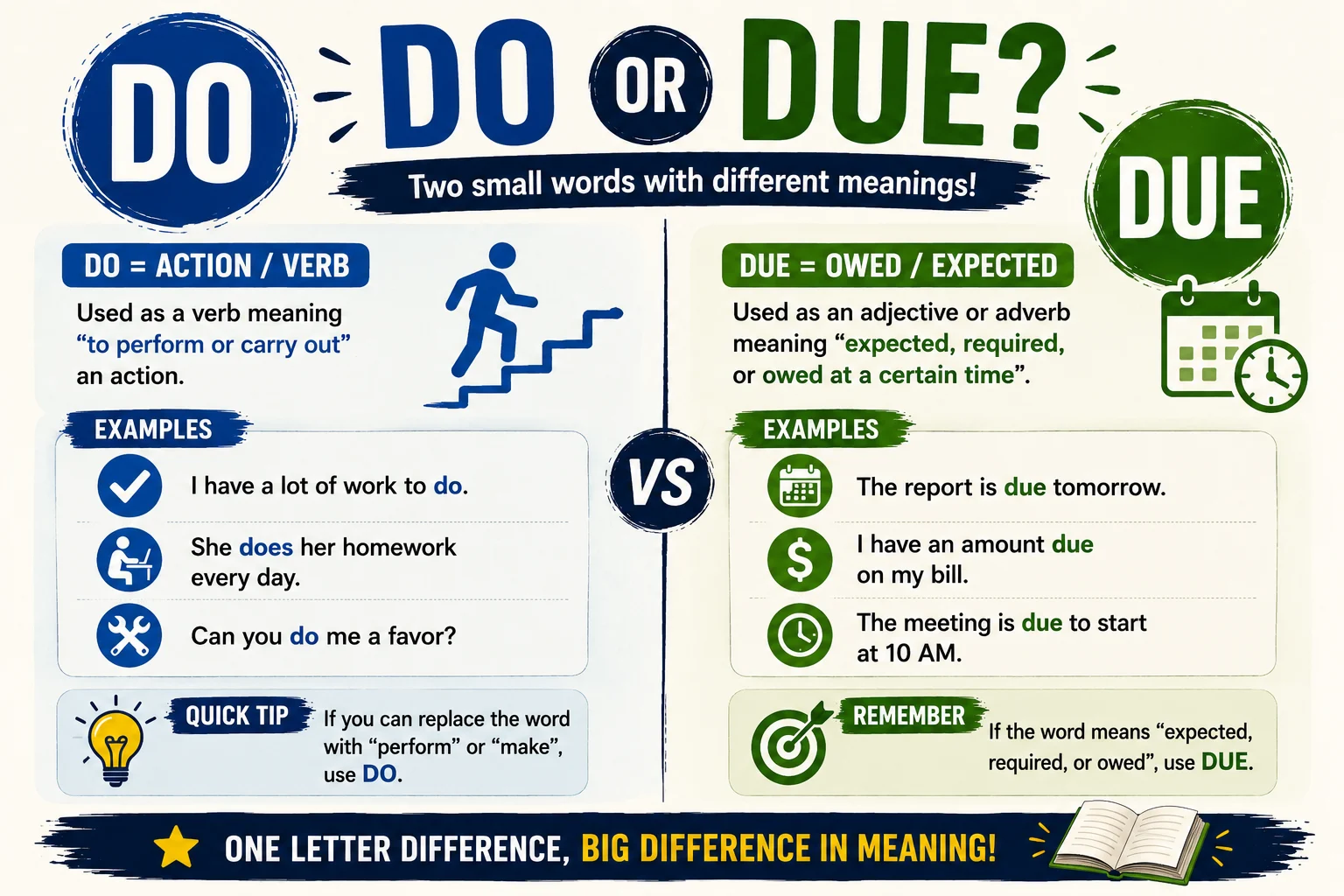
Do is mainly a verb meaning to perform or complete an action, while due usually means expected, owed, or scheduled. ...
Read more
Actor or Actress: The Clear Guide to Correct Use

Actor or actress refers to a person who performs a character in a film, TV show, play, or other production. ...
Read more
Lime or Lemon: The Easy Guide to the Difference
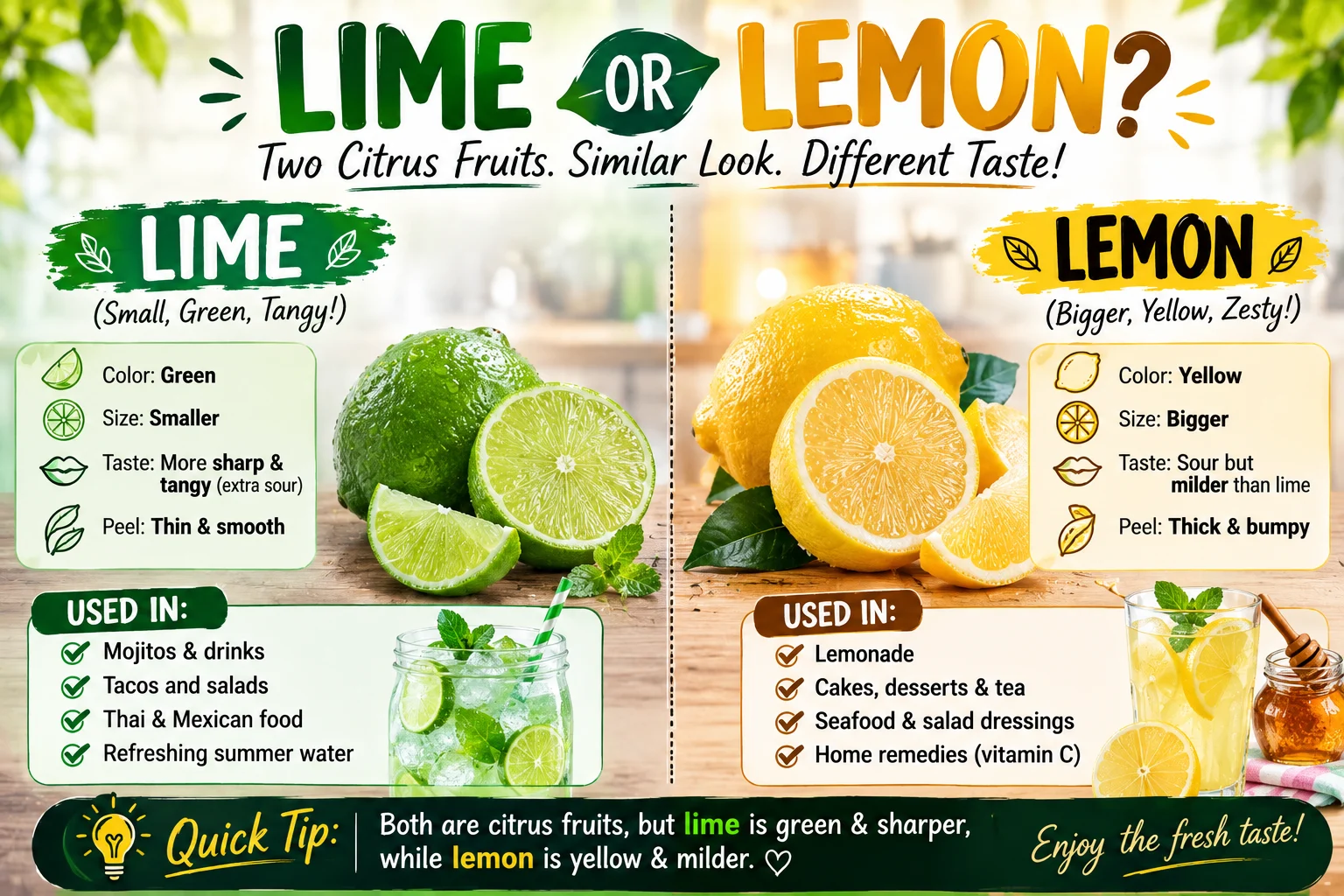
Lime and lemon are different citrus fruits. Lemons are usually larger, yellow, and milder, while limes are usually smaller, green, ...
Read more
White or Wheat: Easy Guide to the Difference
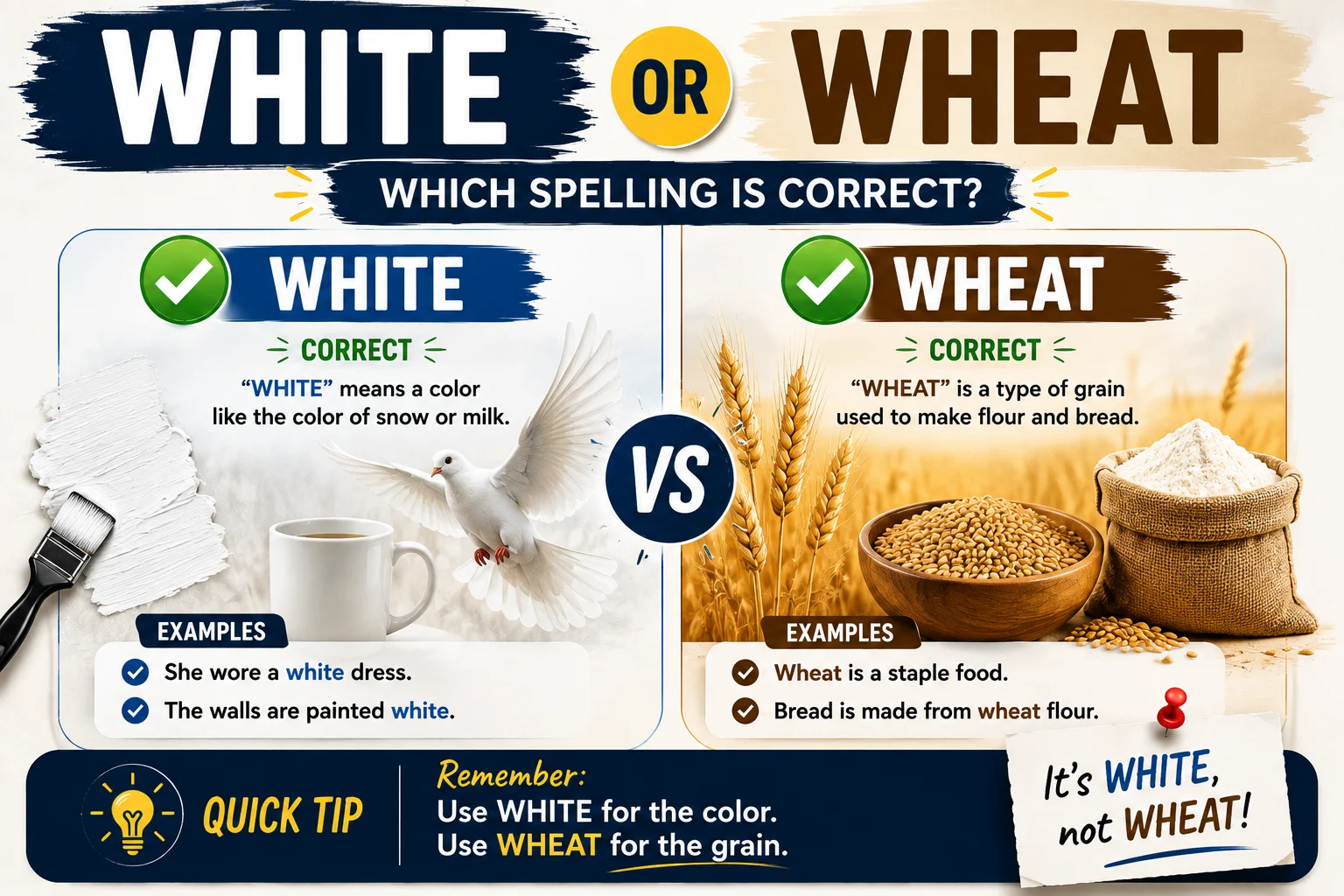
White and wheat are both correct English words, but they have different meanings. White describes a color, while wheat is ...
Read more
Rational or Rationale: Easy Guide to the Difference
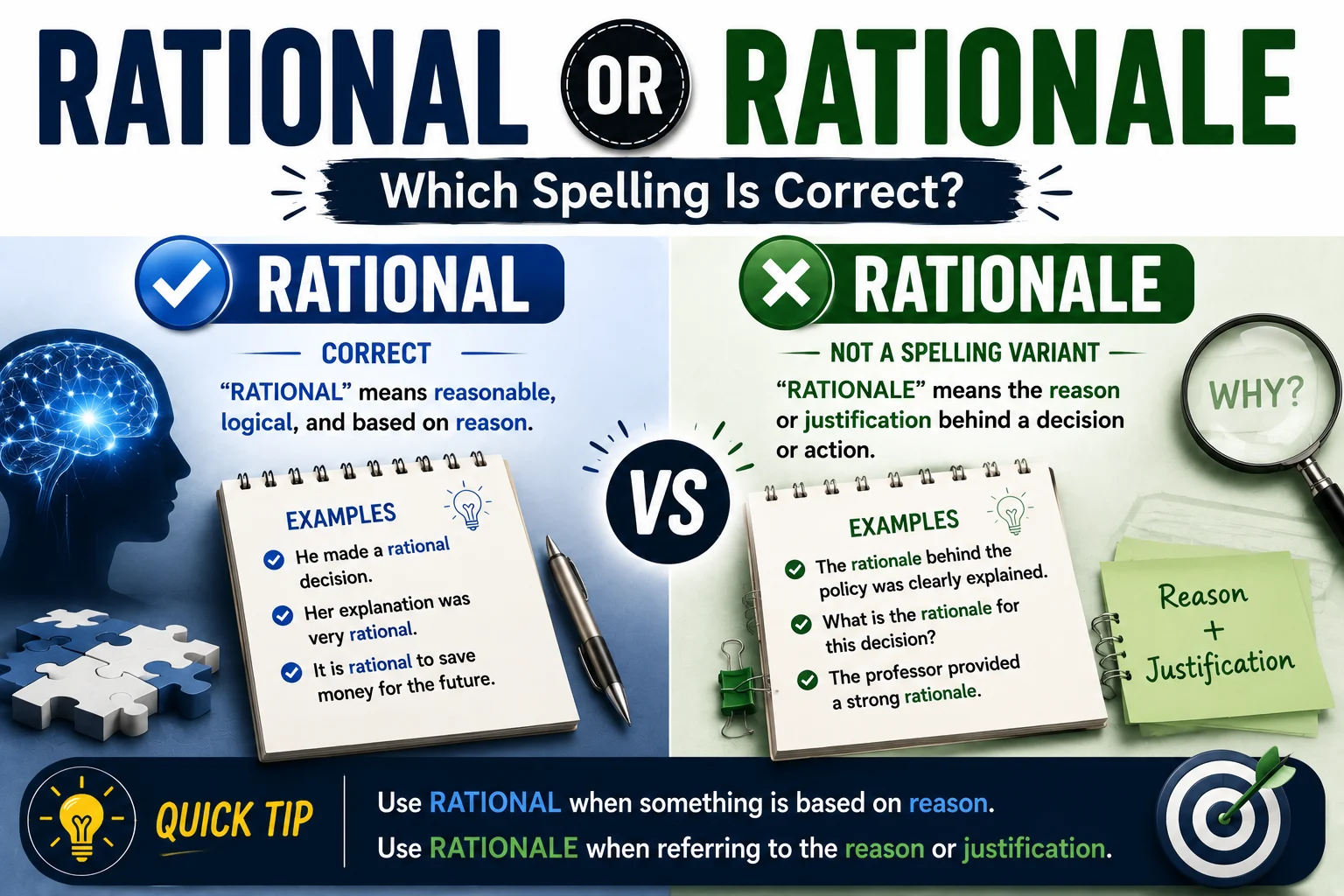
Rational is an adjective meaning sensible, logical, or based on reason. Rationale is a noun meaning the reason or explanation ...
Read more
But or Butt: Easy Guide to the Difference
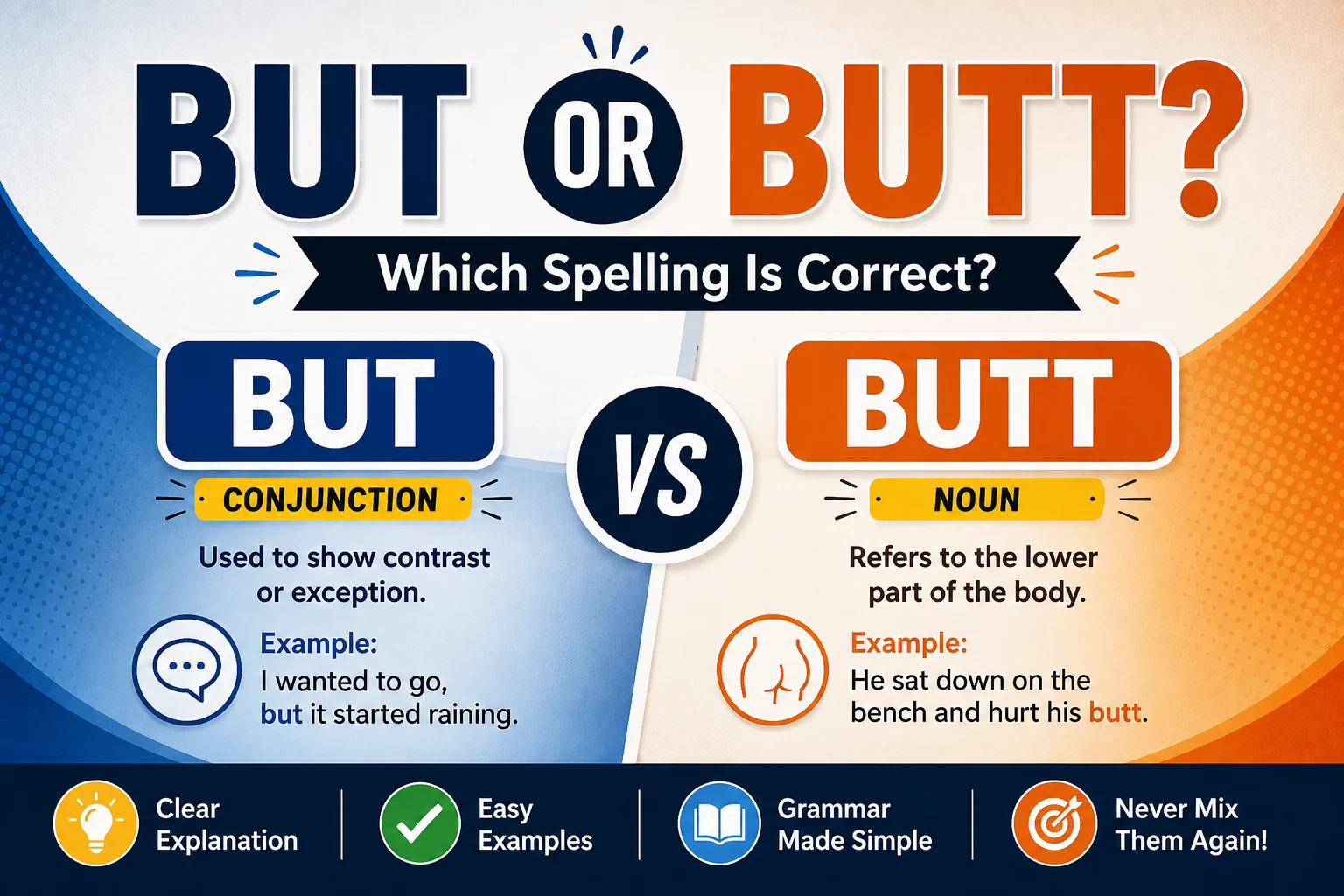
But is usually a conjunction or preposition meaning “except,” “however,” or “although.” Butt is a noun or verb that can ...
Read more
Agree or Agreed: Easy Guide to Correct Usage
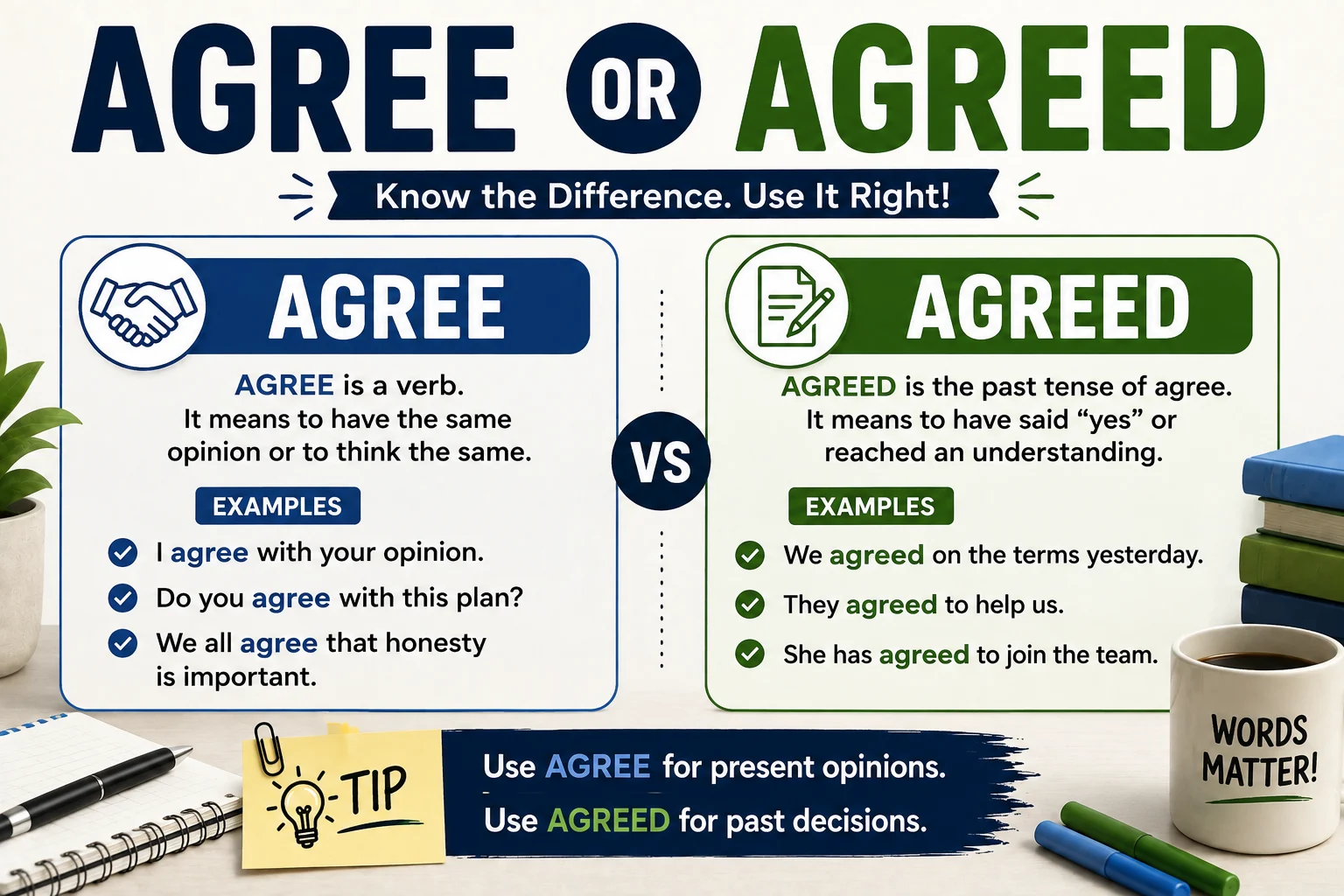
Agree is the present-tense verb, while agreed is its past tense and past participle. Use agree for what you think ...
Read more
Peoples or People’s: Easy Grammar Guide
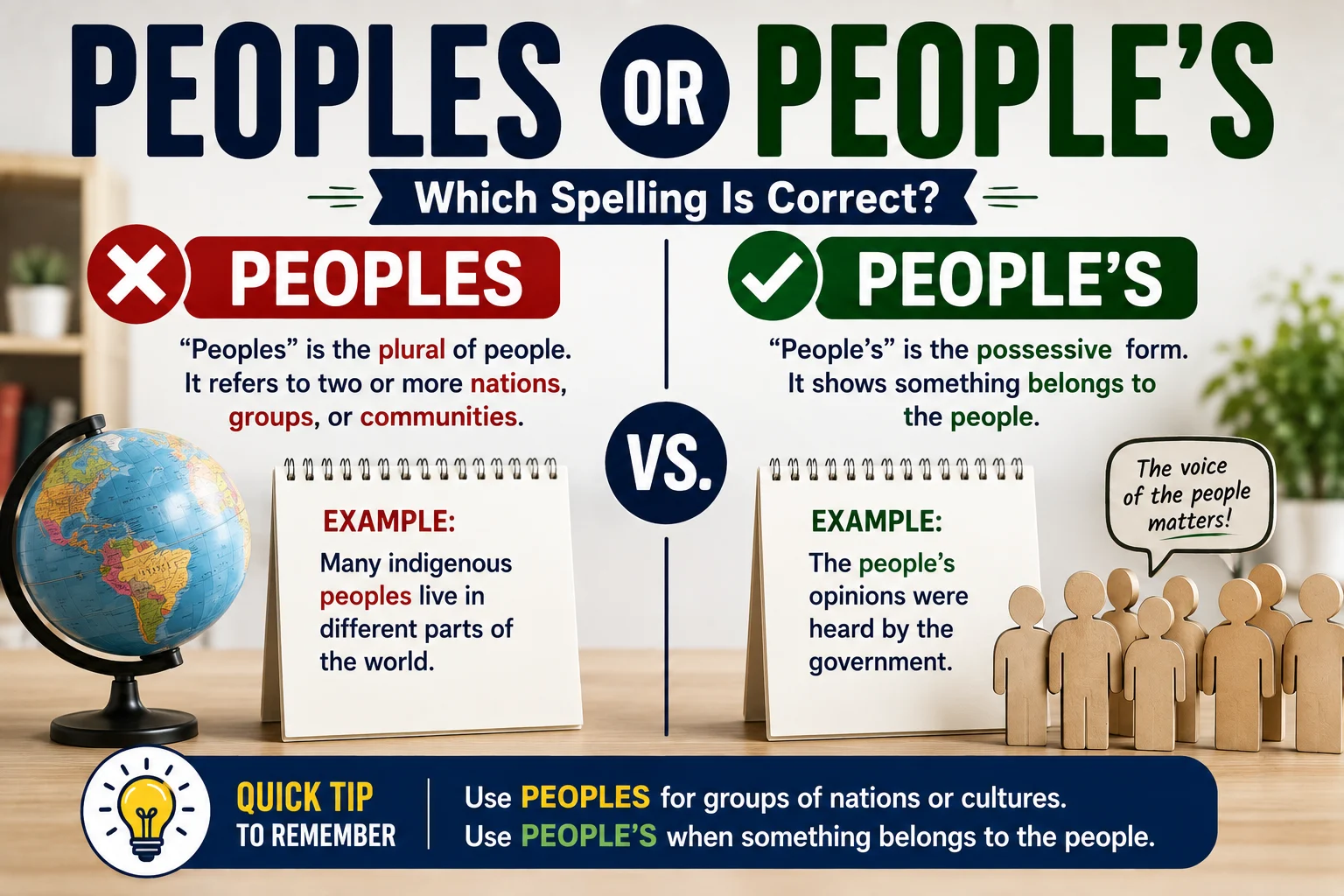
peoples is the plural of people in a special context, while people’s is the possessive form of people. In most ...
Read more
Nobodies or Nobody’s: Easy Spelling Guide
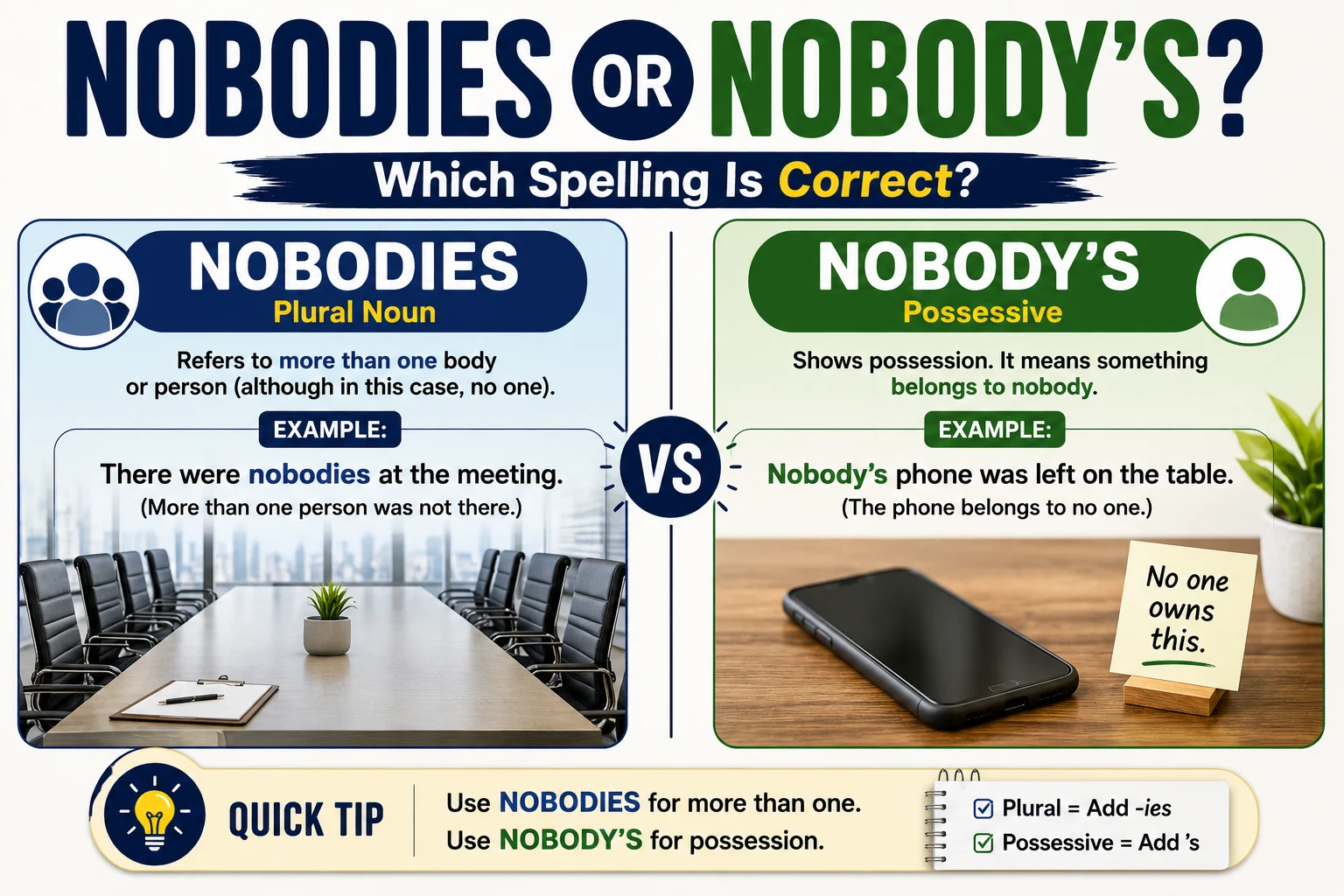
Nobodies is the plural of nobody, while nobody’s is usually the possessive form of nobody or a contraction of nobody ...
Read more
Or or Nor: How Do You Use Them?
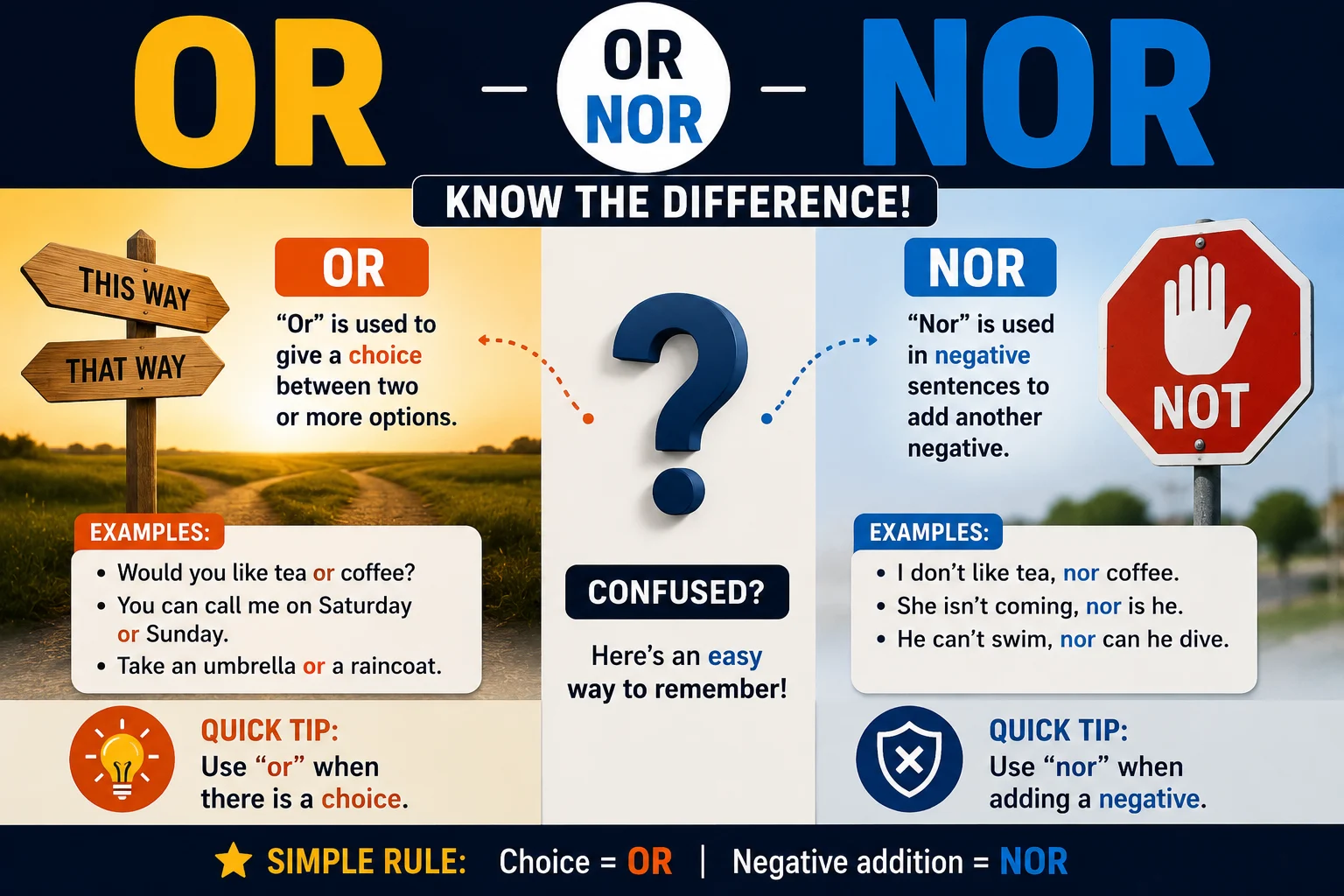
Or vs. Nor: “Or” presents a choice, while “nor” connects negative alternatives. Choosing between or and nor can be confusing, ...
Read more