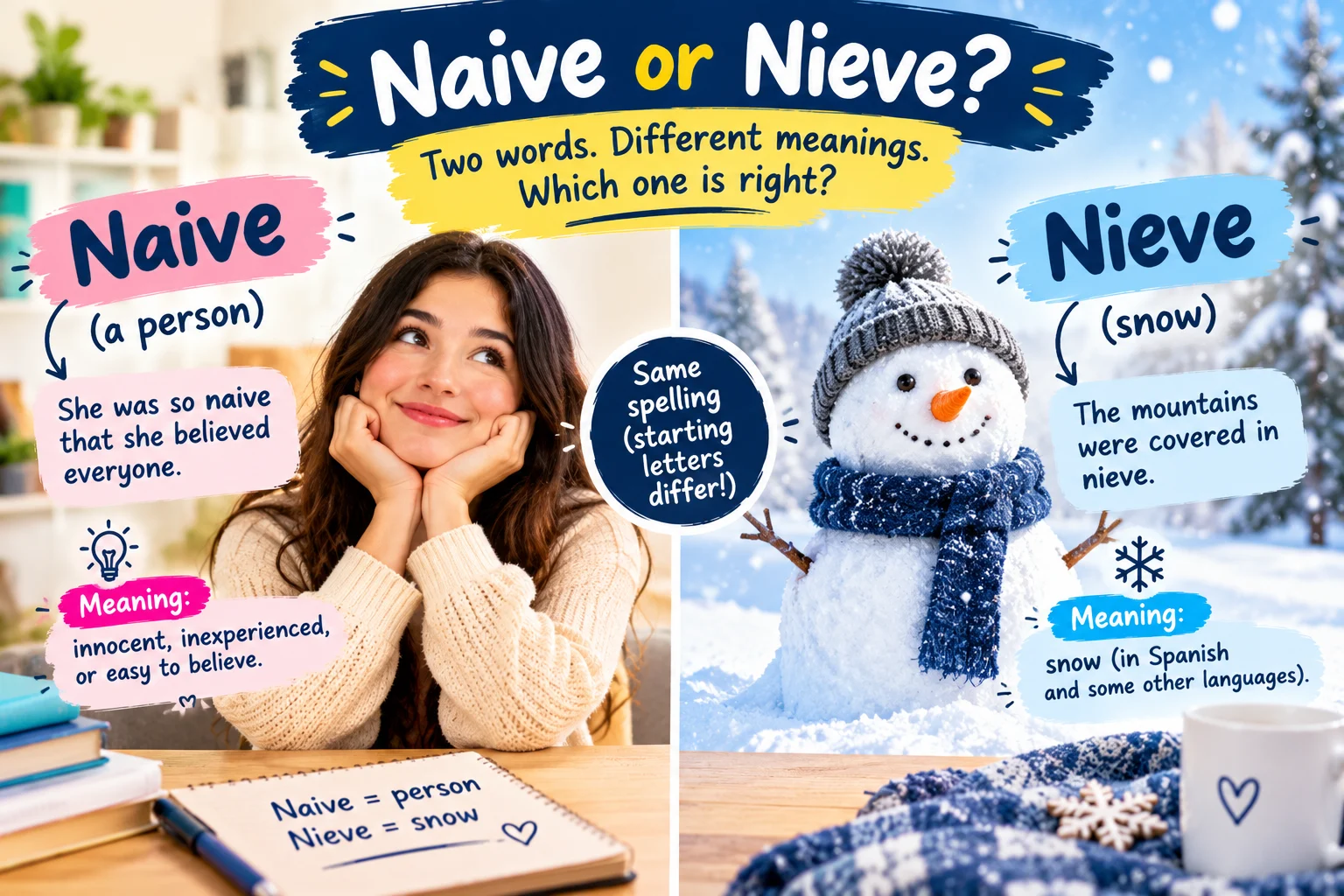
Naive is the correct spelling in English. Nieve is a common misspelling of naive. The word naive means innocent, inexperienced, or too willing to trust others.
Have you ever written a word and stopped to ask, “Is this spelling right?” Many English learners face this problem with naive or nieve. The two forms look almost the same. Yet only one is the standard English spelling.
Imagine you want to describe a person who trusts everyone. You may write, “He is nieve.” The reader may understand your meaning, but the spelling is wrong. The correct sentence is, “He is naive.”
This small spelling mistake can happen in schoolwork, emails, blog posts, and social media. It is easy to make because the letters in naive may not match what you expect to hear.
In this guide, you will learn the correct spelling, its meaning, its history, and how to use it in daily writing. You will also see real examples, common mistakes, and answers to popular questions.
By the end, you will know when to use naive and how to avoid writing nieve by mistake.
Naive or Nieve: Quick Answer
Naive is the correct spelling in standard English. It describes someone who lacks experience or trusts others too easily.
The word can describe a person, an idea, or a belief that shows little understanding of how things work.
Examples:
- She was naive to believe every promise.
- It was naive to think the task would take only five minutes.
Remember this simple rule: write naive, not nieve.
The Origin and Background of Naive
The word naive has a long history. It came into English from French. The French word naïf means natural or innocent when describing a male person. Naïve is the French form used for a female person.
The French word came from Latin nativus, which means natural or native. Over time, the meaning developed to include a person who is innocent, inexperienced, or unaware of possible problems.
English adopted the word from French. It is now used in everyday speech, books, news stories, and professional writing.
Why Does the Spelling Cause Confusion?
The spelling naive can confuse learners for several reasons:
- The letters may not sound the way a new learner expects.
- The word has a French background.
- Some people may confuse it with familiar words such as believe or relieve.
- The misspelling nieve may look reasonable at first glance.
However, English spelling does not always follow one simple sound pattern. That is why it helps to learn the written form of a word along with its meaning.
What About the Two Dots in Naïve?
You may see the word written as naïve, with two dots over the letter i. These dots are called a diaeresis. In this word, they show that the vowels are pronounced separately.
Both naive and naïve are accepted English spellings. The form without the dots is common in modern English, especially in digital writing.
Naive Explained: Meaning and Usage
The adjective naive describes someone who has little experience or does not expect people or situations to be difficult or dishonest.
It can have a positive or negative meaning, depending on the context.
1. Naive as Innocent or Trusting
A naive person may believe what others say without asking questions.
Example: The naive child believed that every story was true.
Here, the word suggests innocence and trust.
2. Naive as Inexperienced
The word can also describe someone who does not yet understand a subject or situation.
Example: His first plan was naive because he had not studied the costs.
In this sentence, naive means that the plan lacked practical understanding.
3. Naive as Unrealistic
Sometimes, naive describes an idea that ignores real problems.
Example: It is naive to think that learning a new skill takes no time.
The word points to a lack of realistic judgment.
Is Naive Always an Insult?
No. The meaning depends on how it is used.
A person may call a young child naive to describe a natural lack of experience. In another situation, calling someone’s plan naive may sound critical.
Use the word with care when talking about another person. If you only mean that someone is new to a subject, inexperienced may sound more neutral.
Naive vs. Nieve: Key Differences
The main difference is spelling. Naive is the standard English word, while nieve is not the correct spelling for this meaning.
| Term | Meaning | When to Use | Region/Context |
|---|---|---|---|
| Naive | Innocent, inexperienced, or too trusting | In standard English writing | English worldwide |
| Naïve | Same meaning as naive | When using the accented form | English, especially edited or literary text |
| Nieve | Not the standard spelling of naive | Avoid when you mean innocent or inexperienced | Common spelling error |
Example Sentences
Correct: She was naive about the risks of the plan.
Incorrect: She was nieve about the risks of the plan.
Also correct: He had a naïve view of the world.
The accented and unaccented forms share the same meaning. The form nieve should not be used as a substitute.
Which Version Should You Use?
The best choice depends on your audience and the style of writing.
For Students
Use naive in essays, homework, exams, and class assignments. It is simple, widely accepted, and easy to type.
Example: It was naive to believe the rumor without checking the facts.
For Teachers and English Learners
Teach naive as the main spelling. You can also show naïve so learners recognize it when reading books or formal text.
Explain the meaning with simple words such as innocent, inexperienced, and too trusting.
For Bloggers and Content Writers
Use naive in most online articles. It works well in headings, web pages, emails, and social media posts.
Keep your spelling consistent throughout the article. If you choose naïve for a particular style, use that form consistently.
For Professional and Formal Writing
Both naive and naïve are accepted. Follow your workplace, publisher, or style guide if it has a preference.
When in doubt, choose naive. It is widely understood and does not require special characters.
Common Mistakes with Naive
Even a short word can lead to errors. Here are five mistakes to watch for.
1. Writing Nieve Instead of Naive
Incorrect: He was nieve to trust the stranger.
Correct: He was naive to trust the stranger.
The letters in nieve are in the wrong order for the intended word.
2. Thinking Naive and Naïve Have Different Meanings
Incorrect idea: The two forms describe different things.
Correct idea: Naive and naïve have the same meaning. The dots are a spelling feature, not a change in meaning.
3. Using Naive When You Mean Dishonest
Incorrect: The naive person tricked everyone on purpose.
Better: The dishonest person tricked everyone on purpose.
A naive person may be easy to mislead. A dishonest person may try to mislead others.
4. Using Naive for Every Kind of Mistake
Unclear: She made a naive mistake.
Clearer, depending on the meaning: She made an inexperienced choice.
The word naive often describes a person’s thinking, belief, or judgment. Choose a more exact word when you mean a simple error.
5. Treating Naive as a Noun
Incorrect: His naive caused a problem.
Correct: His naive attitude caused a problem.
Naive is an adjective. It describes a noun. The noun form naivety or naiveté refers to the quality of being naive.
Naive in Real-World Examples
Seeing a word in different settings makes it easier to use correctly.
1. In a Professional Email
Subject: Review of the Project Plan
“After reviewing the budget, I think our first estimate was naive. We should include more time for testing and possible delays.”
Here, naive means that the first estimate did not fully consider real-world problems.
2. In a News Article
Headline: “Experts Warn Against Naive Views of Online Safety”
The headline suggests that some people may not understand the risks of being online.
3. In a Social Media Post
“I used to think every online offer was real. I was a little naive, but now I check the details first.”
This example uses the word in a personal and informal way.
4. In a Formal Report
“The initial proposal was naive because it did not account for the costs of long-term support.”
The word describes a plan that lacks practical understanding.
5. In Everyday Conversation
“Don’t be so naive. Check the facts before you believe the story.”
This sentence is direct and may sound critical. A kinder option is, “It is best to check the facts before trusting the story.”
Naive: Data, Trends, and Usage
The spelling question naive or nieve is an informational search. People who type this phrase usually want a quick answer, a definition, or an example of the correct spelling.
The word naive appears in many kinds of writing, including:
- School essays and language lessons
- News articles and opinion pieces
- Personal stories and book reviews
- Workplace reports and everyday emails
- Online discussions about trust and judgment
The unaccented spelling naive is useful online because it is easy to type on standard keyboards. The accented form naïve also remains correct and may appear in edited books and other publications.
There is no verified search-volume data provided here, so exact claims about monthly searches or regional rankings would be unreliable. Still, the question is a useful example of a common language-learning need: people want to know which spelling to trust.
For writers, the practical lesson is simple. Use the correct spelling, explain the word clearly, and choose examples that fit the situation.
Standalone Comparison Table: Naive or Nieve
| Term/Variant | Meaning | Region/Context | Best Used When |
|---|---|---|---|
| Naive | Innocent or inexperienced | Standard English | Everyday and professional writing |
| Naïve | Same as naive | English with the diaeresis retained | When following a style that uses the accent |
| Nieve | Misspelling of naive in this context | Informal spelling error | Do not use for the intended meaning |
The safest choice for most writing is naive.
Frequently Asked Questions
Q1: What does naive mean?
A: Naive means innocent, inexperienced, or too willing to trust others. It can describe a person, belief, plan, or idea that lacks practical understanding.
Q2: How do you spell naive correctly?
A: The standard spelling is naive. You may also write naïve, with two dots over the i. Both forms are correct.
Q3: Naive vs. nieve: Which is correct?
A: Naive is correct when you mean innocent or inexperienced. Nieve is a common misspelling and should not be used for this meaning.
Q4: Is naive acceptable in formal writing?
A: Yes. Naive is accepted in formal English. You can also use naïve if it matches the style guide you are following.
Q5: Where does the word naive come from?
A: The word entered English from French naïf and naïve. These forms came from Latin nativus, meaning natural or native.
Q6: Can naive have a positive meaning?
A: Yes. It can suggest innocence, openness, or a lack of bad intentions. However, it can also suggest poor judgment or a lack of experience.
Q7: What is the noun form of naive?
A: The noun forms are naivety and naiveté. Both refer to the quality of being naive.
Q8: What are some synonyms for naive?
A: Depending on the context, synonyms include innocent, trusting, inexperienced, unsuspecting, and gullible. These words have slightly different meanings, so choose the one that best fits your sentence.
Conclusion
The choice between naive or nieve is easy once you know the rule. Naive is the correct spelling in standard English. You may also use naïve, which has the same meaning but includes two dots over the letter i. The spelling nieve is incorrect when you want to describe someone who is innocent, inexperienced, or too trusting.
Remember that naive can describe a person, a belief, or a plan. It may suggest innocence, but it can also point to a lack of practical judgment. Words such as inexperienced, trusting, and gullible can sometimes express the idea more clearly.
For schoolwork, blogs, emails, and most other writing, naive is a safe and simple choice. Learn the spelling, use it in your own sentences, and check your writing before you share it.
Now you know how to use naive correctly. Bookmark this guide or share it with someone who often mixes up these spellings.