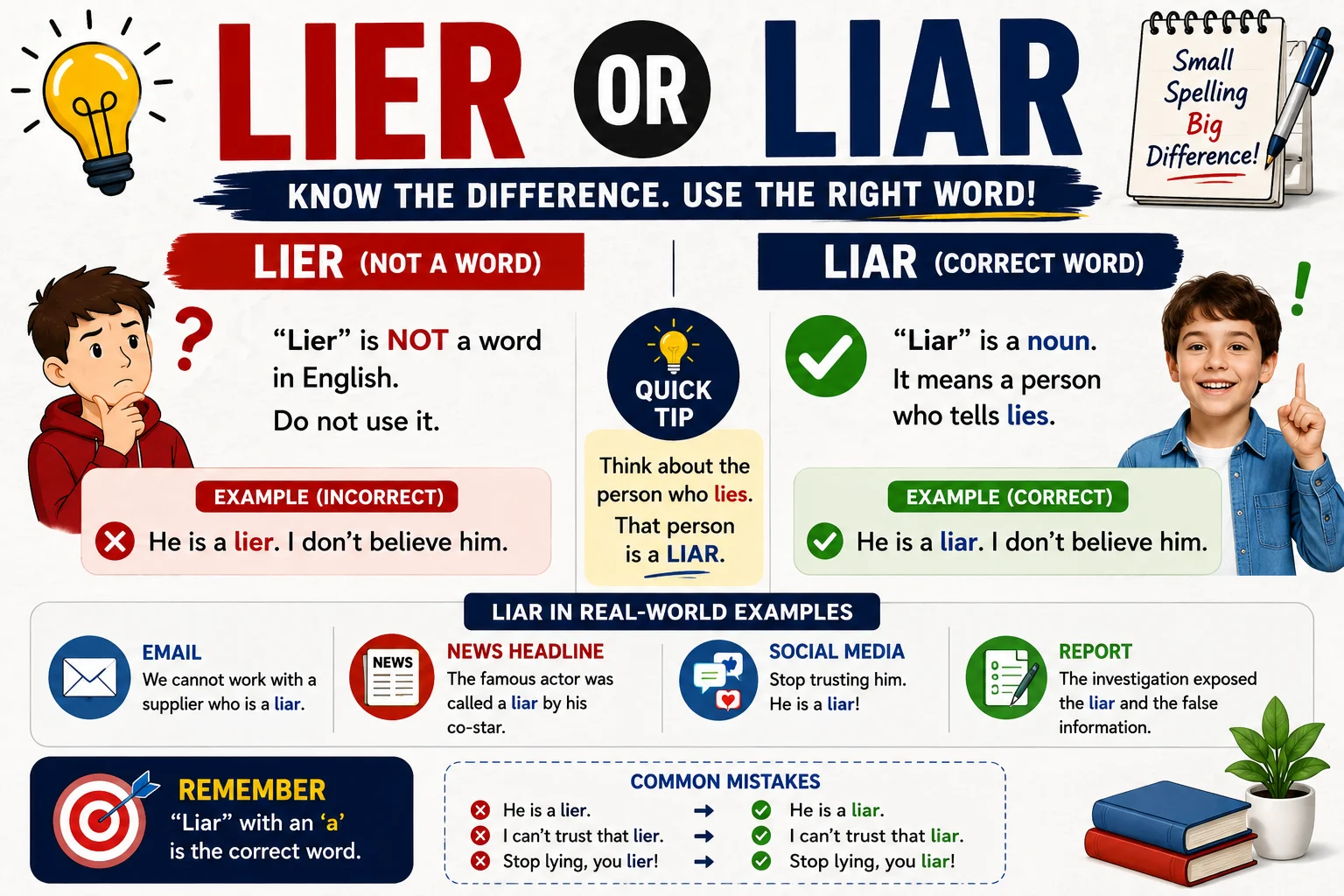
Quick Answer: Liar means a person who tells lies. Lier is a real word, but it means a person or thing that lies down, not someone who tells false stories.
Introduction: Why Do People Confuse Lier or Liar?
Have you ever typed a sentence and stopped because you were unsure: “Is it lier or liar?” You are not the only one. This small spelling difference causes confusion for many English learners and writers.
I once saw a student write, “He is a lier because he never tells the truth.” The meaning was clear, but the word choice was wrong. The correct word was liar. This mistake happens because both words look almost identical and come from the same root idea: the verb lie.
The tricky part is that English has two different meanings of lie. One means to say something untrue. The other means to rest in a flat position. These two meanings create the confusion between lier or liar.
This guide will explain the difference in simple terms. You will learn the meaning, history, correct usage, common mistakes, and real examples so you can choose the right word every time.
Lier or Liar – Quick Answer
A liar is someone who tells a lie or says something false on purpose.
Example:
“Tom is a liar because he made up the story.”
A lier means someone or something that lies down.
Example:
“The dog is a lier on the soft blanket.”
However, lier is very uncommon in modern English. Most people use other words like person lying down instead.
For talking about dishonesty, always use liar.
The Origin and Background of Lier or Liar
The confusion between lier or liar comes from the word lie, which has two different origins.
Lie Meaning “To Tell Something False”
This meaning comes from Old English “lēogan,” which means to deceive or speak falsely.
From this meaning, we get:
Lie
Liar
Lying
Example:
“She lied about her age.”
Lie Meaning “To Rest or Recline”
This meaning comes from another Old English word, “licgan,” meaning to be placed or rest.
From this meaning, we get:
Lie
Lier
Lying down
Example:
“The book is lying on the table.”
Because both words are spelled the same in their base form, many learners mix them up.
Lier or Liar Explained — Key Differences and Variations
The main difference is the action being described.
Liar = a person who tells false information.
Lier = someone or something that rests in a position.
Term Meaning When to Use Region/Context
Liar A person who says something untrue Talking about dishonesty Worldwide English
Lier A person or thing that lies down Rare situations Mostly dictionary use
Lying Saying something false or resting flat Depends on context Everyday English
Lie Base verb with two meanings General use All English varieties
Examples of Liar
“The politician was called a liar after the false statement.”
“Nobody trusts a liar who keeps breaking promises.”
Examples of Lier
“The cat is a quiet lier near the window.”
This sentence is grammatically possible, but most native speakers would say:
“The cat is lying near the window.”
That sounds more natural.
Which Version Should You Use?
Choosing between lier or liar depends on your meaning.
For Students and English Learners
Use liar when describing someone who is dishonest.
Example:
✅ “He is a liar.”
❌ “He is a lier.”
For Professional Writing
Use liar only when discussing dishonesty or false statements.
For physical position, avoid lier. Use clearer phrases:
Person lying down
Someone resting
Someone reclining
For Global English Use
Liar is the word you will need most often.
A simple rule:
If someone tells a false story, use liar. If someone is lying down, describe the action instead.
Common Mistakes with Lier or Liar
Many errors happen because the words look almost the same.
Mistake Correction Why It Happens
“He is a lier because he cheated.” “He is a liar because he cheated.” Confusing spelling patterns
“She is a liar on the bed.” “She is lying on the bed.” Mixing meanings of lie
“The dog is a liar on the floor.” “The dog is lying on the floor.” Using liar for position
“He lied down yesterday.” “He lay down yesterday.” Confusing past forms
Why These Mistakes Happen
English has many irregular verbs. The word lie is especially confusing because it changes form:
Lie → lay → lain (resting)
Lie → lied → lied (telling a falsehood)
Understanding the meaning first makes spelling easier.
Lier or Liar in Real-World Examples
Professional Email
Incorrect:
“The employee is a lier because he gave false information.”
Correct:
“The employee is a liar because he gave false information.”
News Headline
Example:
“Public Figure Responds After Being Called a Liar”
News writing uses liar when discussing false claims.
Social Media Post
Example:
“A true friend tells the truth. A liar creates problems.”
This is a common everyday use.
Formal Document or Report
Example:
“The investigation found that the witness provided false information.”
Formal reports often avoid the emotional word liar and use neutral phrases.
Lier or Liar — Data, Trends, and Usage
Searches for “lier or liar” usually come from people checking spelling and grammar. The search intent is mainly informational.
People often search this phrase when writing:
Essays
Emails
Social media posts
School assignments
Workplace documents
The word liar is much more common because dishonesty is a frequent topic in everyday communication.
The word lier appears mostly in dictionaries or language discussions. Most native speakers rarely use it.
Understanding this difference matters because correct word choice makes your writing clearer and more natural.
Lier or Liar Comparison Table
Term/Variant Meaning Region/Context Best Used When
Liar Person who tells false information Global English Talking about dishonesty
Lier Person or thing that lies down Rare usage Very specific meanings
Lying Saying false things or resting flat Everyday English Describing actions
Lie Base word with two meanings All contexts General sentences
Frequently Asked Questions
Q: What does liar mean?
A: A liar is a person who says something false or dishonest. The word is used when someone intentionally gives untrue information.
Q: How do you use liar correctly?
A: Use liar for a person who tells lies. Example: “He is a liar because he changed the truth.”
Q: Lier vs liar — what is the difference?
A: A liar tells false information. A lier is someone or something that lies down, but this word is rarely used.
Q: Is liar acceptable in formal writing?
A: Yes, but use it carefully. In formal reports, neutral phrases like “provided false information” may sound more professional.
Q: Which version is correct — lier or liar?
A: Both words exist, but they have different meanings. For dishonesty, liar is correct.
Q: Where does the word liar come from?
A: Liar comes from the Old English word related to lie, meaning to speak falsely.
Q: Can lier be used in everyday conversation?
A: It is grammatically possible but uncommon. Most people say “lying down” instead.
Conclusion: Lier or Liar — The Simple Rule to Remember
The difference between lier or liar becomes easy when you remember the meaning behind the word.
A liar is someone who does not tell the truth. A lier is someone or something that lies down, but this word is rarely used in normal conversation.
The key points are:
Use liar for dishonesty.
Avoid using lier unless you mean someone who is physically resting.
Choose clear phrases like “lying down” for natural English.
Small spelling choices can make a big difference in your writing. Learning these differences helps you communicate with more confidence.
Now you know exactly how to use lier or liar — share this guide with someone who has been confused about these two words.
Afterward or Afterwards: Easy Guide to Use It Right