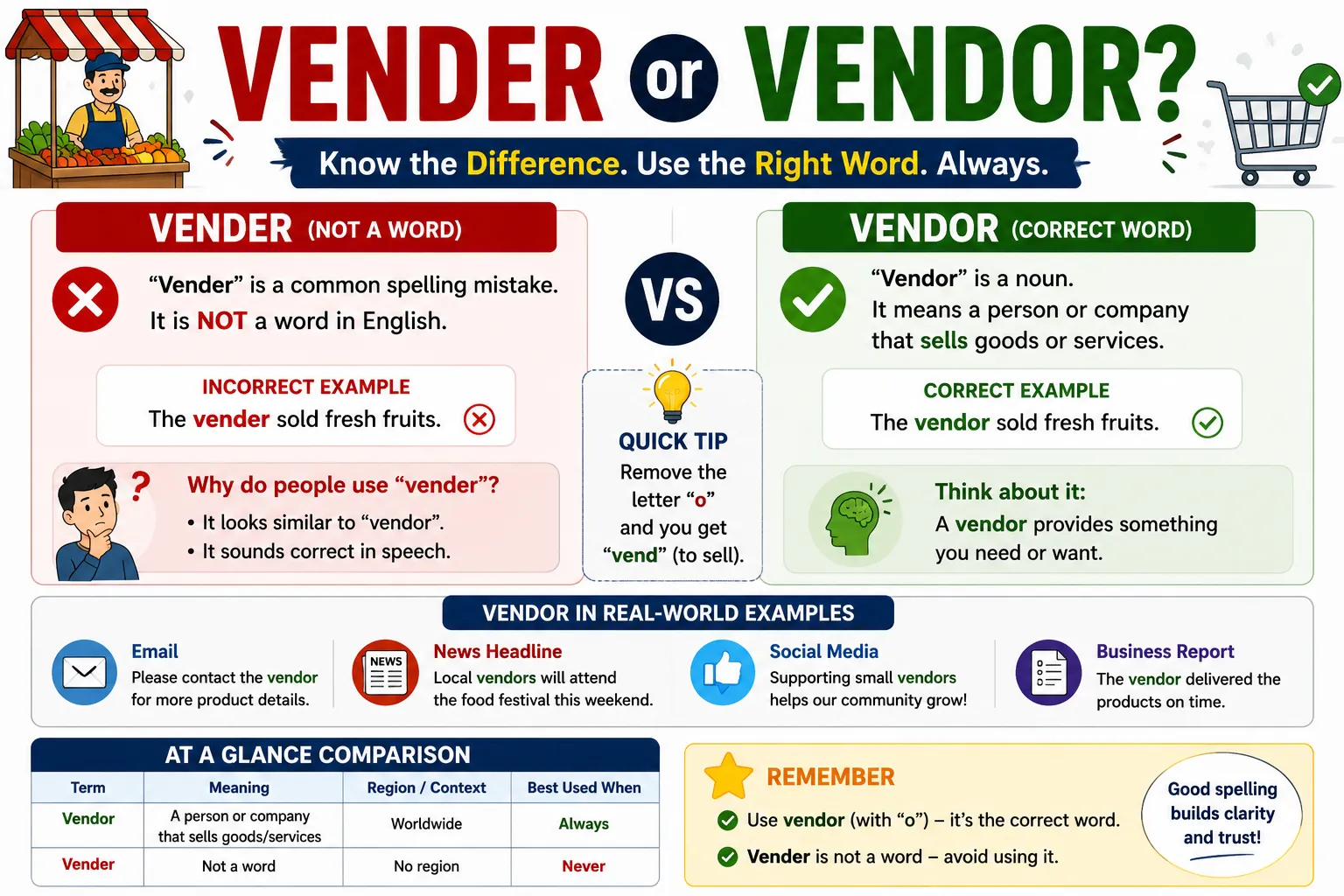
Vendor means a person, company, or seller that provides goods or services. Vender is a rare spelling that means the same thing but is almost never used in modern English.
Introduction: Why Do People Confuse Vender or Vendor?
I once reviewed a business report where a small mistake changed the professional feel of the entire document. The writer used “vender” several times when talking about suppliers. The meaning was understandable, but the spelling looked unusual to many readers.
Have you ever stopped while writing an email and wondered, “Should I write vender or vendor?” You are not alone. Many students, business owners, and professionals search for this difference because both words look correct.
The confusion happens because English has many words that change over time. Some spellings become common, while others slowly disappear from daily use. Vendor became the standard spelling in business, technology, and everyday communication.
This guide will help you understand the meaning, history, correct usage, and difference between vender or vendor. By the end, you will know which word to choose and how to use it with confidence.
Vender or Vendor – Quick Answer
Vendor is the preferred modern spelling for a person or business that sells products or services.
A vendor can be:
A shop owner selling clothes
A company supplying software
A person selling food at a market
Examples:
“The company selected a new vendor for office supplies.”
“A street vendor sold fresh fruit near the station.”
The word vender has the same basic meaning, but it is uncommon. Most readers expect vendor in professional and formal writing.
The Origin and Background of Vender or Vendor
The word vendor comes from the Latin word “vendere,” which means “to sell.”
It entered English through Old French and later became common in business language. Over time, vendor became the accepted spelling in English-speaking countries.
The spelling vender developed because English speakers sometimes add “-er” to words that describe a person doing an action.
For example:
Teach → teacher
Drive → driver
Sell → seller
Because “vend” means “sell,” some people naturally created vender.
However, language habits changed. The business world, dictionaries, and formal writing mostly adopted vendor.
Today:
Vendor = common and accepted
Vender = rare and old-fashioned
Vender or Vendor Explained — Key Differences and Variations
Although the two words have similar meanings, their usage is different.
Term Meaning When to Use Region/Context
Vendor A person or company that sells goods or services Business, technology, formal writing Worldwide English
Vender A person who sells something Rare situations or older texts Limited use
Vendor Examples
Business:
“Our company works with a trusted software vendor.”
Retail:
“The clothing vendor offered a discount.”
Technology:
“The IT vendor provided technical support.”
Vender Examples
You may find vender in older books or uncommon writing:
“The street vender called customers to his shop.”
The sentence is understandable, but most modern writers would choose vendor.
Which Version Should You Use?
Choosing the right word depends on your audience.
For Students and Beginners
Use vendor.
It is the spelling most teachers, websites, and employers expect.
For Business Professionals
Always choose vendor.
It appears in:
Contracts
Reports
Emails
Invoices
Supplier agreements
For Global or Neutral Writing
Use vendor.
It is understood across countries and industries.
A simple rule:
When in doubt, write vendor.
Common Mistakes with Vender or Vendor
Many people make small spelling mistakes because both versions look possible.
Mistake Correction Why It Happens
“We hired a new vender.” “We hired a new vendor.” Confusion with words ending in -er
“The software vender contacted us.” “The software vendor contacted us.” Older spelling habits
“Vendor sells products only.” “Vendor sells products or services.” Meaning is too limited
“Every seller is called a vendor.” “Vendor usually refers to a business seller.” Context misunderstanding
Remember, vendor is not only a person. It can also be a company or organization.
Vender or Vendor in Real-World Examples
Professional Email
Incorrect:
“We need approval before contacting the new vender.”
Better:
“We need approval before contacting the new vendor.”
News Headline
Example:
“Local vendor Creates Jobs Through Small Business Growth”
News articles usually use vendor because it is the recognized spelling.
Social Media Post
Example:
“Support your local vendor and small businesses in your community.”
This sounds natural and modern.
Formal Report
Example:
“The company reviewed three technology vendors before choosing a supplier.”
Formal documents almost always use vendor.
Vender or Vendor — Data, Trends, and Usage
Search interest for “vender or vendor” usually comes from people checking spelling and grammar. The main search intent is informational.
People commonly search this phrase when writing:
Business documents
School assignments
Emails
Product descriptions
Marketing content
The word vendor is especially common in:
E-commerce
Software industries
Supply chains
Retail businesses
Event management
The reason this matters today is simple: professional communication depends on clear language. A small spelling choice can affect how trustworthy your writing appears.
Vender or Vendor Comparison Table
Term/Variant Meaning Region/Context Best Used When
Vendor Seller of goods or services Global English Almost all modern writing
Vender Alternative spelling for seller Rare and outdated contexts Historical or quoted material
Seller General person who sells something Everyday conversation Simple descriptions
Supplier Business providing goods or materials Business relationships Manufacturing and trade
Frequently Asked Questions
Q: What does vendor mean?
A: A vendor is a person, company, or organization that sells products or services. The word is common in business, retail, and technology.
Q: How do you use vendor correctly?
A: Use vendor when talking about a seller, supplier, or service provider. Example: “The company hired a new vendor.”
Q: Vender vs vendor — what is the difference?
A: Both words mean a seller, but vendor is the standard modern spelling. Vender is rarely used today.
Q: Is vendor acceptable in formal writing?
A: Yes. Vendor is the preferred choice for reports, contracts, emails, and professional documents.
Q: Which spelling is correct — vender or vendor?
A: Both exist, but vendor is the correct choice for modern English writing.
Q: Where does the word vendor come from?
A: Vendor comes from the Latin word vendere, meaning “to sell.”
Q: Can vendor be used for online businesses?
A: Yes. Online sellers, software companies, and marketplace sellers are often called vendors.
Conclusion: Vender or Vendor — The Right Choice Is Clear
The difference between vender or vendor is simple once you know the history. Both words describe someone who sells goods or services, but vendor is the spelling used in modern English.
Remember these key points:
Vendor is the preferred and widely accepted spelling.
Vender is rare and usually avoided.
Businesses, websites, and formal documents use vendor.
Choosing the right word helps your writing look professional and clear. Whether you are writing an email, report, article, or school project, vendor is the safest choice.
Now you know exactly how to use vender or vendor — bookmark this guide so you never second-guess this spelling again.
Your or You’re: Complete Guide to Easy Grammar