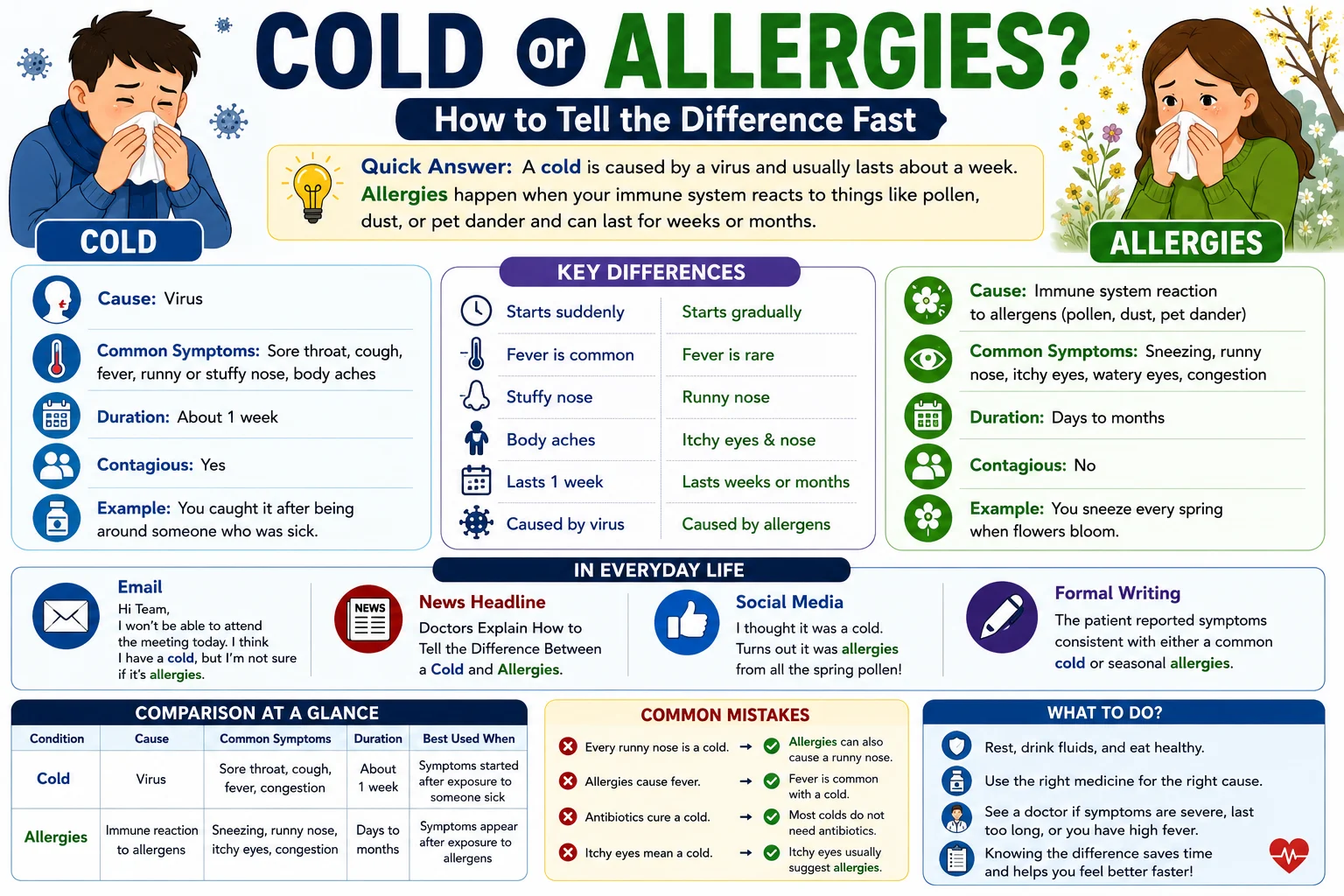
Cold or allergies is a common question people ask when they have sneezing, a runny nose, or congestion. A cold is caused by a virus, while allergies happen when your immune system reacts to things like pollen, dust, or pet dander
Have you ever woken up with a stuffy nose and wondered, “Is this a cold or allergies?” You are not alone. Many people ask this question every year because the symptoms look almost the same at first.
I remember thinking I had a bad cold during spring. I stayed home, drank hot tea, and waited to feel better. Days later, I found out it was only a pollen allergy. The medicine I needed was very different from cold treatment. That experience taught me how important it is to know the difference.
People search for cold or allergies because they want quick answers. They want to know why they are sneezing, coughing, or feeling tired. They also want to choose the right treatment and avoid wasting time on the wrong one.
This guide explains the differences in simple words. By the end, you will know what signs to watch for and when you should see a doctor.
Cold or Allergies – Quick Answer
A cold is a viral infection. It usually lasts about one week.
Allergies happen when your immune system reacts to harmless substances like pollen, dust, or pet hair. They can last for weeks or even months if you keep meeting the trigger.
Simple examples
- You develop a sore throat after your coworker had a cold → Likely a cold.
- You sneeze every spring when flowers bloom → Likely allergies.
- Your eyes itch every time you visit a house with cats → Likely allergies.
The Origin of Cold or Allergies
The word cold has been used in English for hundreds of years. People believed cold weather caused illness. Today, we know viruses are the real cause.
The word allergy comes from Greek words meaning “changed reaction.” Doctors began using the term in the early 1900s to describe unusual immune responses.
Unlike many English words, cold and allergy do not have British and American spelling differences. The confusion comes from their similar symptoms, not from spelling.
British English vs American English Spelling
The spellings are the same in both British and American English.
| Version | Spelling | Region | Example Sentence |
|---|---|---|---|
| American English | Cold, Allergies | United States | I think I have a cold. |
| British English | Cold, Allergies | United Kingdom | My allergies are worse in spring. |
| Australian English | Cold, Allergies | Australia | Dust can trigger allergies. |
| Canadian English | Cold, Allergies | Canada | She stayed home with a cold. |
There is no spelling difference to remember. Only the medical cause is different.
Which Spelling Should You Use?
Since there is no spelling difference, simply use the standard words.
For US readers
Use cold and allergies as normal. These are the accepted medical terms.
For UK and Commonwealth readers
Use the same spellings. Medical websites and schools follow these forms.
For Global and SEO Writing
Use cold or allergies naturally in headings and questions because many people search using this exact phrase.
Common Mistakes with Cold or Allergies
Many people confuse these conditions.
| Incorrect | Correct |
|---|---|
| Every runny nose is a cold. | Allergies can also cause a runny nose. |
| Allergies cause fever. | Fever is much more common with a cold. |
| Colds last for months. | Allergies may last months if the trigger remains. |
| Antibiotics cure a cold. | Most colds do not need antibiotics. |
| Itchy eyes mean a cold. | Itchy eyes usually suggest allergies. |
Why these mistakes happen
- Both cause sneezing.
- Both cause congestion.
- Both can make you feel tired.
- Symptoms often appear during seasonal changes.
Cold or Allergies in Everyday Examples
“I won’t attend today’s meeting because I think I have a cold, but I’m checking if it could be allergies.”
News Headline
“Doctors Explain How to Tell the Difference Between a Cold and Allergies.”
Social Media
“I thought it was a cold. Turns out it was allergies from all the spring pollen!”
Formal Writing
“The patient reported symptoms consistent with either a common cold or seasonal allergies.”
Cold or Allergies – Google Trends & Usage
The phrase cold or allergies becomes more popular during spring and fall.
People in countries with changing seasons search for it more often because pollen levels rise and viruses spread.
The search intent is mainly informational. Users want to identify their symptoms before choosing treatment or deciding whether to visit a doctor.
Interest also increases when schools reopen or during cold and flu season because people want to know if they are contagious.
Comparison Table
| Condition | Cause | Common Symptoms | Duration | Best Used When |
|---|---|---|---|---|
| Cold | Virus | Sore throat, cough, fever, congestion | About one week | Symptoms started after exposure to someone sick |
| Allergies | Immune reaction | Sneezing, itchy eyes, runny nose | Days to months | Symptoms appear after exposure to allergens |
Frequently Asked Questions
Q: Cold or allergies—how can I tell the difference?
A: Fever and body aches usually point to a cold. Itchy eyes and repeated sneezing often suggest allergies.
Q: Can allergies cause a sore throat?
A: Yes. Postnasal drip from allergies can make your throat feel sore or irritated.
Q: Do colds cause itchy eyes?
A: Not often. Itchy, watery eyes are much more common with allergies.
Q: Can I have both a cold and allergies?
A: Yes. Some people experience allergies and then catch a cold at the same time.
Q: How long do allergies last?
A: Allergies may continue as long as you are exposed to the allergen.
Q: Is a cold contagious?
A: Yes. Cold viruses spread from person to person. Allergies are not contagious.
Q: When should I see a doctor?
A: See a healthcare professional if symptoms become severe, breathing is difficult, a high fever develops, or symptoms last much longer than expected.
Conclusion
It is easy to confuse cold or allergies because both can cause sneezing, a runny nose, and congestion. The biggest difference is the cause. A cold comes from a virus, while allergies happen because your immune system reacts to something in your environment.
Watch for clues. Fever, body aches, and a sore throat often point to a cold. Itchy eyes, repeated sneezing, and symptoms that appear during certain seasons usually suggest allergies.
Remember that there is no spelling difference between these words in British and American English. The challenge is knowing which condition you have, not how to spell it.
If your symptoms are mild, use these signs as a helpful guide. If they become severe, last a long time, or worry you, speak with a healthcare professional. Knowing the difference can help you choose the right treatment and recover with confidence.
https://prayerhhub.com/prayers-for-the-life-and-dignity-of-the-human-person