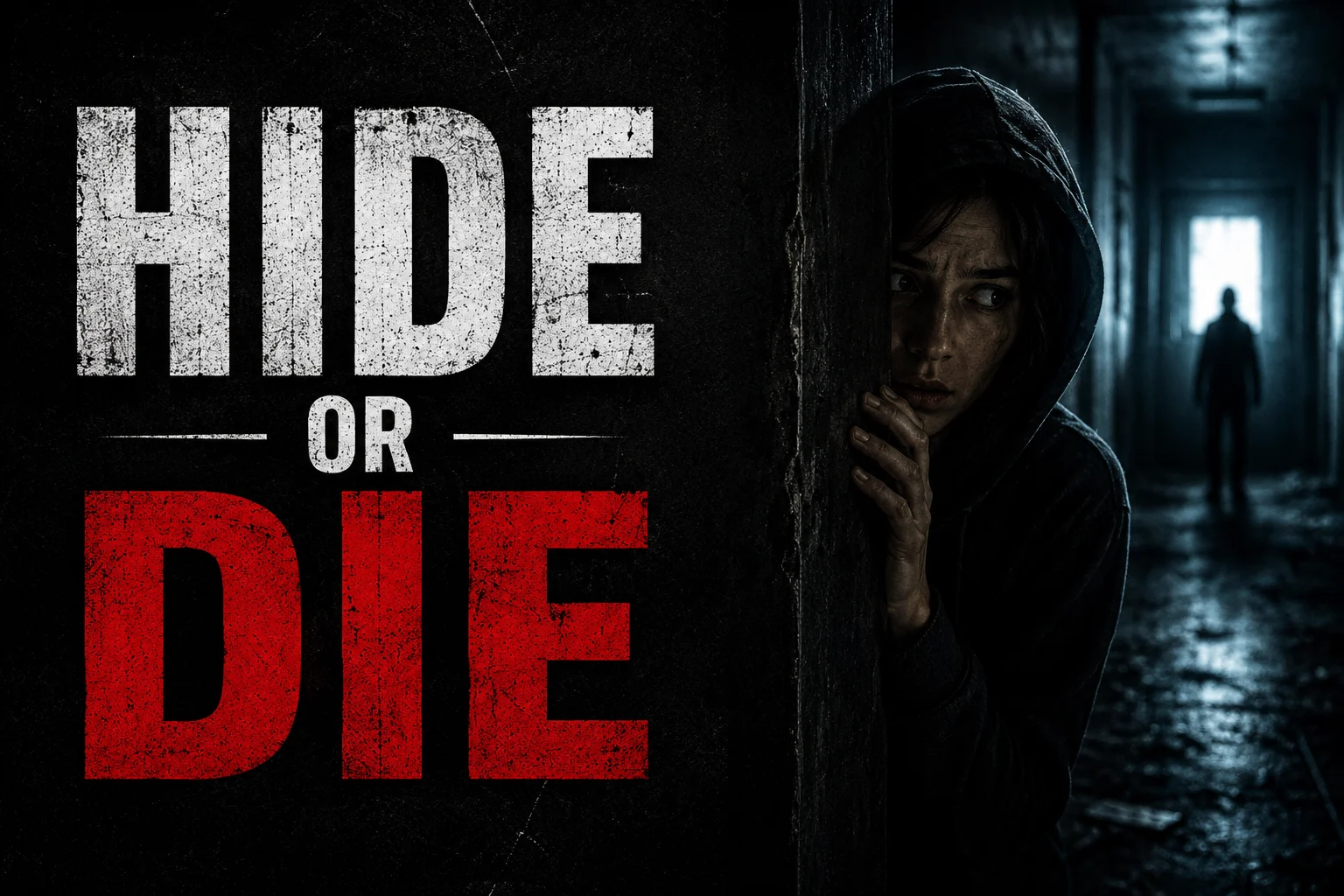
Hide or die means you must hide or stay out of sight to avoid serious danger, harm, or death. It can be literal, but it is also used in games, stories, and dramatic speech.
Have you ever heard someone say, “Hide or die!” and wondered if they were being serious?
The phrase sounds intense. It can make you picture a person running from danger, hiding behind a door, or trying to survive in a scary situation. Yet, hide or die is not always meant literally.
As an English writer and language teacher, I have seen short phrases like this cause confusion because their meaning depends heavily on context. A phrase may sound simple, but the situation around it can change its meaning.
You may see hide or die in a video game, horror story, movie, online post, or casual conversation. In each case, the basic idea stays the same: hiding is presented as the only way to survive or avoid serious harm.
This guide explains what hide or die means, where the phrase comes from, how to use it, and when it may sound too dramatic. You will also see clear examples that make the meaning easy to understand.
Hide or Die – Quick Answer
Hide or die is a dramatic phrase meaning “hide yourself or you may be killed.”
The phrase presents two choices:
- Hide to stay safe.
- Die if you fail to hide.
For example:
“The enemy soldiers are coming. Hide or die!”
Here, the speaker is warning someone about a real or imagined threat.
The phrase can also be used figuratively:
“During the horror game, it was basically hide or die.”
In this example, the speaker is talking about a game rather than a real-life danger.
Simple Meaning
Hide or die = hide to survive.
The phrase often creates a feeling of fear, urgency, danger, or survival.
The Origin / Background of Hide or Die
The exact phrase hide or die does not have one famous inventor or a single known historical origin.
Instead, it follows a very old pattern in English: “do X or suffer a serious result.”
English has many expressions built this way.
Examples include:
- Fight or die.
- Run or die.
- Adapt or die.
- Sink or swim.
- Do it or fail.
These phrases create a strong contrast between two possible outcomes.
The word hide comes from Old English hȳdan, meaning to conceal or keep something out of sight. The word die comes from Old English dēag, connected with the idea of death.
Over time, short survival phrases became common in stories, films, games, and everyday speech.
Hide or die fits this pattern perfectly. It is short, memorable, and dramatic.
Why Does It Sound So Strong?
The strength comes from the word or.
The structure suggests that there are only two choices:
Hide → survive
Do not hide → die
Real life is rarely this simple. That is why people often use the phrase for dramatic effect.
A horror game might use hide or die to make a situation sound frightening. A writer might use it to build suspense. A friend might say it jokingly after watching a scary movie.
Hide or Die Explained — Key Differences and Variations
The meaning of hide or die can change slightly depending on the context.
| Term | Meaning | When to Use | Region/Context |
|---|---|---|---|
| Hide or die | Hide to avoid death or serious danger | Extreme or dramatic situations | General English |
| Hide or be killed | Hide to avoid being killed | Clear literal warning | General English |
| Hide to survive | Hiding is needed for survival | Less dramatic explanation | General English |
| Run or die | Escape or face death | When movement is needed | Informal/dramatic |
| Fight or die | Fight instead of accepting defeat | Conflict or dramatic writing | Informal/dramatic |
| Adapt or die | Change or fail to survive | Business, life, strategy | Figurative |
| Hide and survive | Hide as a survival method | Neutral explanation | General English |
Literal Use
A literal use describes a situation where hiding may actually protect someone.
“The soldiers were searching the village. The villagers had to hide or die.”
This sentence describes a serious situation.
Figurative Use
The phrase can also exaggerate a situation.
“The boss is looking for whoever broke the printer. Hide or die!”
Nobody is actually expected to die. The speaker is being dramatic or humorous.
Entertainment and Gaming
The phrase works especially well in games and horror stories.
“The monster can hear you. Hide or die!”
Here, the phrase creates tension and tells the player what to do.
Which Version or Approach Should You Use?
Your choice depends on what you want to communicate.
For Beginners
Use hide or die when you want to understand or describe a dramatic situation.
It is easy to understand because the structure is simple.
For Formal Writing
Avoid hide or die unless you are discussing a quote, title, story, game, or fictional situation.
Formal writing usually benefits from clearer wording.
Instead of:
“People must hide or die.”
You could write:
“People must seek shelter to avoid the danger.”
That sounds more neutral and professional.
For Stories and Creative Writing
Hide or die can be very effective.
It creates tension quickly.
“The footsteps grew louder. There was nowhere to run. Hide or die.”
The short sentence makes the scene feel urgent.
For Social Media
The phrase can work well in informal posts.
“New horror game tonight. Hide or die!”
It is short, dramatic, and easy to remember.
For Global or Neutral English
If your goal is maximum clarity, use:
“Hide to stay safe.”
It is less dramatic but easier for learners and international readers.
Common Mistakes with Hide or Die
1. Thinking It Always Means Literal Death
Mistake:
“Hide or die” always means someone will literally die.
Correction:
The phrase can be literal or figurative.
It may describe real danger, a fictional story, or a joke.
2. Using It in Serious Professional Writing
Mistake:
“Our company must hide or die from the competition.”
Better:
“Our company must adapt to remain competitive.”
The original sounds dramatic and informal.
3. Confusing “Hide” With “Hidden”
Mistake:
“Hidden or die!”
Correct:
“Hide or die!”
Hide is the verb that gives the command.
Hidden is normally used as a past participle or adjective.
For example:
“She hid behind the wall.”
“She was hidden behind the wall.”
4. Adding Unnecessary Words
Mistake:
“You need to hide yourself or else you will die.”
This is grammatically possible, but it is much longer.
Stronger:
“Hide or die!”
The short form creates urgency.
5. Using It Without Considering Tone
The phrase is powerful.
It can sound threatening if used toward a real person.
For example:
“Hide or die.”
could sound like a genuine threat.
Use it carefully in real-life conversations.
Hide or Die in Real-World Examples
1. Professional Email
A professional email would usually avoid the phrase unless the subject is a game, story, or creative project.
Example:
“The new horror game uses the theme hide or die to create tension.”
Here, the phrase is being discussed rather than used as a real command.
2. News Headline or Article
A dramatic headline might say:
“Hide or Die: Residents Face a Dangerous Night”
This style is designed to create urgency and attract attention.
In a neutral news report, a writer would usually explain the actual danger instead.
3. Social Media Post
“Playing the new horror game tonight. Hide or die!”
This sounds casual and dramatic.
It works well because social media often favors short, emotional phrases.
4. Formal Report
“The evacuation plan advises residents to move indoors and remain out of sight during the attack.”
This is better for a formal report.
The meaning is similar, but the language is precise and professional.
5. Fiction
“The lights went out. Something moved in the hallway. Hide or die.”
This is a strong creative use.
The short phrase adds suspense without needing a long explanation.
Hide or Die — Data, Trends & Usage
The search intent behind hide or die is mainly informational.
People who search for the phrase may want to know:
- What hide or die means
- Whether it is a common expression
- How to use it in a sentence
- Whether it is literal or figurative
- Where they may have heard it
- Whether it relates to a game, movie, or story
The phrase is especially likely to appear in fiction, horror content, survival games, memes, social media, and dramatic storytelling.
Why Does the Phrase Get Attention?
Short phrases often work well online.
Hide or die is only three words. Yet it creates a clear image and a strong emotional reaction.
It also fits the language of survival.
People naturally understand the idea of choosing between action and danger. That makes the phrase easy to remember.
Search Intent
The main search intent is:
Informational → meaning, usage, context, and examples
A smaller group of searches may be connected to a specific game, movie, book, or online trend.
If you found the phrase in a particular piece of media, the surrounding context is important. The creator may be using it as a title, slogan, warning, or fictional rule.
Hide or Die: Comparison Table
| Term/Variant | Meaning | Region/Context | Best Used When |
|---|---|---|---|
| Hide or die | Hide to avoid death | General English | Dramatic or dangerous situations |
| Hide or be killed | Hide to avoid being killed | General English | Literal warnings |
| Hide to survive | Hide as a way to stay alive | General English | Clear, neutral explanations |
| Run or die | Escape to survive | Dramatic contexts | Stories, games, informal speech |
| Fight or die | Fight rather than accept death | Dramatic contexts | Stories and motivational language |
| Adapt or die | Change or become unable to survive | Figurative | Business and life discussions |
| Stay hidden | Remain out of sight | Neutral English | Instructions and formal contexts |
The best choice depends on tone and context.
If you want drama, hide or die is strong.
If you want clarity, hide to survive is better.
If you need formal language, describe the danger directly.
Frequently Asked Questions About Hide or Die
Q: What does hide or die mean?
A: Hide or die means you should hide to avoid serious danger or death. It can be literal, but it can also be used dramatically or humorously.
Q: How do you use hide or die correctly?
A: Use it when hiding is presented as the only way to avoid danger. For example: “The creature is coming. Hide or die!”
Q: Is hide or die a threat?
A: It can sound like a threat if directed at a real person. In games, movies, stories, and jokes, it is often dramatic rather than threatening.
Q: Is hide or die formal English?
A: No. It is mainly informal and dramatic. For formal writing, use clearer language such as “hide to avoid danger” or “seek shelter to stay safe.”
Q: What is the difference between hide or die and hide to survive?
A: Both express a similar idea. Hide or die sounds dramatic and urgent, while hide to survive sounds more neutral and factual.
Q: Where does hide or die come from?
A: There is no single well-known source for the phrase. It follows an old English pattern in which two choices are presented with or, such as fight or die or adapt or die.
Q: Can hide or die be used in a video game?
A: Yes. It works especially well in horror and survival games. It can describe a game mechanic where players must hide from a dangerous enemy.
Conclusion
Hide or die is a short but powerful English phrase. Its basic meaning is simple: hide to avoid serious danger or death.
The phrase can be used literally. It can also be used for humor, fiction, games, movies, and dramatic social media posts. Context tells you how serious the phrase is.
Remember these three points:
- Hide or die is dramatic and informal.
- It can describe real or fictional danger.
- For formal writing, a clearer phrase such as “hide to survive” may be better.
If you are writing a story or discussing a horror game, hide or die can create strong tension with only three words. If you are writing a report or professional message, choose calmer and more precise wording.
Now you know exactly what hide or die means and how to use it. Bookmark this guide so you never second-guess the phrase again.
Meta Description
Hide or die explained with meaning, usage, examples, context, and differences. Learn when this dramatic phrase fits everyday English.
Have you ever heard someone say, “Hide or die!” and wondered if they were being serious?
The phrase sounds intense. It can make you picture a person running from danger, hiding behind a door, or trying to survive in a scary situation. Yet, hide or die is not always meant literally.
As an English writer and language teacher, I have seen short phrases like this cause confusion because their meaning depends heavily on context. A phrase may sound simple, but the situation around it can change its meaning.
You may see hide or die in a video game, horror story, movie, online post, or casual conversation. In each case, the basic idea stays the same: hiding is presented as the only way to survive or avoid serious harm.
This guide explains what hide or die means, where the phrase comes from, how to use it, and when it may sound too dramatic. You will also see clear examples that make the meaning easy to understand.
Hide or Die – Quick Answer
Hide or die is a dramatic phrase meaning “hide yourself or you may be killed.”
The phrase presents two choices:
- Hide to stay safe.
- Die if you fail to hide.
For example:
“The enemy soldiers are coming. Hide or die!”
Here, the speaker is warning someone about a real or imagined threat.
The phrase can also be used figuratively:
“During the horror game, it was basically hide or die.”
In this example, the speaker is talking about a game rather than a real-life danger.
Simple Meaning
Hide or die = hide to survive.
The phrase often creates a feeling of fear, urgency, danger, or survival.
The Origin / Background of Hide or Die
The exact phrase hide or die does not have one famous inventor or a single known historical origin.
Instead, it follows a very old pattern in English: “do X or suffer a serious result.”
English has many expressions built this way.
Examples include:
- Fight or die.
- Run or die.
- Adapt or die.
- Sink or swim.
- Do it or fail.
These phrases create a strong contrast between two possible outcomes.
The word hide comes from Old English hȳdan, meaning to conceal or keep something out of sight. The word die comes from Old English dēag, connected with the idea of death.
Over time, short survival phrases became common in stories, films, games, and everyday speech.
Hide or die fits this pattern perfectly. It is short, memorable, and dramatic.
Why Does It Sound So Strong?
The strength comes from the word or.
The structure suggests that there are only two choices:
Hide → survive
Do not hide → die
Real life is rarely this simple. That is why people often use the phrase for dramatic effect.
A horror game might use hide or die to make a situation sound frightening. A writer might use it to build suspense. A friend might say it jokingly after watching a scary movie.
Hide or Die Explained — Key Differences and Variations
The meaning of hide or die can change slightly depending on the context.
| Term | Meaning | When to Use | Region/Context |
|---|---|---|---|
| Hide or die | Hide to avoid death or serious danger | Extreme or dramatic situations | General English |
| Hide or be killed | Hide to avoid being killed | Clear literal warning | General English |
| Hide to survive | Hiding is needed for survival | Less dramatic explanation | General English |
| Run or die | Escape or face death | When movement is needed | Informal/dramatic |
| Fight or die | Fight instead of accepting defeat | Conflict or dramatic writing | Informal/dramatic |
| Adapt or die | Change or fail to survive | Business, life, strategy | Figurative |
| Hide and survive | Hide as a survival method | Neutral explanation | General English |
Literal Use
A literal use describes a situation where hiding may actually protect someone.
“The soldiers were searching the village. The villagers had to hide or die.”
This sentence describes a serious situation.
Figurative Use
The phrase can also exaggerate a situation.
“The boss is looking for whoever broke the printer. Hide or die!”
Nobody is actually expected to die. The speaker is being dramatic or humorous.
Entertainment and Gaming
The phrase works especially well in games and horror stories.
“The monster can hear you. Hide or die!”
Here, the phrase creates tension and tells the player what to do.
Which Version or Approach Should You Use?
Your choice depends on what you want to communicate.
For Beginners
Use hide or die when you want to understand or describe a dramatic situation.
It is easy to understand because the structure is simple.
For Formal Writing
Avoid hide or die unless you are discussing a quote, title, story, game, or fictional situation.
Formal writing usually benefits from clearer wording.
Instead of:
“People must hide or die.”
You could write:
“People must seek shelter to avoid the danger.”
That sounds more neutral and professional.
For Stories and Creative Writing
Hide or die can be very effective.
It creates tension quickly.
“The footsteps grew louder. There was nowhere to run. Hide or die.”
The short sentence makes the scene feel urgent.
For Social Media
The phrase can work well in informal posts.
“New horror game tonight. Hide or die!”
It is short, dramatic, and easy to remember.
For Global or Neutral English
If your goal is maximum clarity, use:
“Hide to stay safe.”
It is less dramatic but easier for learners and international readers.
Common Mistakes with Hide or Die
1. Thinking It Always Means Literal Death
Mistake:
“Hide or die” always means someone will literally die.
Correction:
The phrase can be literal or figurative.
It may describe real danger, a fictional story, or a joke.
2. Using It in Serious Professional Writing
Mistake:
“Our company must hide or die from the competition.”
Better:
“Our company must adapt to remain competitive.”
The original sounds dramatic and informal.
3. Confusing “Hide” With “Hidden”
Mistake:
“Hidden or die!”
Correct:
“Hide or die!”
Hide is the verb that gives the command.
Hidden is normally used as a past participle or adjective.
For example:
“She hid behind the wall.”
“She was hidden behind the wall.”
4. Adding Unnecessary Words
Mistake:
“You need to hide yourself or else you will die.”
This is grammatically possible, but it is much longer.
Stronger:
“Hide or die!”
The short form creates urgency.
5. Using It Without Considering Tone
The phrase is powerful.
It can sound threatening if used toward a real person.
For example:
“Hide or die.”
could sound like a genuine threat.
Use it carefully in real-life conversations.
Hide or Die in Real-World Examples
1. Professional Email
A professional email would usually avoid the phrase unless the subject is a game, story, or creative project.
Example:
“The new horror game uses the theme hide or die to create tension.”
Here, the phrase is being discussed rather than used as a real command.
2. News Headline or Article
A dramatic headline might say:
“Hide or Die: Residents Face a Dangerous Night”
This style is designed to create urgency and attract attention.
In a neutral news report, a writer would usually explain the actual danger instead.
3. Social Media Post
“Playing the new horror game tonight. Hide or die!”
This sounds casual and dramatic.
It works well because social media often favors short, emotional phrases.
4. Formal Report
“The evacuation plan advises residents to move indoors and remain out of sight during the attack.”
This is better for a formal report.
The meaning is similar, but the language is precise and professional.
5. Fiction
“The lights went out. Something moved in the hallway. Hide or die.”
This is a strong creative use.
The short phrase adds suspense without needing a long explanation.
Hide or Die — Data, Trends & Usage
The search intent behind hide or die is mainly informational.
People who search for the phrase may want to know:
- What hide or die means
- Whether it is a common expression
- How to use it in a sentence
- Whether it is literal or figurative
- Where they may have heard it
- Whether it relates to a game, movie, or story
The phrase is especially likely to appear in fiction, horror content, survival games, memes, social media, and dramatic storytelling.
Why Does the Phrase Get Attention?
Short phrases often work well online.
Hide or die is only three words. Yet it creates a clear image and a strong emotional reaction.
It also fits the language of survival.
People naturally understand the idea of choosing between action and danger. That makes the phrase easy to remember.
Search Intent
The main search intent is:
Informational → meaning, usage, context, and examples
A smaller group of searches may be connected to a specific game, movie, book, or online trend.
If you found the phrase in a particular piece of media, the surrounding context is important. The creator may be using it as a title, slogan, warning, or fictional rule.
Hide or Die: Comparison Table
| Term/Variant | Meaning | Region/Context | Best Used When |
|---|---|---|---|
| Hide or die | Hide to avoid death | General English | Dramatic or dangerous situations |
| Hide or be killed | Hide to avoid being killed | General English | Literal warnings |
| Hide to survive | Hide as a way to stay alive | General English | Clear, neutral explanations |
| Run or die | Escape to survive | Dramatic contexts | Stories, games, informal speech |
| Fight or die | Fight rather than accept death | Dramatic contexts | Stories and motivational language |
| Adapt or die | Change or become unable to survive | Figurative | Business and life discussions |
| Stay hidden | Remain out of sight | Neutral English | Instructions and formal contexts |
The best choice depends on tone and context.
If you want drama, hide or die is strong.
If you want clarity, hide to survive is better.
If you need formal language, describe the danger directly.
Frequently Asked Questions About Hide or Die
Q: What does hide or die mean?
A: Hide or die means you should hide to avoid serious danger or death. It can be literal, but it can also be used dramatically or humorously.
Q: How do you use hide or die correctly?
A: Use it when hiding is presented as the only way to avoid danger. For example: “The creature is coming. Hide or die!”
Q: Is hide or die a threat?
A: It can sound like a threat if directed at a real person. In games, movies, stories, and jokes, it is often dramatic rather than threatening.
Q: Is hide or die formal English?
A: No. It is mainly informal and dramatic. For formal writing, use clearer language such as “hide to avoid danger” or “seek shelter to stay safe.”
Q: What is the difference between hide or die and hide to survive?
A: Both express a similar idea. Hide or die sounds dramatic and urgent, while hide to survive sounds more neutral and factual.
Q: Where does hide or die come from?
A: There is no single well-known source for the phrase. It follows an old English pattern in which two choices are presented with or, such as fight or die or adapt or die.
Q: Can hide or die be used in a video game?
A: Yes. It works especially well in horror and survival games. It can describe a game mechanic where players must hide from a dangerous enemy.
Conclusion
Hide or die is a short but powerful English phrase. Its basic meaning is simple: hide to avoid serious danger or death.
The phrase can be used literally. It can also be used for humor, fiction, games, movies, and dramatic social media posts. Context tells you how serious the phrase is.
Remember these three points:
- Hide or die is dramatic and informal.
- It can describe real or fictional danger.
- For formal writing, a clearer phrase such as “hide to survive” may be better.
If you are writing a story or discussing a horror game, hide or die can create strong tension with only three words. If you are writing a report or professional message, choose calmer and more precise wording.
Now you know exactly what hide or die means and how to use it. Bookmark this guide so you never second-guess the phrase again.
Meta Description
Hide or die explained with meaning, usage, examples, context, and differences. Learn when this dramatic phrase fits everyday English.
Hide or Die: Meaning, Usage, and Examples
Quick Answer: Hide or die means you must hide or stay out of sight to avoid serious danger, harm, or death. It can be literal, but it is also used in games, stories, and dramatic speech.
Hide or Die: Meaning, Usage, and Examples
Have you ever heard someone say, “Hide or die!” and wondered if they were being serious?
The phrase sounds intense. It can make you picture a person running from danger, hiding behind a door, or trying to survive in a scary situation. Yet, hide or die is not always meant literally.
As an English writer and language teacher, I have seen short phrases like this cause confusion because their meaning depends heavily on context. A phrase may sound simple, but the situation around it can change its meaning.
You may see hide or die in a video game, horror story, movie, online post, or casual conversation. In each case, the basic idea stays the same: hiding is presented as the only way to survive or avoid serious harm.
This guide explains what hide or die means, where the phrase comes from, how to use it, and when it may sound too dramatic. You will also see clear examples that make the meaning easy to understand.
Hide or Die – Quick Answer
Hide or die is a dramatic phrase meaning “hide yourself or you may be killed.”
The phrase presents two choices:
- Hide to stay safe.
- Die if you fail to hide.
For example:
“The enemy soldiers are coming. Hide or die!”
Here, the speaker is warning someone about a real or imagined threat.
The phrase can also be used figuratively:
“During the horror game, it was basically hide or die.”
In this example, the speaker is talking about a game rather than a real-life danger.
Simple Meaning
Hide or die = hide to survive.
The phrase often creates a feeling of fear, urgency, danger, or survival.
The Origin / Background of Hide or Die
The exact phrase hide or die does not have one famous inventor or a single known historical origin.
Instead, it follows a very old pattern in English: “do X or suffer a serious result.”
English has many expressions built this way.
Examples include:
- Fight or die.
- Run or die.
- Adapt or die.
- Sink or swim.
- Do it or fail.
These phrases create a strong contrast between two possible outcomes.
The word hide comes from Old English hȳdan, meaning to conceal or keep something out of sight. The word die comes from Old English dēag, connected with the idea of death.
Over time, short survival phrases became common in stories, films, games, and everyday speech.
Hide or die fits this pattern perfectly. It is short, memorable, and dramatic.
Why Does It Sound So Strong?
The strength comes from the word or.
The structure suggests that there are only two choices:
Hide → survive
Do not hide → die
Real life is rarely this simple. That is why people often use the phrase for dramatic effect.
A horror game might use hide or die to make a situation sound frightening. A writer might use it to build suspense. A friend might say it jokingly after watching a scary movie.
Hide or Die Explained — Key Differences and Variations
The meaning of hide or die can change slightly depending on the context.
| Term | Meaning | When to Use | Region/Context |
|---|---|---|---|
| Hide or die | Hide to avoid death or serious danger | Extreme or dramatic situations | General English |
| Hide or be killed | Hide to avoid being killed | Clear literal warning | General English |
| Hide to survive | Hiding is needed for survival | Less dramatic explanation | General English |
| Run or die | Escape or face death | When movement is needed | Informal/dramatic |
| Fight or die | Fight instead of accepting defeat | Conflict or dramatic writing | Informal/dramatic |
| Adapt or die | Change or fail to survive | Business, life, strategy | Figurative |
| Hide and survive | Hide as a survival method | Neutral explanation | General English |
Literal Use
A literal use describes a situation where hiding may actually protect someone.
“The soldiers were searching the village. The villagers had to hide or die.”
This sentence describes a serious situation.
Figurative Use
The phrase can also exaggerate a situation.
“The boss is looking for whoever broke the printer. Hide or die!”
Nobody is actually expected to die. The speaker is being dramatic or humorous.
Entertainment and Gaming
The phrase works especially well in games and horror stories.
“The monster can hear you. Hide or die!”
Here, the phrase creates tension and tells the player what to do.
Which Version or Approach Should You Use?
Your choice depends on what you want to communicate.
For Beginners
Use hide or die when you want to understand or describe a dramatic situation.
It is easy to understand because the structure is simple.
For Formal Writing
Avoid hide or die unless you are discussing a quote, title, story, game, or fictional situation.
Formal writing usually benefits from clearer wording.
Instead of:
“People must hide or die.”
You could write:
“People must seek shelter to avoid the danger.”
That sounds more neutral and professional.
For Stories and Creative Writing
Hide or die can be very effective.
It creates tension quickly.
“The footsteps grew louder. There was nowhere to run. Hide or die.”
The short sentence makes the scene feel urgent.
For Social Media
The phrase can work well in informal posts.
“New horror game tonight. Hide or die!”
It is short, dramatic, and easy to remember.
For Global or Neutral English
If your goal is maximum clarity, use:
“Hide to stay safe.”
It is less dramatic but easier for learners and international readers.
Common Mistakes with Hide or Die
1. Thinking It Always Means Literal Death
Mistake:
“Hide or die” always means someone will literally die.
Correction:
The phrase can be literal or figurative.
It may describe real danger, a fictional story, or a joke.
2. Using It in Serious Professional Writing
Mistake:
“Our company must hide or die from the competition.”
Better:
“Our company must adapt to remain competitive.”
The original sounds dramatic and informal.
3. Confusing “Hide” With “Hidden”
Mistake:
“Hidden or die!”
Correct:
“Hide or die!”
Hide is the verb that gives the command.
Hidden is normally used as a past participle or adjective.
For example:
“She hid behind the wall.”
“She was hidden behind the wall.”
4. Adding Unnecessary Words
Mistake:
“You need to hide yourself or else you will die.”
This is grammatically possible, but it is much longer.
Stronger:
“Hide or die!”
The short form creates urgency.
5. Using It Without Considering Tone
The phrase is powerful.
It can sound threatening if used toward a real person.
For example:
“Hide or die.”
could sound like a genuine threat.
Use it carefully in real-life conversations.
Hide or Die in Real-World Examples
1. Professional Email
A professional email would usually avoid the phrase unless the subject is a game, story, or creative project.
Example:
“The new horror game uses the theme hide or die to create tension.”
Here, the phrase is being discussed rather than used as a real command.
2. News Headline or Article
A dramatic headline might say:
“Hide or Die: Residents Face a Dangerous Night”
This style is designed to create urgency and attract attention.
In a neutral news report, a writer would usually explain the actual danger instead.
3. Social Media Post
“Playing the new horror game tonight. Hide or die!”
This sounds casual and dramatic.
It works well because social media often favors short, emotional phrases.
4. Formal Report
“The evacuation plan advises residents to move indoors and remain out of sight during the attack.”
This is better for a formal report.
The meaning is similar, but the language is precise and professional.
5. Fiction
“The lights went out. Something moved in the hallway. Hide or die.”
This is a strong creative use.
The short phrase adds suspense without needing a long explanation.
Hide or Die — Data, Trends & Usage
The search intent behind hide or die is mainly informational.
People who search for the phrase may want to know:
- What hide or die means
- Whether it is a common expression
- How to use it in a sentence
- Whether it is literal or figurative
- Where they may have heard it
- Whether it relates to a game, movie, or story
The phrase is especially likely to appear in fiction, horror content, survival games, memes, social media, and dramatic storytelling.
Why Does the Phrase Get Attention?
Short phrases often work well online.
Hide or die is only three words. Yet it creates a clear image and a strong emotional reaction.
It also fits the language of survival.
People naturally understand the idea of choosing between action and danger. That makes the phrase easy to remember.
Search Intent
The main search intent is:
Informational → meaning, usage, context, and examples
A smaller group of searches may be connected to a specific game, movie, book, or online trend.
If you found the phrase in a particular piece of media, the surrounding context is important. The creator may be using it as a title, slogan, warning, or fictional rule.
Hide or Die: Comparison Table
| Term/Variant | Meaning | Region/Context | Best Used When |
|---|---|---|---|
| Hide or die | Hide to avoid death | General English | Dramatic or dangerous situations |
| Hide or be killed | Hide to avoid being killed | General English | Literal warnings |
| Hide to survive | Hide as a way to stay alive | General English | Clear, neutral explanations |
| Run or die | Escape to survive | Dramatic contexts | Stories, games, informal speech |
| Fight or die | Fight rather than accept death | Dramatic contexts | Stories and motivational language |
| Adapt or die | Change or become unable to survive | Figurative | Business and life discussions |
| Stay hidden | Remain out of sight | Neutral English | Instructions and formal contexts |
The best choice depends on tone and context.
If you want drama, hide or die is strong.
If you want clarity, hide to survive is better.
If you need formal language, describe the danger directly.
Frequently Asked Questions About Hide or Die
Q: What does hide or die mean?
A: Hide or die means you should hide to avoid serious danger or death. It can be literal, but it can also be used dramatically or humorously.
Q: How do you use hide or die correctly?
A: Use it when hiding is presented as the only way to avoid danger. For example: “The creature is coming. Hide or die!”
Q: Is hide or die a threat?
A: It can sound like a threat if directed at a real person. In games, movies, stories, and jokes, it is often dramatic rather than threatening.
Q: Is hide or die formal English?
A: No. It is mainly informal and dramatic. For formal writing, use clearer language such as “hide to avoid danger” or “seek shelter to stay safe.”
Q: What is the difference between hide or die and hide to survive?
A: Both express a similar idea. Hide or die sounds dramatic and urgent, while hide to survive sounds more neutral and factual.
Q: Where does hide or die come from?
A: There is no single well-known source for the phrase. It follows an old English pattern in which two choices are presented with or, such as fight or die or adapt or die.
Q: Can hide or die be used in a video game?
A: Yes. It works especially well in horror and survival games. It can describe a game mechanic where players must hide from a dangerous enemy.
Conclusion
Hide or die is a short but powerful English phrase. Its basic meaning is simple: hide to avoid serious danger or death.
The phrase can be used literally. It can also be used for humor, fiction, games, movies, and dramatic social media posts. Context tells you how serious the phrase is.
Remember these three points:
- Hide or die is dramatic and informal.
- It can describe real or fictional danger.
- For formal writing, a clearer phrase such as “hide to survive” may be better.
If you are writing a story or discussing a horror game, hide or die can create strong tension with only three words. If you are writing a report or professional message, choose calmer and more precise wording.
Now you know exactly what hide or die means and how to use it. Bookmark this guide so you never second-guess the phrase again.
Meta Description
Hide or die explained with meaning, usage, examples, context, and differences. Learn when this dramatic phrase fits everyday English.
Have you ever heard someone say, “Hide or die!” and wondered if they were being serious?
The phrase sounds intense. It can make you picture a person running from danger, hiding behind a door, or trying to survive in a scary situation. Yet, hide or die is not always meant literally.
As an English writer and language teacher, I have seen short phrases like this cause confusion because their meaning depends heavily on context. A phrase may sound simple, but the situation around it can change its meaning.
You may see hide or die in a video game, horror story, movie, online post, or casual conversation. In each case, the basic idea stays the same: hiding is presented as the only way to survive or avoid serious harm.
This guide explains what hide or die means, where the phrase comes from, how to use it, and when it may sound too dramatic. You will also see clear examples that make the meaning easy to understand.
Hide or Die – Quick Answer
Hide or die is a dramatic phrase meaning “hide yourself or you may be killed.”
The phrase presents two choices:
- Hide to stay safe.
- Die if you fail to hide.
For example:
“The enemy soldiers are coming. Hide or die!”
Here, the speaker is warning someone about a real or imagined threat.
The phrase can also be used figuratively:
“During the horror game, it was basically hide or die.”
In this example, the speaker is talking about a game rather than a real-life danger.
Simple Meaning
Hide or die = hide to survive.
The phrase often creates a feeling of fear, urgency, danger, or survival.
The Origin / Background of Hide or Die
The exact phrase hide or die does not have one famous inventor or a single known historical origin.
Instead, it follows a very old pattern in English: “do X or suffer a serious result.”
English has many expressions built this way.
Examples include:
- Fight or die.
- Run or die.
- Adapt or die.
- Sink or swim.
- Do it or fail.
These phrases create a strong contrast between two possible outcomes.
The word hide comes from Old English hȳdan, meaning to conceal or keep something out of sight. The word die comes from Old English dēag, connected with the idea of death.
Over time, short survival phrases became common in stories, films, games, and everyday speech.
Hide or die fits this pattern perfectly. It is short, memorable, and dramatic.
Why Does It Sound So Strong?
The strength comes from the word or.
The structure suggests that there are only two choices:
Hide → survive
Do not hide → die
Real life is rarely this simple. That is why people often use the phrase for dramatic effect.
A horror game might use hide or die to make a situation sound frightening. A writer might use it to build suspense. A friend might say it jokingly after watching a scary movie.
Hide or Die Explained — Key Differences and Variations
The meaning of hide or die can change slightly depending on the context.
| Term | Meaning | When to Use | Region/Context |
|---|---|---|---|
| Hide or die | Hide to avoid death or serious danger | Extreme or dramatic situations | General English |
| Hide or be killed | Hide to avoid being killed | Clear literal warning | General English |
| Hide to survive | Hiding is needed for survival | Less dramatic explanation | General English |
| Run or die | Escape or face death | When movement is needed | Informal/dramatic |
| Fight or die | Fight instead of accepting defeat | Conflict or dramatic writing | Informal/dramatic |
| Adapt or die | Change or fail to survive | Business, life, strategy | Figurative |
| Hide and survive | Hide as a survival method | Neutral explanation | General English |
Literal Use
A literal use describes a situation where hiding may actually protect someone.
“The soldiers were searching the village. The villagers had to hide or die.”
This sentence describes a serious situation.
Figurative Use
The phrase can also exaggerate a situation.
“The boss is looking for whoever broke the printer. Hide or die!”
Nobody is actually expected to die. The speaker is being dramatic or humorous.
Entertainment and Gaming
The phrase works especially well in games and horror stories.
“The monster can hear you. Hide or die!”
Here, the phrase creates tension and tells the player what to do.
Which Version or Approach Should You Use?
Your choice depends on what you want to communicate.
For Beginners
Use hide or die when you want to understand or describe a dramatic situation.
It is easy to understand because the structure is simple.
For Formal Writing
Avoid hide or die unless you are discussing a quote, title, story, game, or fictional situation.
Formal writing usually benefits from clearer wording.
Instead of:
“People must hide or die.”
You could write:
“People must seek shelter to avoid the danger.”
That sounds more neutral and professional.
For Stories and Creative Writing
Hide or die can be very effective.
It creates tension quickly.
“The footsteps grew louder. There was nowhere to run. Hide or die.”
The short sentence makes the scene feel urgent.
For Social Media
The phrase can work well in informal posts.
“New horror game tonight. Hide or die!”
It is short, dramatic, and easy to remember.
For Global or Neutral English
If your goal is maximum clarity, use:
“Hide to stay safe.”
It is less dramatic but easier for learners and international readers.
Common Mistakes with Hide or Die
1. Thinking It Always Means Literal Death
Mistake:
“Hide or die” always means someone will literally die.
Correction:
The phrase can be literal or figurative.
It may describe real danger, a fictional story, or a joke.
2. Using It in Serious Professional Writing
Mistake:
“Our company must hide or die from the competition.”
Better:
“Our company must adapt to remain competitive.”
The original sounds dramatic and informal.
3. Confusing “Hide” With “Hidden”
Mistake:
“Hidden or die!”
Correct:
“Hide or die!”
Hide is the verb that gives the command.
Hidden is normally used as a past participle or adjective.
For example:
“She hid behind the wall.”
“She was hidden behind the wall.”
4. Adding Unnecessary Words
Mistake:
“You need to hide yourself or else you will die.”
This is grammatically possible, but it is much longer.
Stronger:
“Hide or die!”
The short form creates urgency.
5. Using It Without Considering Tone
The phrase is powerful.
It can sound threatening if used toward a real person.
For example:
“Hide or die.”
could sound like a genuine threat.
Use it carefully in real-life conversations.
Hide or Die in Real-World Examples
1. Professional Email
A professional email would usually avoid the phrase unless the subject is a game, story, or creative project.
Example:
“The new horror game uses the theme hide or die to create tension.”
Here, the phrase is being discussed rather than used as a real command.
2. News Headline or Article
A dramatic headline might say:
“Hide or Die: Residents Face a Dangerous Night”
This style is designed to create urgency and attract attention.
In a neutral news report, a writer would usually explain the actual danger instead.
3. Social Media Post
“Playing the new horror game tonight. Hide or die!”
This sounds casual and dramatic.
It works well because social media often favors short, emotional phrases.
4. Formal Report
“The evacuation plan advises residents to move indoors and remain out of sight during the attack.”
This is better for a formal report.
The meaning is similar, but the language is precise and professional.
5. Fiction
“The lights went out. Something moved in the hallway. Hide or die.”
This is a strong creative use.
The short phrase adds suspense without needing a long explanation.
Hide or Die — Data, Trends & Usage
The search intent behind hide or die is mainly informational.
People who search for the phrase may want to know:
- What hide or die means
- Whether it is a common expression
- How to use it in a sentence
- Whether it is literal or figurative
- Where they may have heard it
- Whether it relates to a game, movie, or story
The phrase is especially likely to appear in fiction, horror content, survival games, memes, social media, and dramatic storytelling.
Why Does the Phrase Get Attention?
Short phrases often work well online.
Hide or die is only three words. Yet it creates a clear image and a strong emotional reaction.
It also fits the language of survival.
People naturally understand the idea of choosing between action and danger. That makes the phrase easy to remember.
Search Intent
The main search intent is:
Informational → meaning, usage, context, and examples
A smaller group of searches may be connected to a specific game, movie, book, or online trend.
If you found the phrase in a particular piece of media, the surrounding context is important. The creator may be using it as a title, slogan, warning, or fictional rule.
Hide or Die: Comparison Table
| Term/Variant | Meaning | Region/Context | Best Used When |
|---|---|---|---|
| Hide or die | Hide to avoid death | General English | Dramatic or dangerous situations |
| Hide or be killed | Hide to avoid being killed | General English | Literal warnings |
| Hide to survive | Hide as a way to stay alive | General English | Clear, neutral explanations |
| Run or die | Escape to survive | Dramatic contexts | Stories, games, informal speech |
| Fight or die | Fight rather than accept death | Dramatic contexts | Stories and motivational language |
| Adapt or die | Change or become unable to survive | Figurative | Business and life discussions |
| Stay hidden | Remain out of sight | Neutral English | Instructions and formal contexts |
The best choice depends on tone and context.
If you want drama, hide or die is strong.
If you want clarity, hide to survive is better.
If you need formal language, describe the danger directly.
Frequently Asked Questions About Hide or Die
Q: What does hide or die mean?
A: Hide or die means you should hide to avoid serious danger or death. It can be literal, but it can also be used dramatically or humorously.
Q: How do you use hide or die correctly?
A: Use it when hiding is presented as the only way to avoid danger. For example: “The creature is coming. Hide or die!”
Q: Is hide or die a threat?
A: It can sound like a threat if directed at a real person. In games, movies, stories, and jokes, it is often dramatic rather than threatening.
Q: Is hide or die formal English?
A: No. It is mainly informal and dramatic. For formal writing, use clearer language such as “hide to avoid danger” or “seek shelter to stay safe.”
Q: What is the difference between hide or die and hide to survive?
A: Both express a similar idea. Hide or die sounds dramatic and urgent, while hide to survive sounds more neutral and factual.
Q: Where does hide or die come from?
A: There is no single well-known source for the phrase. It follows an old English pattern in which two choices are presented with or, such as fight or die or adapt or die.
Q: Can hide or die be used in a video game?
A: Yes. It works especially well in horror and survival games. It can describe a game mechanic where players must hide from a dangerous enemy.
Conclusion
Hide or die is a short but powerful English phrase. Its basic meaning is simple: hide to avoid serious danger or death.
The phrase can be used literally. It can also be used for humor, fiction, games, movies, and dramatic social media posts. Context tells you how serious the phrase is.
Remember these three points:
- Hide or die is dramatic and informal.
- It can describe real or fictional danger.
- For formal writing, a clearer phrase such as “hide to survive” may be better.
If you are writing a story or discussing a horror game, hide or die can create strong tension with only three words. If you are writing a report or professional message, choose calmer and more precise wording.
Now you know exactly what hide or die means and how to use it. Bookmark this guide so you never second-guess the phrase again.