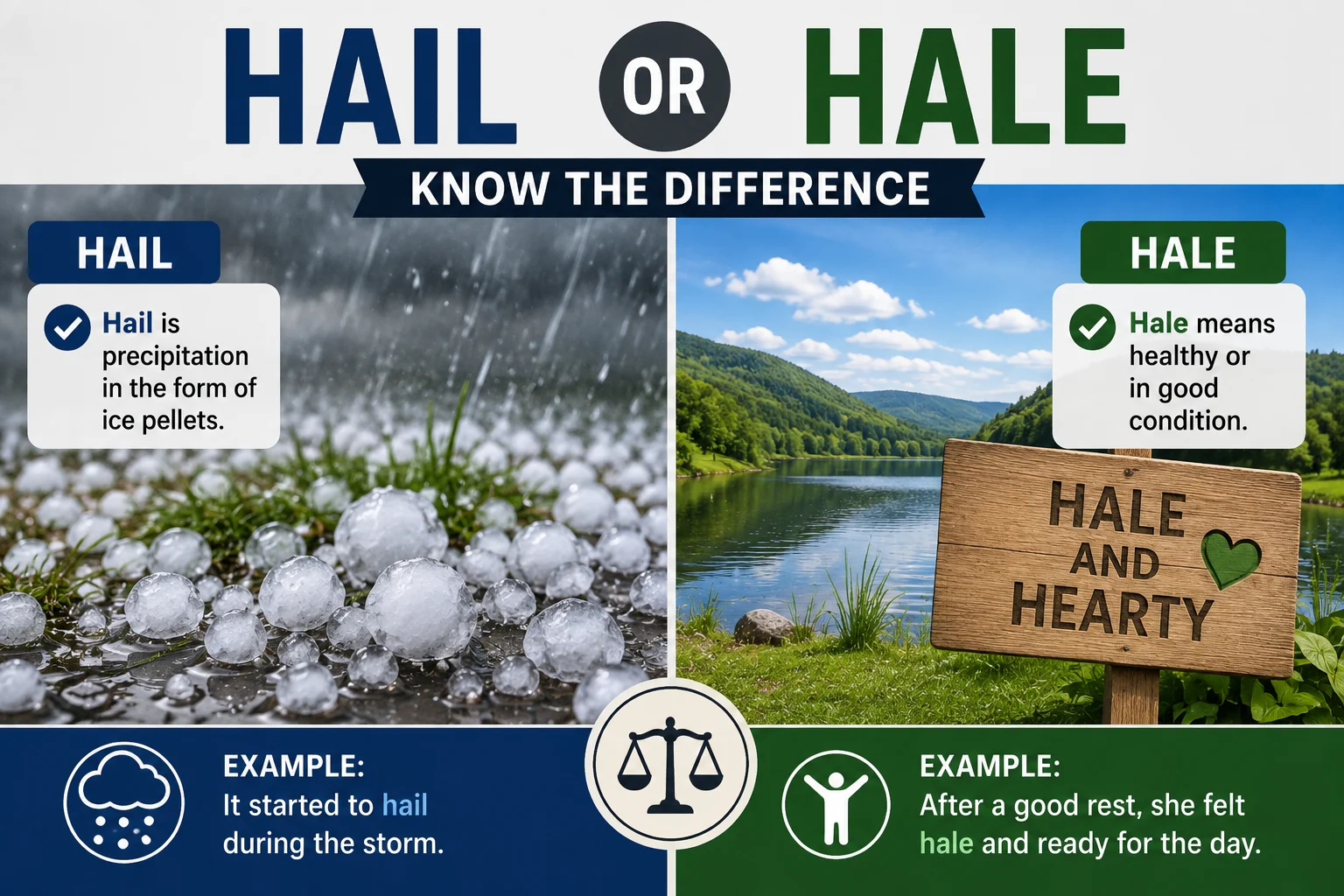
Hail means frozen rain, while hale means healthy, strong, and in good condition.
Have you ever wondered whether you should write hail or hale? These two words sound the same, but they have different meanings and uses. This makes them easy to confuse, especially when writing quickly or learning English. A single letter can change the meaning of your sentence, so knowing the difference is important.
The good news is that hail and hale are both correct words. However, they are not interchangeable. Hail can refer to small balls of ice that fall from the sky. It can also mean to greet someone, call out to someone, or praise someone. Hale usually means healthy and strong, especially when describing a person.
This guide explains hail or hale in simple English. You will learn what each word means, where the words came from, how British and American English use them, common mistakes, and practical examples. By the end, you will know which word to use and avoid this common homophone mistake.
Hail or Hale – Quick Answer
Both hail and hale are correct, but they have different meanings.
- Hail can mean frozen balls of ice that fall during a storm.
- Hail can also mean to greet, call, or praise someone.
- Hale means healthy, strong, and in good condition.
Examples
- The storm brought heavy hail.
- We hailed a taxi outside the hotel.
- His grandfather is still hale and active at 90.
Easy Tip:
Hail = storm, greeting, or praise
Hale = healthy
The Origin of Hail or Hale
The words hail and hale have different histories, even though they sound alike.
Hail, meaning frozen precipitation, comes from an Old English word related to forms found in other Germanic languages. The verb hail, meaning to greet or call out, has a related history connected with expressions of greeting and health.
Hale comes from an Old English word meaning healthy, sound, or whole. It is related to the word whole, which helps explain its connection with physical health and completeness.
Over time, the words developed different spellings and meanings while keeping similar pronunciation.
British English vs American English Spelling
There is no major British-American spelling difference for these words. Both varieties use hail and hale in the same ways.
| Version | Spelling | Region | Example Sentence |
|---|---|---|---|
| Weather | Hail | US & UK | Hail damaged several cars. |
| Greeting/Calling | Hail | US & UK | She hailed a taxi. |
| Healthy/Strong | Hale | US & UK | He remains hale and healthy. |
The difference is based on meaning, not region.
Which Spelling Should You Use?
US Audience
Use hail for ice from a storm, calling or greeting someone, or praising someone. Use hale when describing someone as healthy and strong.
UK/Commonwealth Audience
Follow the same rule. British English uses both words with the same meanings.
Global/SEO Audience
Choose the word based on context:
- Hail = ice, greeting, calling, or praising.
- Hale = healthy and strong.
Common Mistakes with Hail or Hale
Here are common mistakes people make.
❌ The man was hail and healthy.
✅ The man was hale and healthy.
❌ Heavy hale fell during the storm.
✅ Heavy hail fell during the storm.
❌ She haled a taxi.
✅ She hailed a taxi.
❌ He is hail and hearty.
✅ He is hale and hearty.
Hail or Hale in Everyday Examples
Emails
- The storm caused hail damage to the roof.
- Our elderly neighbor is still hale and healthy.
News Headlines
- Severe hail damages homes and vehicles.
- Hale and healthy veteran celebrates another birthday.
Social Media
- We just had a huge hail storm!
- My grandfather is still hale and hearty!
Formal Writing
- The region experienced severe hail during the afternoon storm.
- Despite his age, the athlete remains hale and vigorous.
Hail or Hale – Google Trends & Usage
Searches for hail are generally more common because the word has several meanings. People search for it when reading about storms, weather warnings, transportation, greetings, or expressions such as “hail to.”
Hale is searched less often and is usually connected with phrases such as hale and hearty, descriptions of older people, or questions about health-related vocabulary.
Interest in hail can also increase during periods of severe weather. Meanwhile, hale tends to appear more often in language and vocabulary searches.
Comparison Table
| Feature | Hail | Hale |
|---|---|---|
| Frozen precipitation | ✅ Yes | ❌ No |
| Greet or call | ✅ Yes | ❌ No |
| Praise | ✅ Yes | ❌ No |
| Healthy and strong | ❌ No | ✅ Yes |
| Common phrase | Hailstorm | Hale and hearty |
| Pronunciation | Same | Same |
| British English | ✅ | ✅ |
| American English | ✅ | ✅ |
FAQs
Is it hail or hale?
Both are correct words, but they have different meanings.
What does hail mean?
Hail can mean frozen precipitation, or it can mean to greet, call, or praise someone.
What does hale mean?
Hale means healthy, strong, and in good physical condition.
Is hale and hearty correct?
Yes. Hale and hearty is a common expression meaning healthy and strong.
Is hail the same as rain?
No. Hail consists of balls or pieces of ice that fall from storm clouds, while rain is liquid water.
Do British and American English use hail and hale differently?
No. Both varieties generally use the words in the same way.
How can I remember hail or hale?
Think hail = weather or calling, while hale = healthy.
Conclusion
The difference between hail or hale is easy to understand when you focus on meaning. Both words are correct, but they cannot be used in the same situations. Hail can refer to frozen balls of ice that fall during a storm. It can also mean to greet, call out to someone, or praise someone. Hale, however, means healthy, strong, and in good condition.
There is no important difference between British and American English for these words. Both varieties use hail and hale with the same meanings. The key is to choose the word that matches your sentence.
If you are talking about a storm, use hail. If you are calling a taxi or greeting someone, use hail as well. If you are describing someone as healthy and strong, use hale. Remember the simple tip: hail is for storms and calling; hale is for health. This will help you avoid this common homophone mistake and write with confidence.