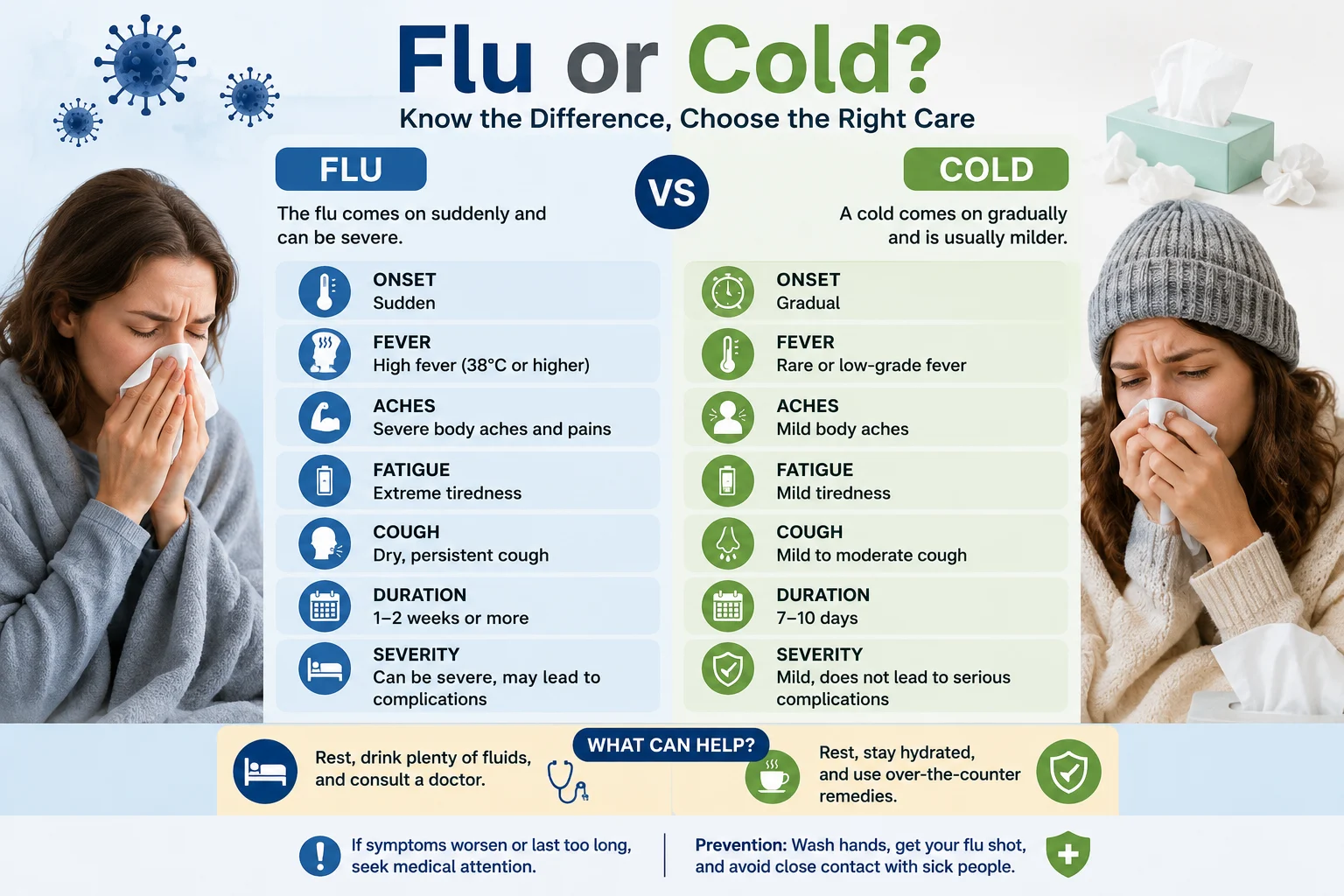
Have you ever searched for “flu or cold” and wondered if these words mean the same thing? Many people confuse them because both illnesses can cause similar symptoms, such as coughing, sneezing, and feeling tired. The phrase flu or cold helps people understand the difference between two common health problems and choose the right word when writing or speaking.
This guide explains what “flu” and “cold” mean, where the words come from, and how people use them in different regions. It also clears up spelling questions because many readers are unsure if British English and American English use different forms. While the illnesses are different, the words are simple once you know the basics. Whether you are writing an email, reading the news, or searching online, this guide will help you use the correct terms with confidence.
flu or cold – Quick Answer
Flu or cold refers to two different common illnesses that affect the body, especially the nose, throat, and breathing system.
- Flu is short for influenza. It is usually stronger and can cause fever, body pain, and extreme tiredness.
- Cold is a milder illness that often causes a runny nose, sneezing, and a sore throat.
Real-life examples:
- “I have a cold, so I need to rest today.”
- “She stayed home because the flu made her feel very weak.”
- “The doctor explained the difference between flu or cold symptoms.”
The Origin of flu or cold
The word flu comes from the Italian word influenza, meaning “influence.” In the past, people believed illnesses were influenced by stars or the environment. Over time, the word became shorter in English and changed into “flu.”
The word cold has been used in English for hundreds of years. It comes from the belief that exposure to cold weather could cause the illness, although viruses are the real cause.
There are no major spelling differences between countries for these words. Confusion usually happens because people compare meanings, not spellings.
British English vs American English Spelling
British English and American English use the same spelling for both words: flu and cold. The difference is mainly in pronunciation, style, and surrounding vocabulary.
| Version | Spelling | Region | Example Sentence |
|---|---|---|---|
| American English | flu | United States | “I caught the flu during winter.” |
| British English | flu | United Kingdom | “I have had the flu for three days.” |
| American English | cold | United States | “My cold is getting better.” |
| British English | cold | United Kingdom | “My cold should improve soon.” |
Which Spelling Should You Use?
The correct spelling depends on your audience, not the country where the illness occurs.
- US audience: Use “flu” and “cold” because these are the standard American spellings.
- UK/Commonwealth audience: Use “flu” and “cold” because these spellings are also standard in British English.
- Global/SEO audience: Use both terms naturally when explaining the topic. Many people search using “flu or cold,” so clear explanations help readers worldwide.
There is no need to change the spelling. Focus on using the right meaning and context.
Common Mistakes with flu or cold
Common mistakes include confusing the illnesses or using the words incorrectly.
Incorrect: “I have a flu.”
Correct: “I have the flu.”
Incorrect: “The cold virus is always caused by cold weather.”
Correct: “A cold is caused by viruses, not simply by cold weather.”
Incorrect: “Flu and cold are exactly the same.”
Correct: “Flu and cold can have similar symptoms but are different illnesses.”
Incorrect: “I caught cold yesterday.”
Correct: “I caught a cold yesterday.”
flu or cold in Everyday Examples
Emails
- “I am staying home today because I have the flu.”
- “I will complete the report after my cold improves.”
News Headlines
- “Experts explain how to tell the flu from a common cold.”
- “Cold and flu cases increase during winter months.”
Social Media
- “Feeling tired after a bad cold. Time to rest.”
- “The flu kept me in bed for several days.”
Formal Writing
- “This report explains the differences between influenza and the common cold.”
- “Seasonal flu prevention remains an important public health topic.”
flu or cold – Google Trends & Usage
Search interest for flu or cold changes depending on seasons, weather, and health concerns. People often search these terms more during colder months when respiratory illnesses are common.
In countries with colder winters, searches may increase when many people experience coughs and fever. In warmer regions, people may search the terms during local illness seasons or when news reports discuss outbreaks.
The phrase is also popular because people often want a quick answer about symptoms, spelling, and the difference between illnesses. For websites and online content, using clear language around both terms helps reach readers from different countries.
flu or cold Comparison Table
| Feature | Flu | Cold |
|---|---|---|
| Full Name | Influenza | Common cold |
| Severity | Usually stronger | Usually milder |
| Common Symptoms | Fever, body aches, tiredness | Sneezing, runny nose, sore throat |
| Cause | Influenza viruses | Many different viruses |
| Recovery Time | Often longer | Often shorter |
| Common Search Reason | Understanding serious symptoms | Understanding mild symptoms |
FAQs
Is “flu or cold” the correct phrase to use?
Yes. “Flu or cold” is a common phrase people use when comparing the two illnesses.
Is flu the same as a cold?
No. Flu and cold are different illnesses, although some symptoms can look similar.
Do British and American people spell flu differently?
No. Both British English and American English use the spelling “flu.”
Should I write “a flu” or “the flu”?
The common expression is “the flu.” For example: “I have the flu.”
Why do people search for flu or cold?
People search this phrase to understand symptoms, differences, and correct word usage.
Is a cold caused by cold weather?
No. A cold is caused by viruses. Cold weather may affect when people get sick, but it does not create the virus.
Which word should I use in SEO content?
Use “flu or cold” naturally when discussing both illnesses. Add related terms where helpful without repeating the phrase too often.
Conclusion
Understanding flu or cold is simple once you know that these are two different illnesses. The flu usually causes stronger symptoms, while a cold is often milder and more common. Although people often compare these words, the spelling does not change between British English and American English.
When writing for a US audience, UK readers, or a global audience, you can confidently use the same spellings: “flu” and “cold.” The most important point is choosing the correct meaning and using the words naturally.
If you are writing online content, emails, or everyday messages, the phrase flu or cold is useful because it matches how many people search for information. Clear explanations, correct grammar, and simple wording make it easier for everyone to understand the difference and communicate effectively.