Do or Due: Easy Guide to the Difference
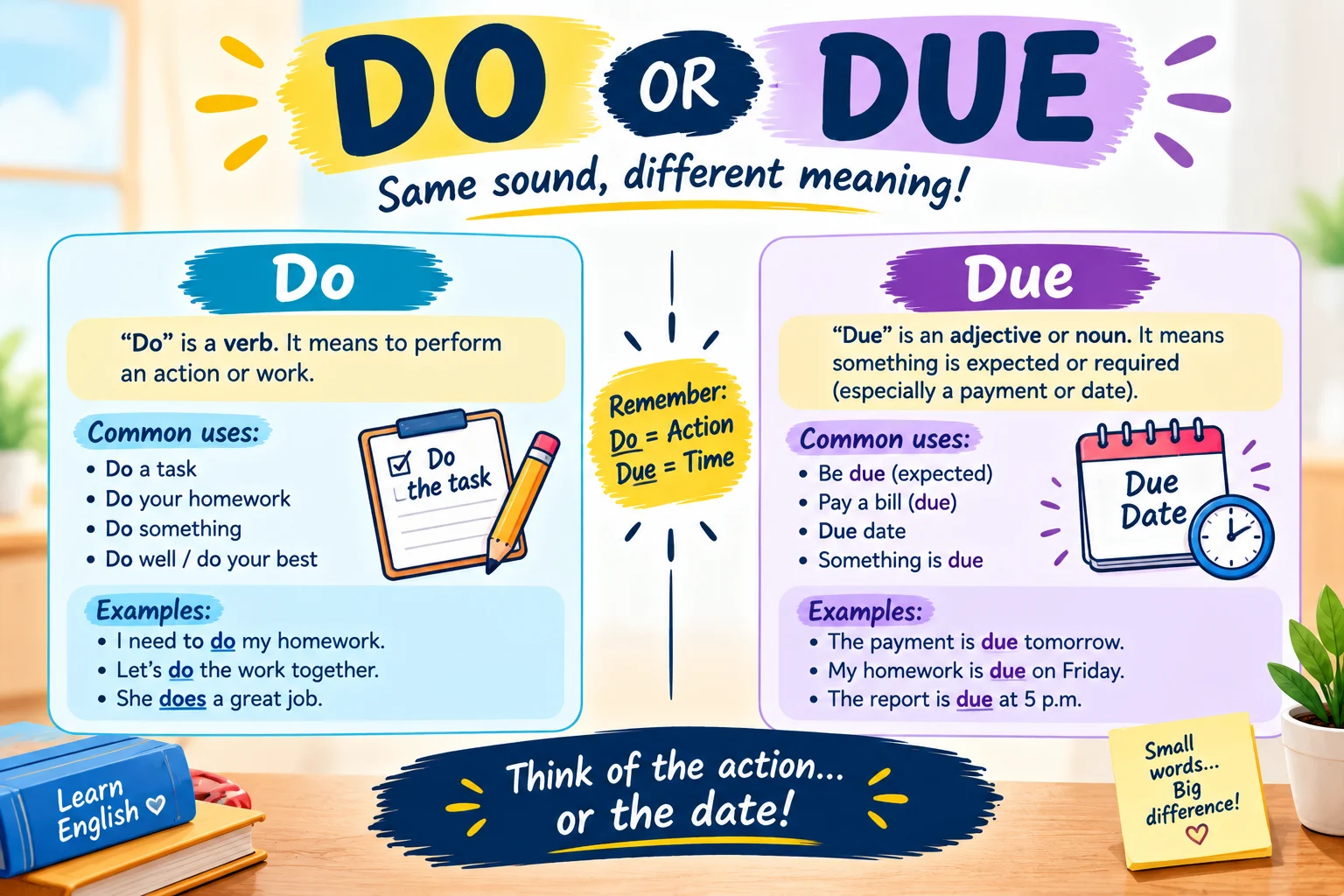
Do is a verb meaning to perform or complete an action. Due usually means expected, owed, or scheduled for a ...
Read more
Unhuman or Inhuman: The Easy Difference Guide
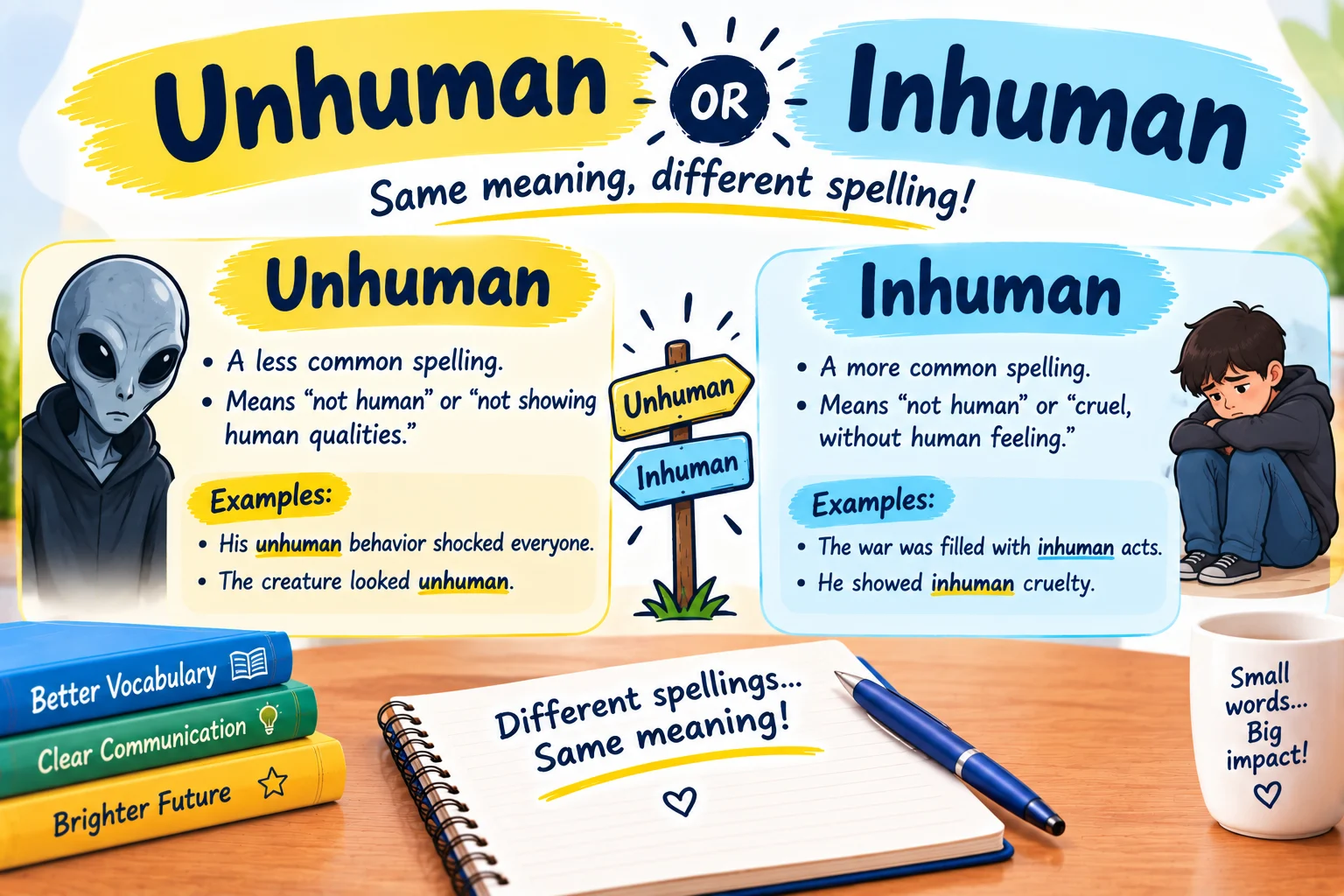
Inhuman is the usual word when you mean cruel, heartless, or lacking human kindness. Unhuman is much less common and ...
Read more
Sundays or Sunday’s: The Easy Grammar Guide
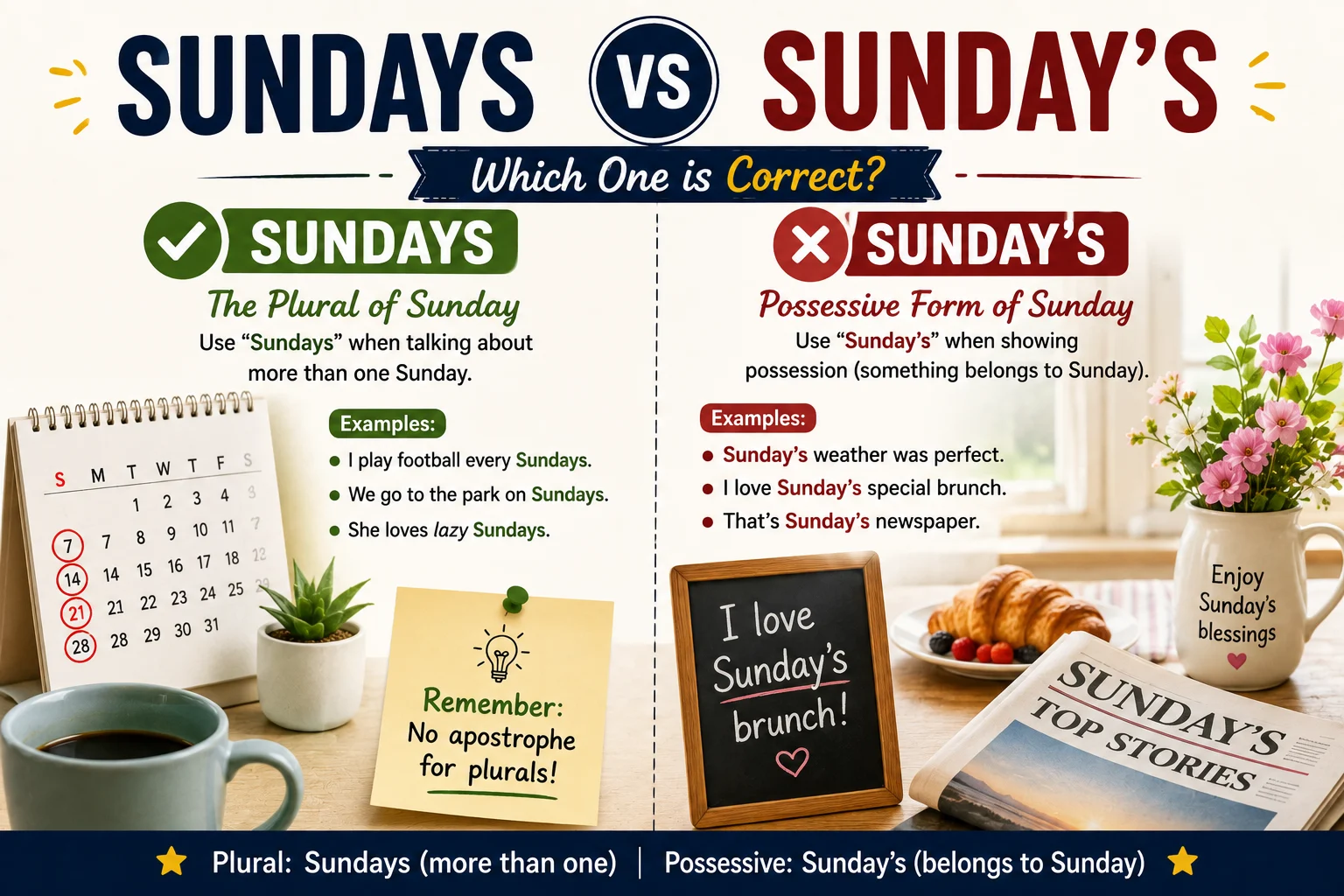
Sundays is the correct plural form of Sunday. Sunday’s is the possessive form, used when something belongs to or is ...
Read more
Do or Due: The Easy Difference Explained
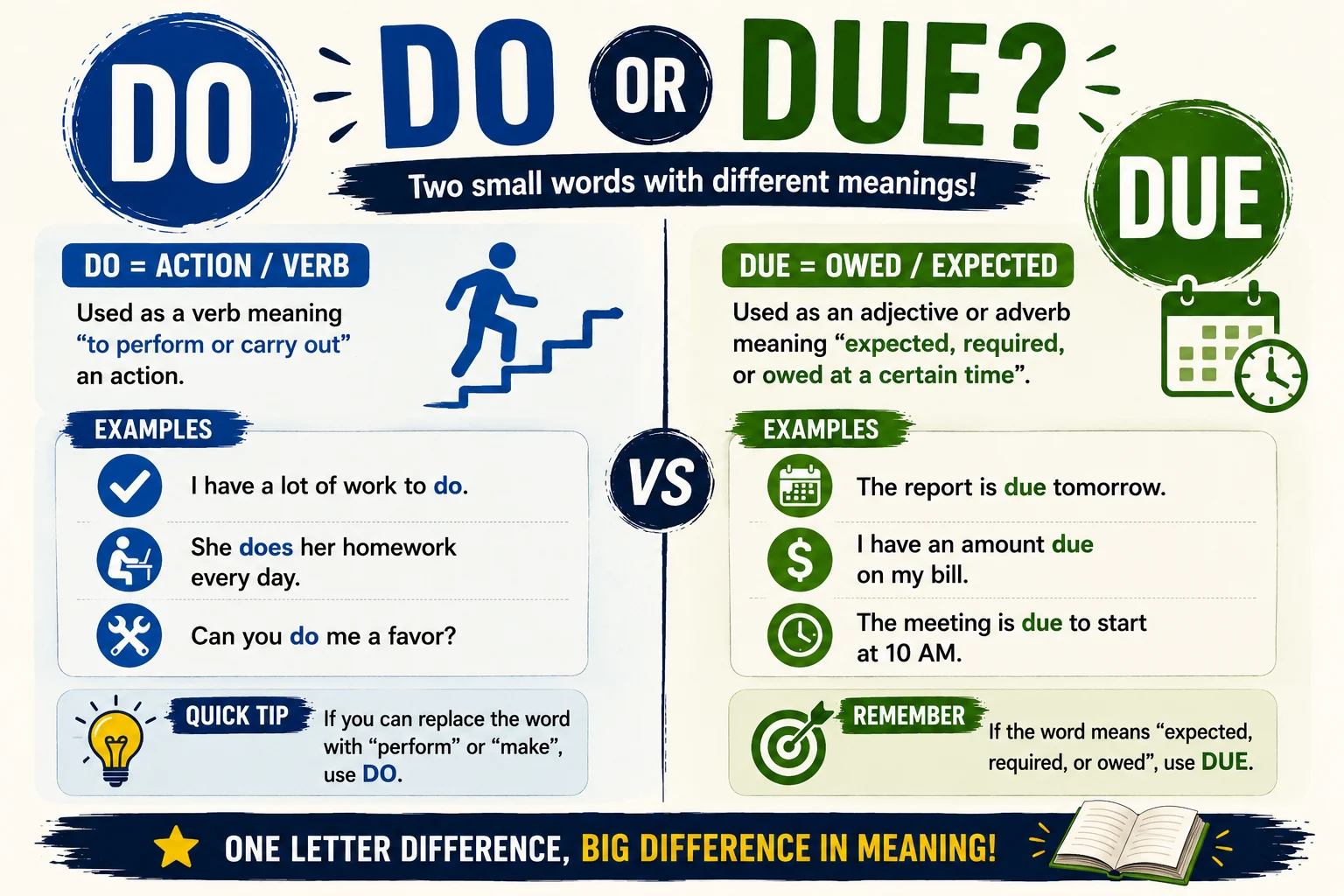
Do is mainly a verb meaning to perform or complete an action, while due usually means expected, owed, or scheduled. ...
Read more
Damn or Dam: The Easy Guide to Correct Usage
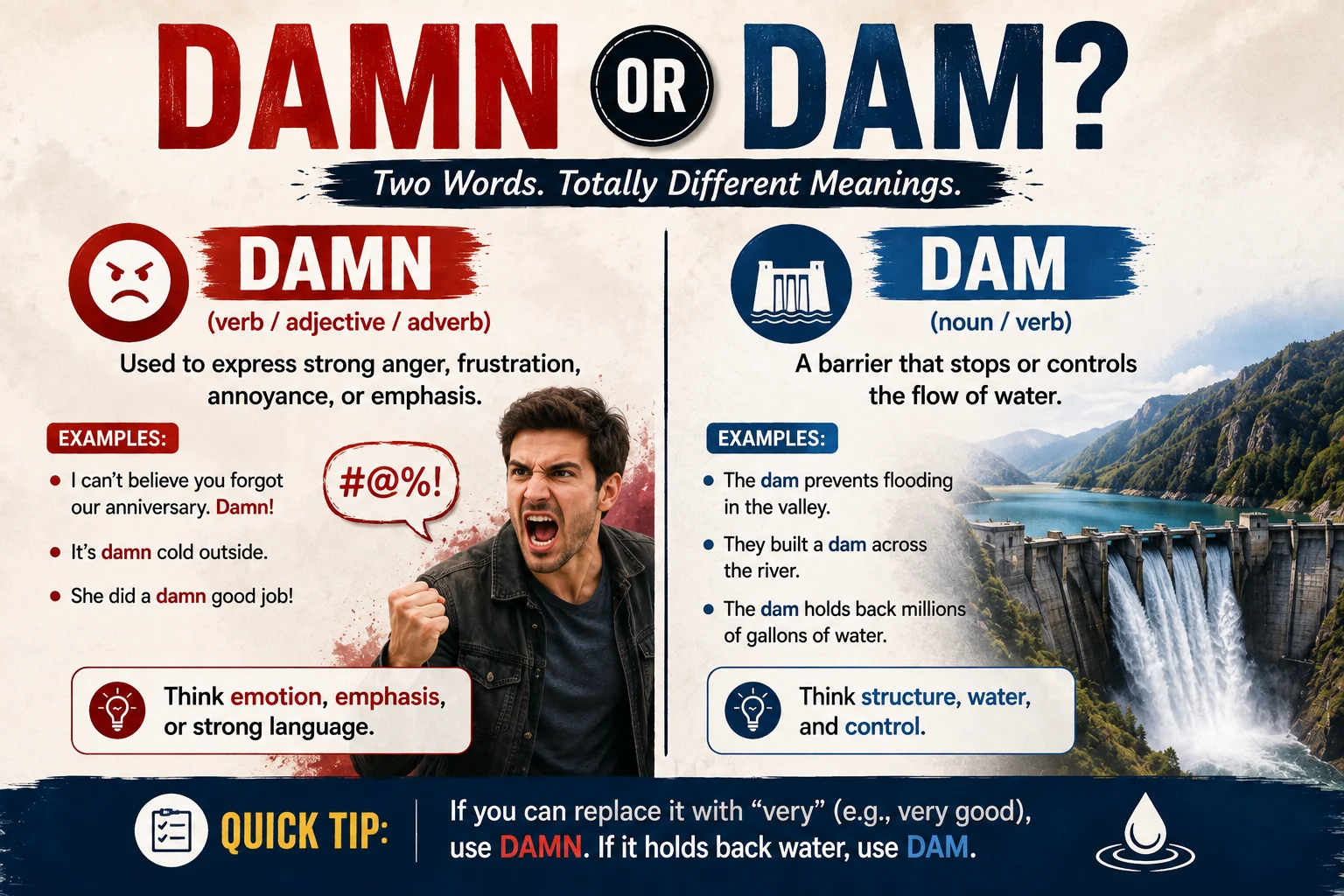
Damn is the correct spelling when you mean an expression of anger, surprise, emphasis, or a curse. Dam is a ...
Read more
Rational or Rationale: Easy Guide to the Difference
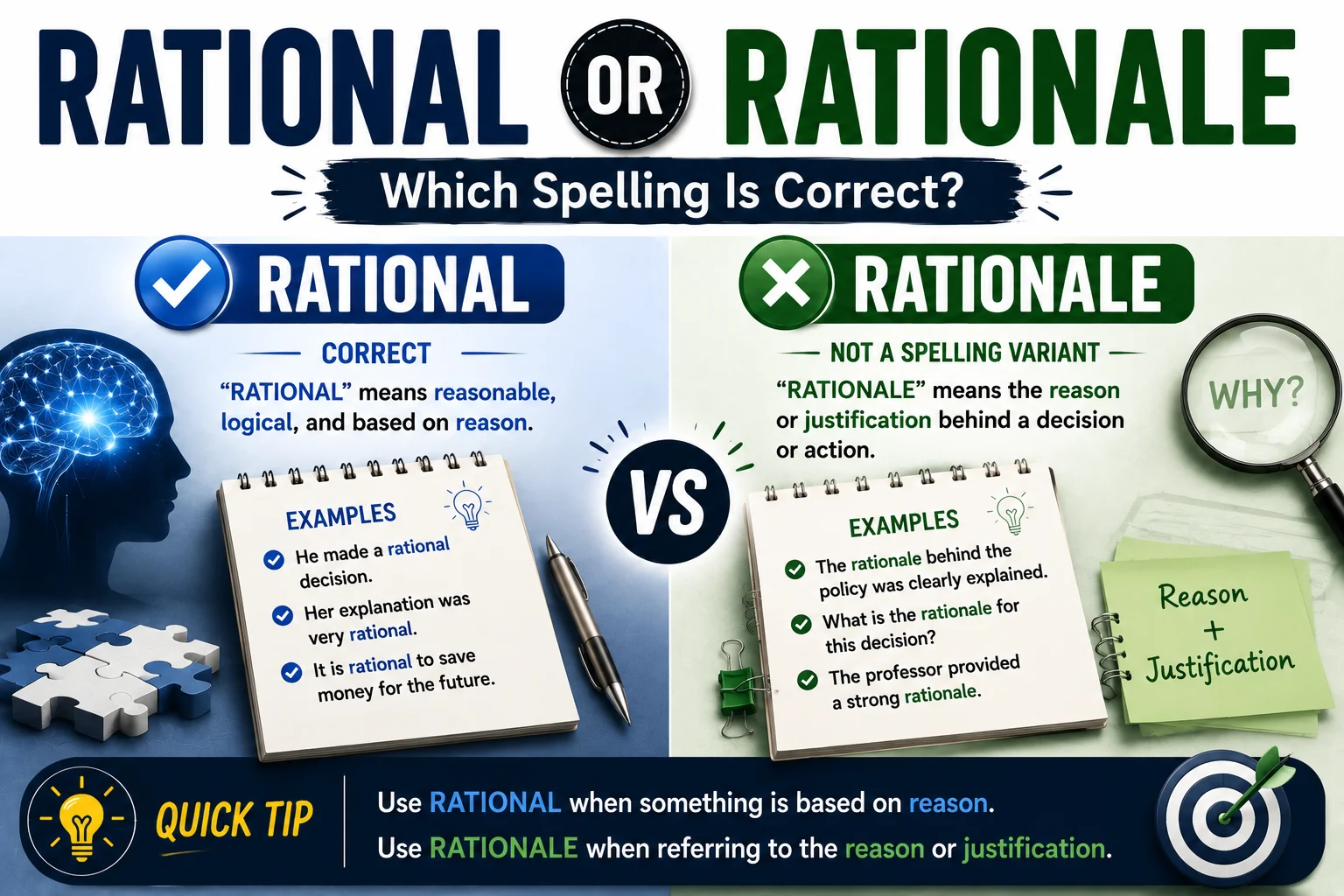
Rational is an adjective meaning sensible, logical, or based on reason. Rationale is a noun meaning the reason or explanation ...
Read more
Conversating or Conversing: The Easy Answer
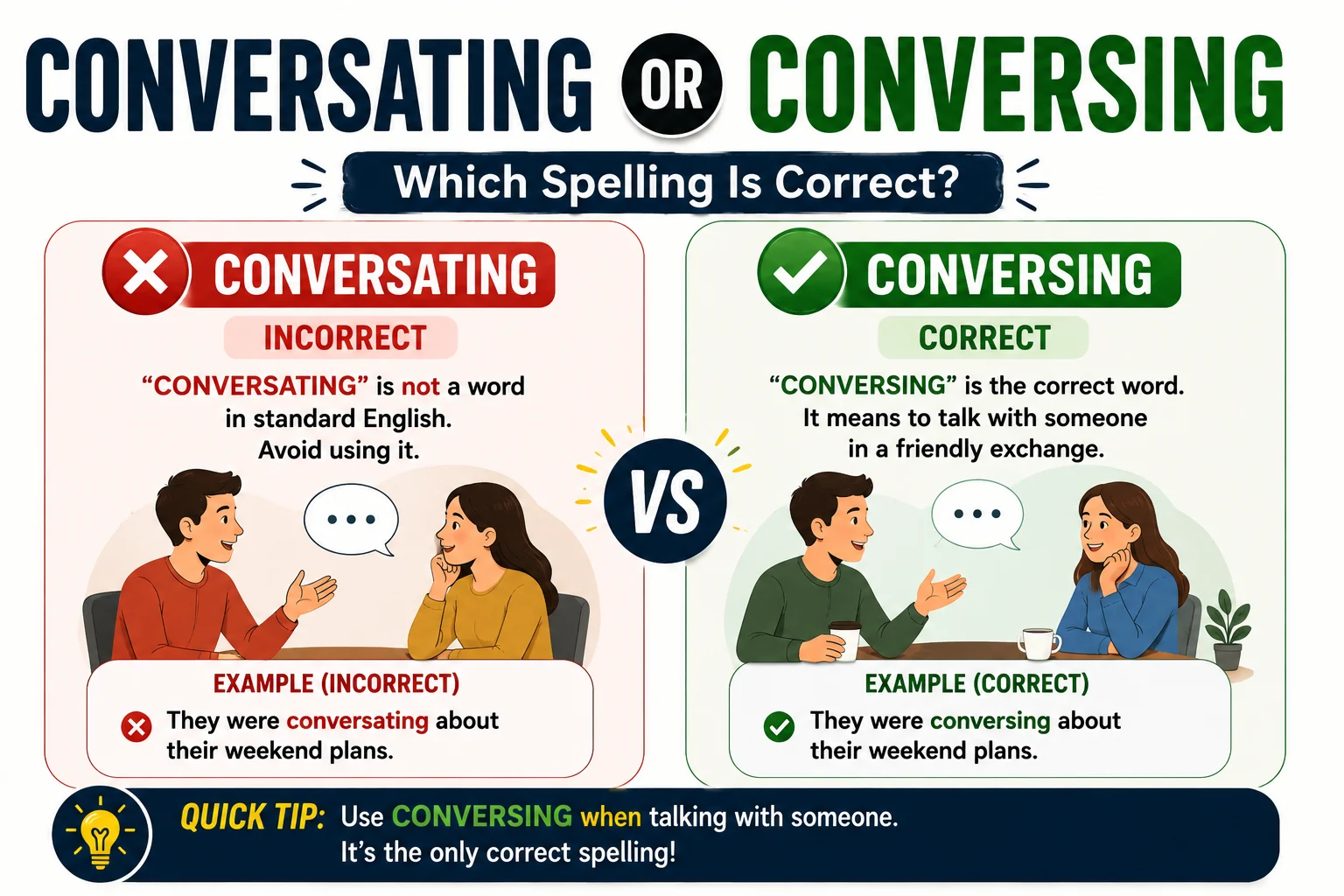
Conversing is the standard English form. Conversating exists in informal and dialectal use, but conversing is the better choice for ...
Read more
MST or MDT: Easy Time Zone Guide

MST means Mountain Standard Time (UTC−7), while MDT means Mountain Daylight Time (UTC−6). Areas that use daylight saving time switch ...
Read more
Metre or Meter: Easy Guide to the Right Spelling
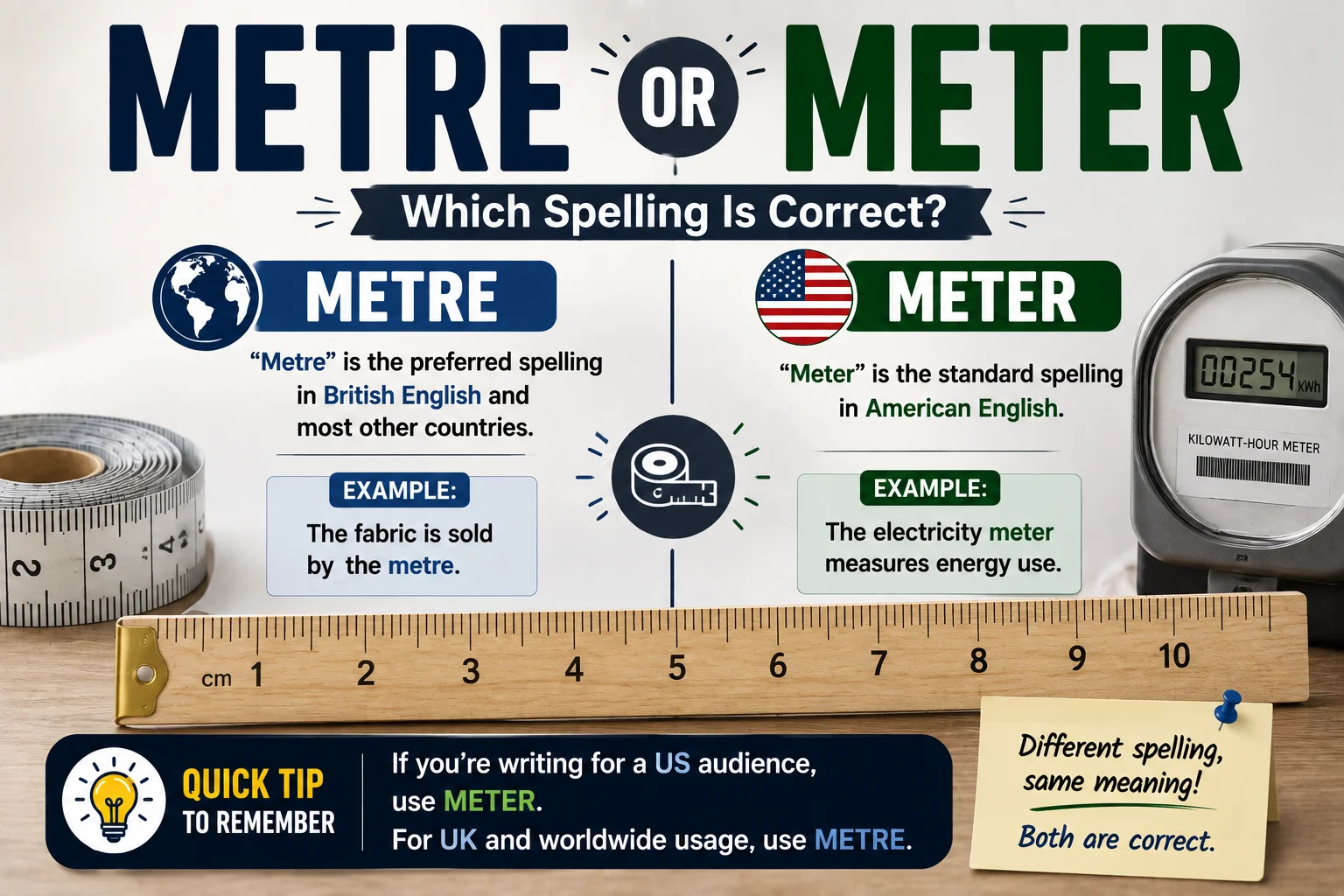
Metre and meter are both correct spellings, but they are used differently by region and meaning. Metre is mainly British ...
Read more
Selfs or Selves: The Easy Spelling Guide
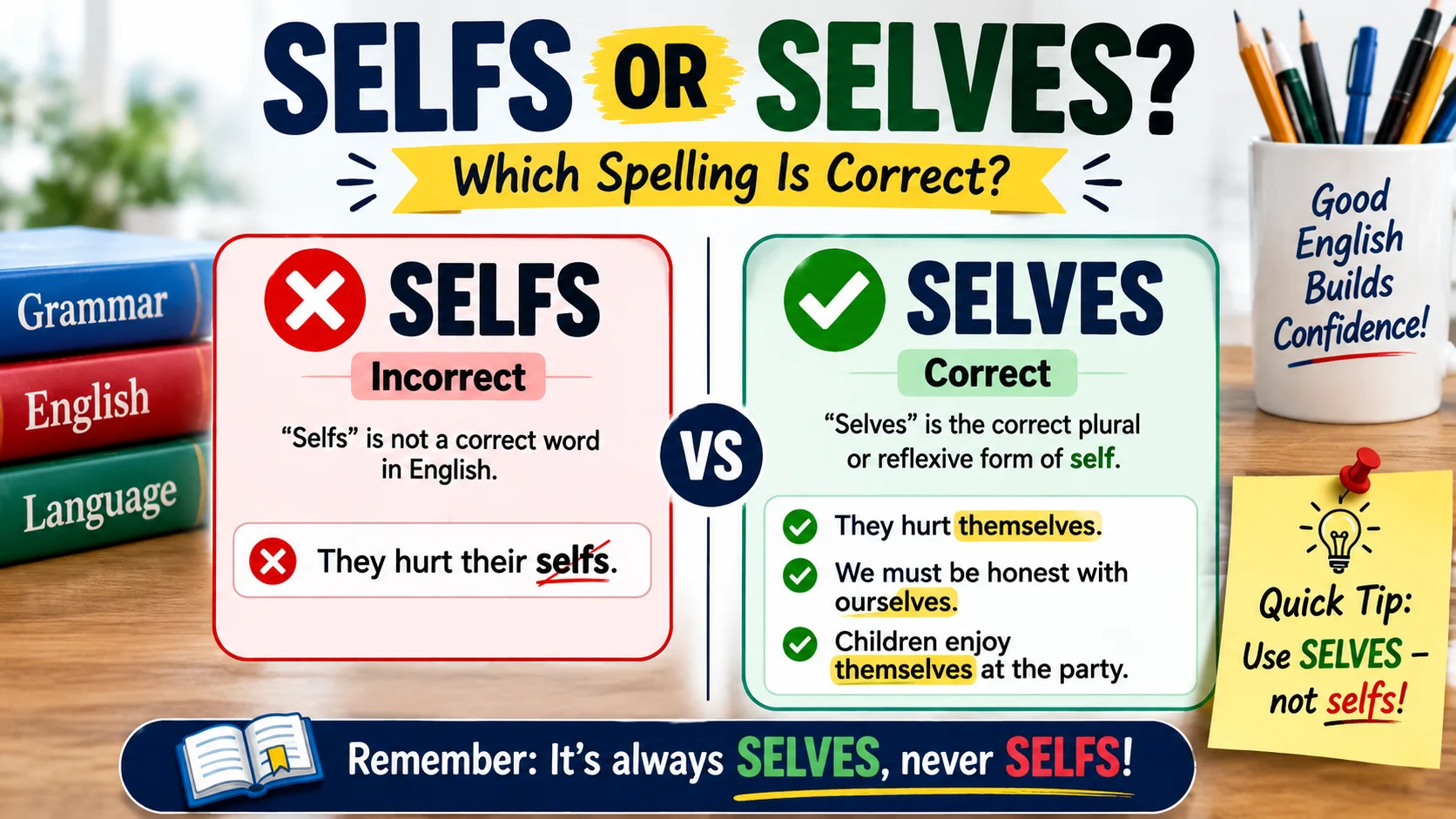
Selves is the correct plural form of self. Selfs is not standard English and should not be used in normal ...
Read more