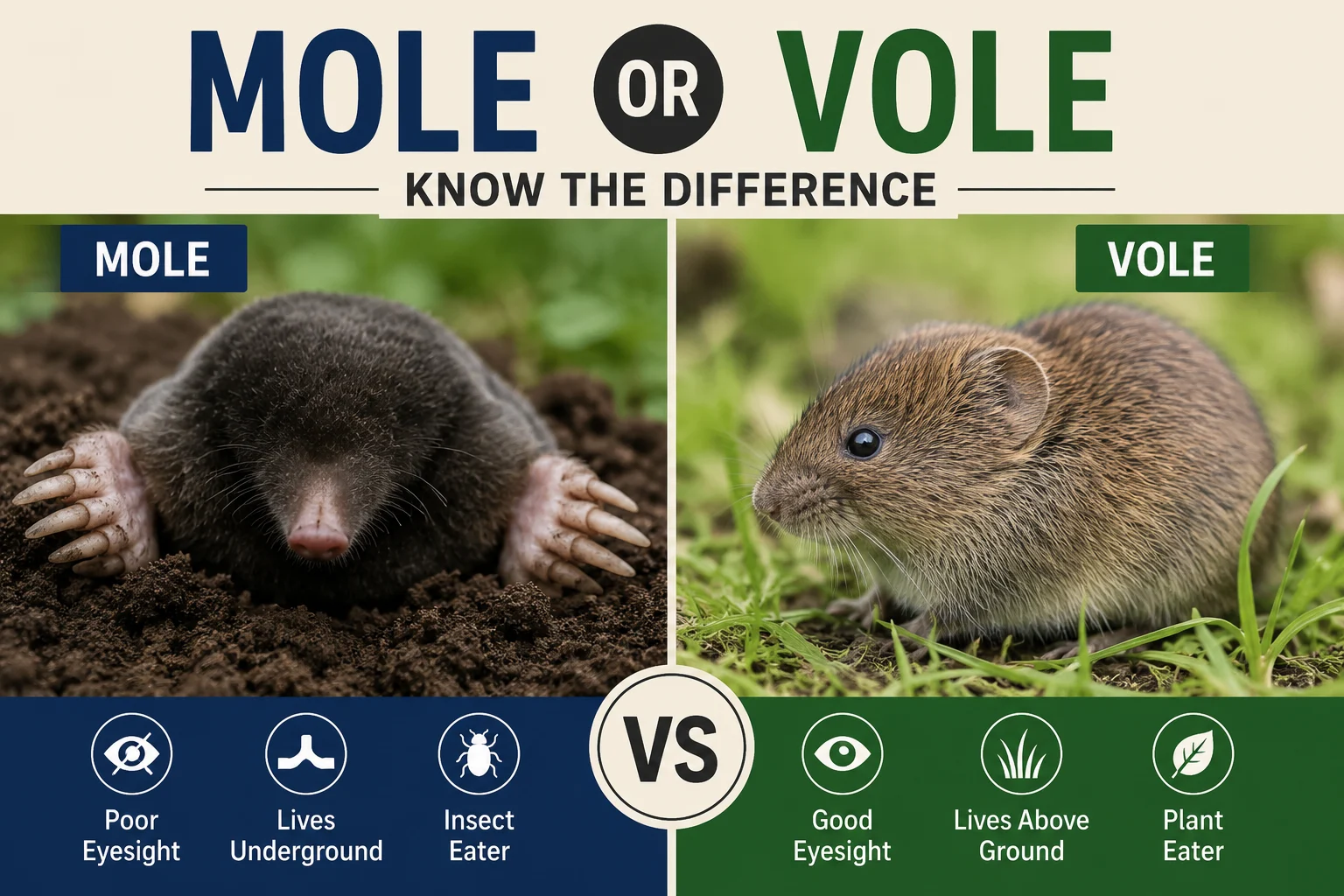
A mole is a burrowing insect-eating mammal with large digging paws, while a vole is a small mouse-like rodent that feeds mainly on grasses and plants.
Have you ever wondered whether you are looking at a mole or vole? These two small animals are often confused because they both live close to the ground and can damage gardens and lawns. However, they are very different animals with different diets, habitats, and behaviors. Knowing the difference can help gardeners, homeowners, students, and animal lovers identify them correctly.
People often search for mole or vole after finding tunnels, holes, or damaged plants in their yard. While both animals can leave signs of activity, they create different kinds of damage and require different solutions. A mole spends most of its life underground eating insects, while a vole is a small rodent that feeds mainly on plants.
This guide explains the difference between mole or vole in simple English. You’ll learn how to identify each animal, where their names come from, whether British and American English use different terms, common mistakes people make, and which animal is more likely to be causing problems in your garden.
Mole or Vole – Quick Answer
A mole and a vole are different animals.
- A mole is a small, burrowing mammal that eats insects and earthworms.
- A vole is a small rodent that eats grass, roots, seeds, bark, and plants.
Examples
- A mole created raised tunnels across the lawn.
- A vole chewed the roots of young plants.
- The gardener identified a mole, not a vole, because of the fresh soil mounds.
The Origin of Mole or Vole
The word mole comes from Old English and has been used for centuries to describe the burrowing mammal known for digging underground tunnels.
The word vole entered English much later from Scandinavian languages. It refers to a small rodent related to mice and hamsters.
Although the names sound similar, they come from different language origins because they describe two completely different animals.
British English vs American English Spelling
There is no spelling difference between British and American English.
| Version | Spelling | Region | Example Sentence |
|---|---|---|---|
| Standard English | Mole | US | A mole dug tunnels under the lawn. |
| Standard English | Mole | UK | The garden has signs of a mole. |
| Standard English | Vole | US & UK | A vole damaged the flower roots. |
Both countries use the same spellings and meanings.
Which Spelling Should You Use?
US Audience
Use mole when referring to the insect-eating burrowing mammal. Use vole for the small plant-eating rodent.
UK/Commonwealth Audience
The same rule applies. Both names are standard throughout the UK and Commonwealth countries.
Global/SEO Audience
Use the correct animal name based on what you are describing. The words are not interchangeable.
Common Mistakes with Mole or Vole
Here are mistakes people often make.
❌ A vole made large soil mounds in my yard.
✅ A mole made large soil mounds in my yard.
❌ A mole chewed the tree bark.
✅ A vole chewed the tree bark.
❌ Moles are rodents.
✅ Voles are rodents; moles are not.
❌ Moles eat garden plants.
✅ Moles mainly eat insects and worms.
Mole or Vole in Everyday Examples
Emails
- We found a mole tunnel near the flower bed.
- A vole damaged several young trees.
News Headlines
- Moles cause spring lawn damage.
- Voles threaten crops across farming areas.
Social Media
- Pretty sure a mole visited my backyard last night!
- My garden has vole damage again this year.
Formal Writing
- Moles improve soil by creating underground tunnels.
- Voles may damage crops by feeding on roots and stems.
Mole or Vole – Google Trends & Usage
People often search for mole or vole when they notice damage in gardens, farms, or lawns.
Searches for mole are common among homeowners dealing with underground tunnels or raised soil ridges. Searches for vole usually come from gardeners trying to identify chewed plants, damaged roots, or missing bark.
In countries such as the United States, Canada, the United Kingdom, and Australia, both terms are widely recognized. Seasonal interest often increases during spring and summer when garden activity becomes more noticeable.
Comparison Table
| Feature | Mole | Vole |
|---|---|---|
| Animal type | Mammal | Rodent |
| Lives underground | ✅ Mostly | Sometimes |
| Eats insects and worms | ✅ Yes | ❌ No |
| Eats plants and roots | ❌ Rarely | ✅ Yes |
| Creates raised tunnels | ✅ Yes | Sometimes |
| Damages plants | Rarely | ✅ Often |
| Related to mice | ❌ No | ✅ Yes |
FAQs
Is a mole the same as a vole?
No. They are different animals with different diets and behaviors.
How can I tell a mole from a vole?
Moles have large digging paws and eat insects. Voles look like small mice and eat plants.
Which animal damages garden plants?
Voles usually damage roots, stems, and bark.
Which animal makes soil mounds?
Moles create raised tunnels and soil mounds while digging.
Are moles harmful to gardens?
Moles mainly eat insects and worms, although their tunnels may disturb lawns.
Are voles dangerous to people?
No. Voles are generally shy and avoid human contact.
Conclusion
Knowing the difference between mole or vole makes it much easier to identify what is happening in your yard or garden. Although these small animals are often confused, they have very different lifestyles. A mole is an insect-eating mammal that spends most of its time underground digging tunnels. A vole, on the other hand, is a small rodent that feeds mainly on grasses, roots, bark, and other plants.
If you notice raised soil ridges or fresh mounds, a mole is the likely cause. If your plants have chewed roots, damaged bark, or missing stems, a vole is probably responsible. Understanding these signs helps you choose the right way to protect your lawn and garden.
Remember, mole and vole are both correct words, but they describe different animals. Choosing the right one will make your writing more accurate and help readers understand exactly which animal you mean.