Inbalance or Imbalance: Which Spelling Is Correct?
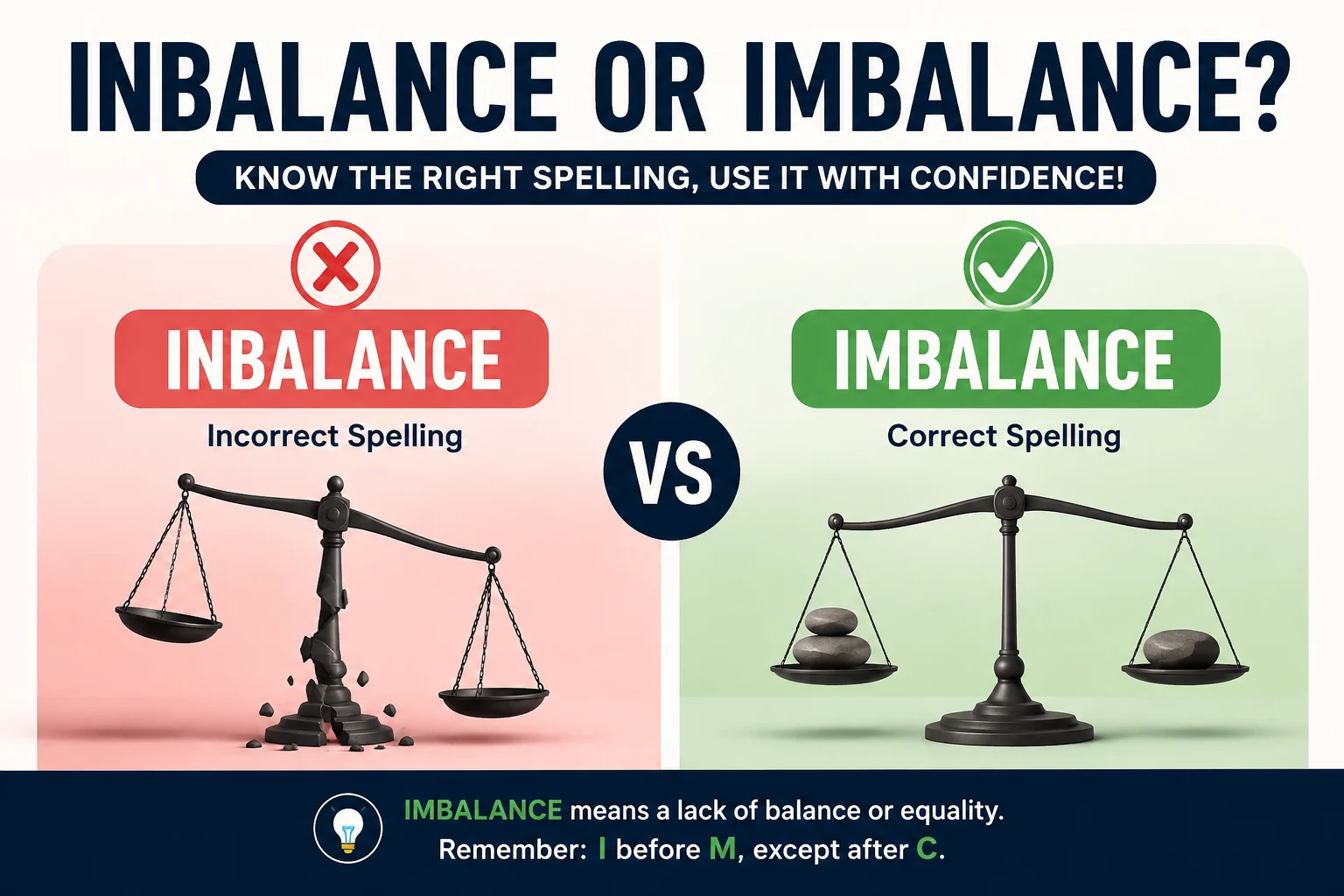
Imbalance is the correct spelling for a lack of balance or equality, while inbalance is a misspelling. Have you ever ...
Read more
Realize or Realise: Meaning, Spelling Differences, and Correct Usage Guide
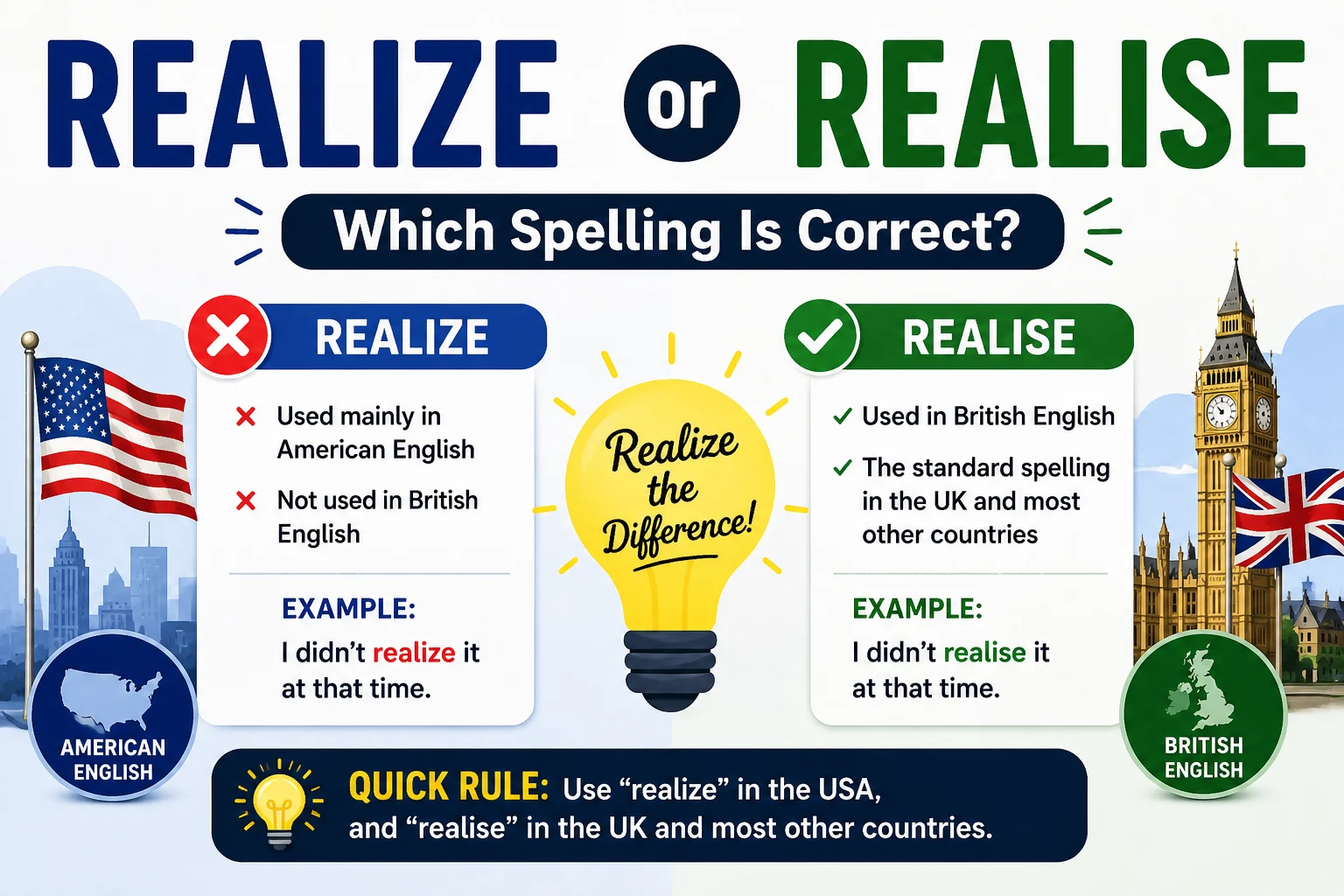
Realize is the preferred American English spelling, while realise is the standard spelling in British English—both are correct depending on ...
Read more
Judgement or Judgment: Complete Guide to Correct Use
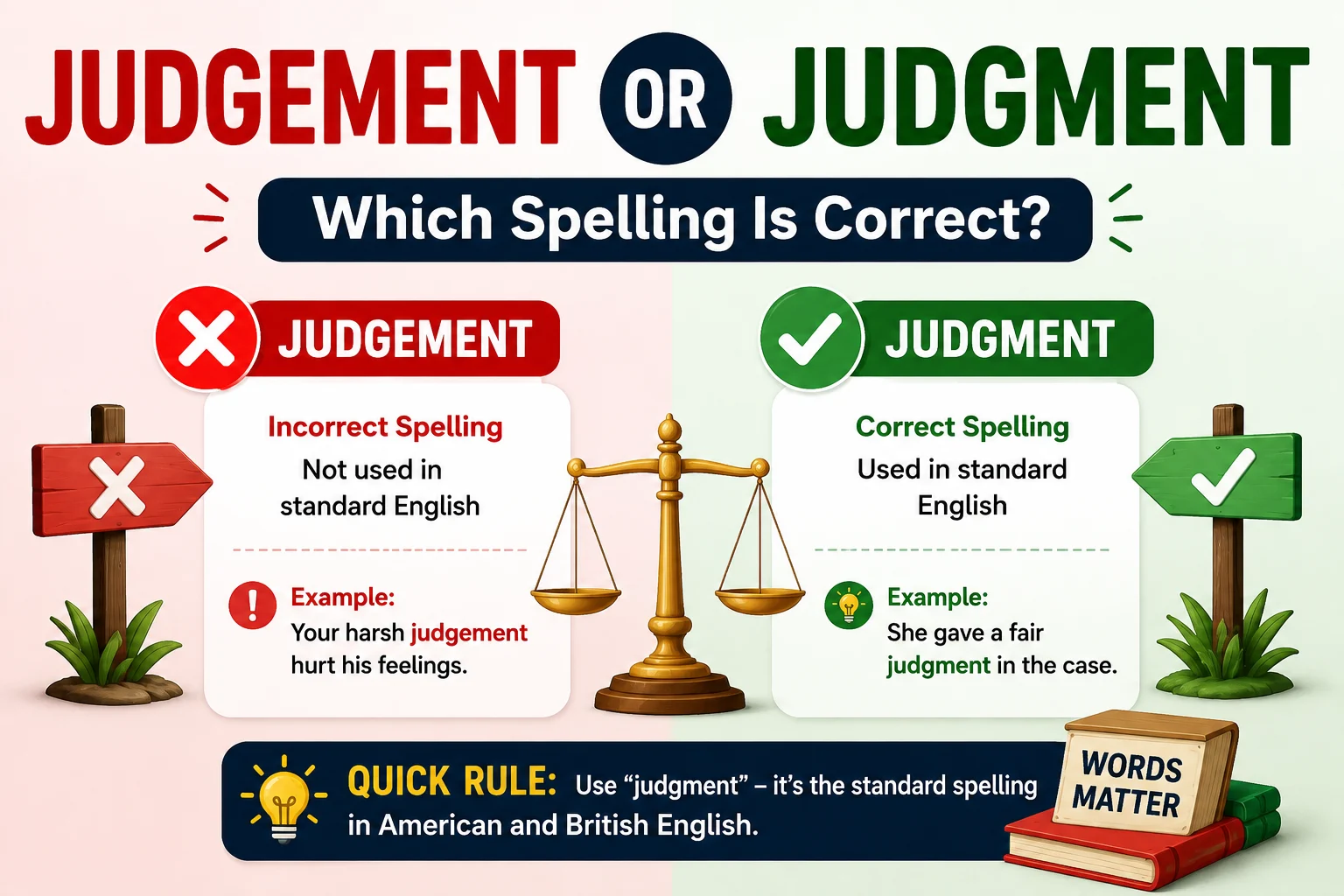
Judgement and judgment mean the same thing: a decision, opinion, or ability to form conclusions. The main difference is spelling. ...
Read more
Gypped or Jipped: Which Spelling Is Correct?
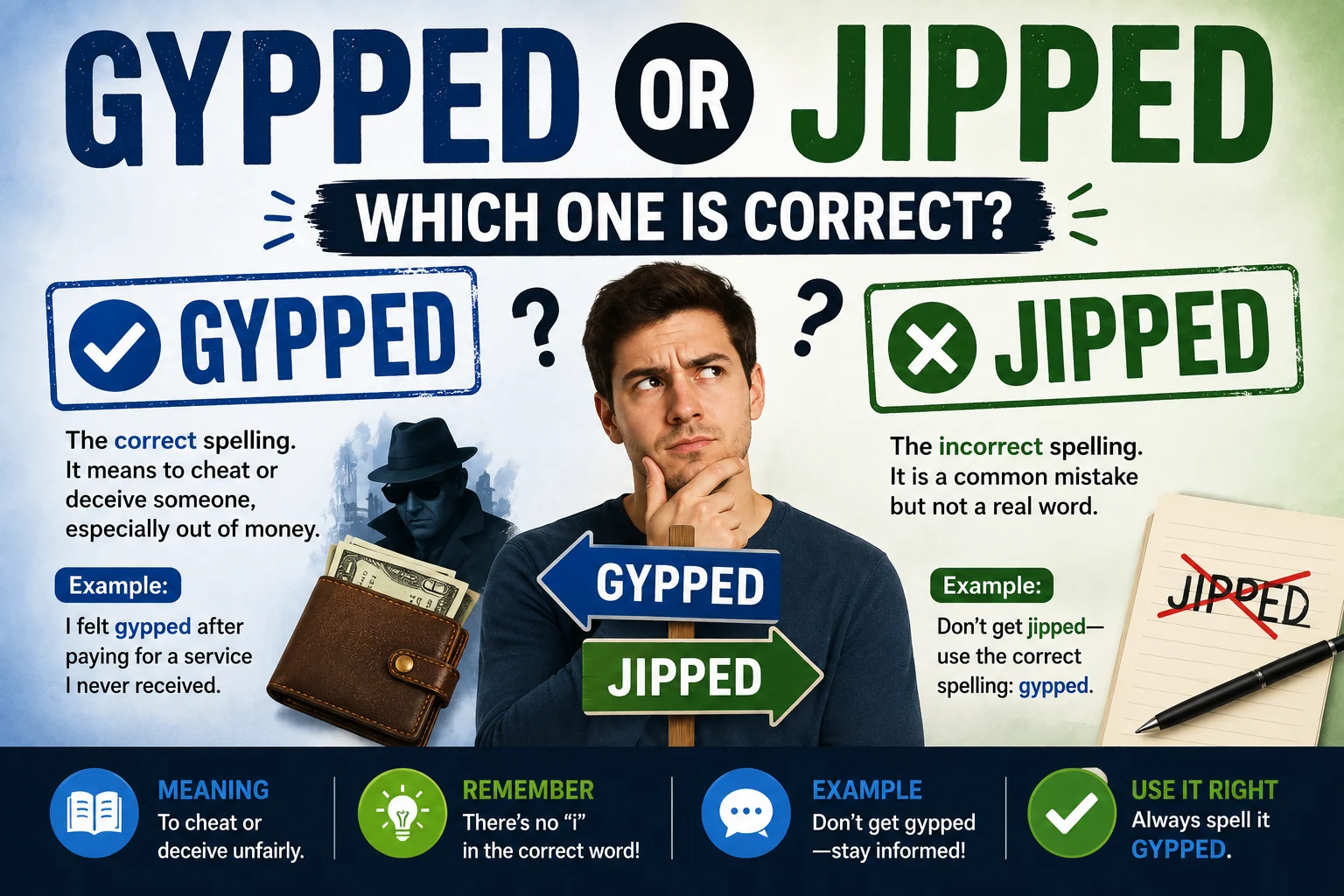
Jipped is an informal variant of gypped, but both are best avoided because the term is considered offensive; use words ...
Read more
Bussing or Busing: Which Spelling Is Correct?
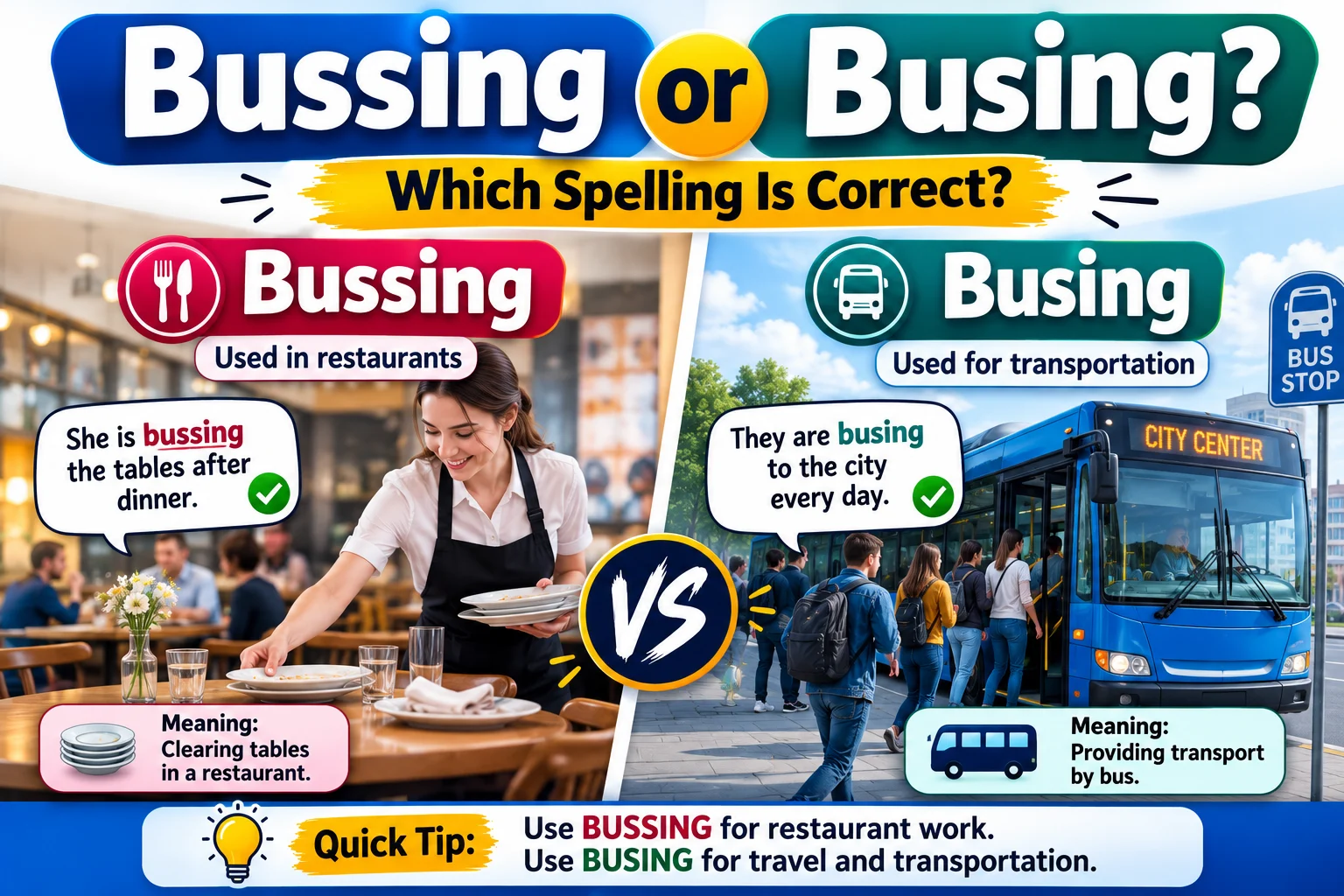
“Busing” is the standard spelling for transporting people by bus, while “bussing” usually refers to clearing tables in restaurants or ...
Read more
Busyness or Business: What’s the Difference?
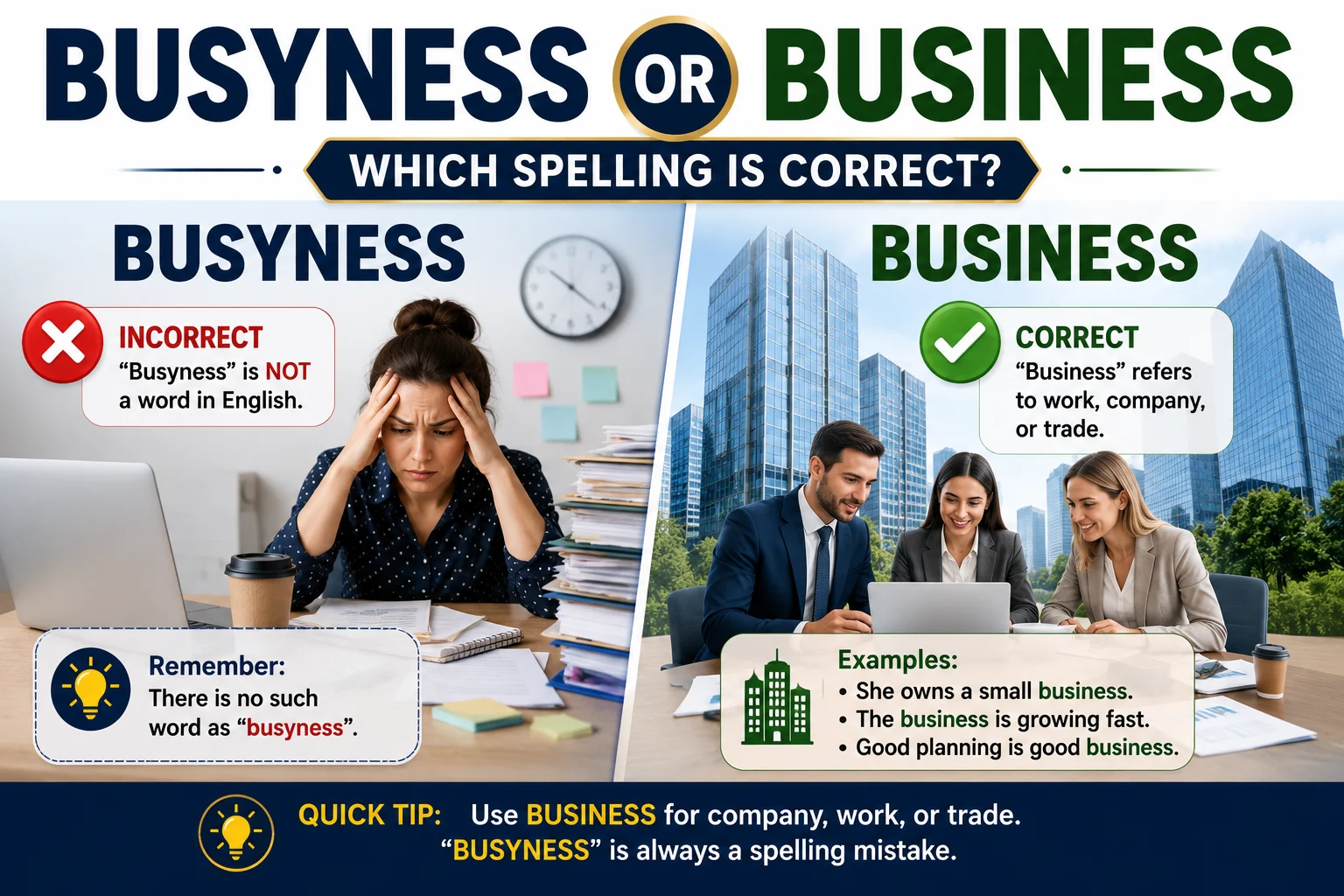
“Busyness” means the state of being busy, while “business” refers to work, trade, or a company—choose the word that matches ...
Read more
Ally or Allie: What’s the Difference?
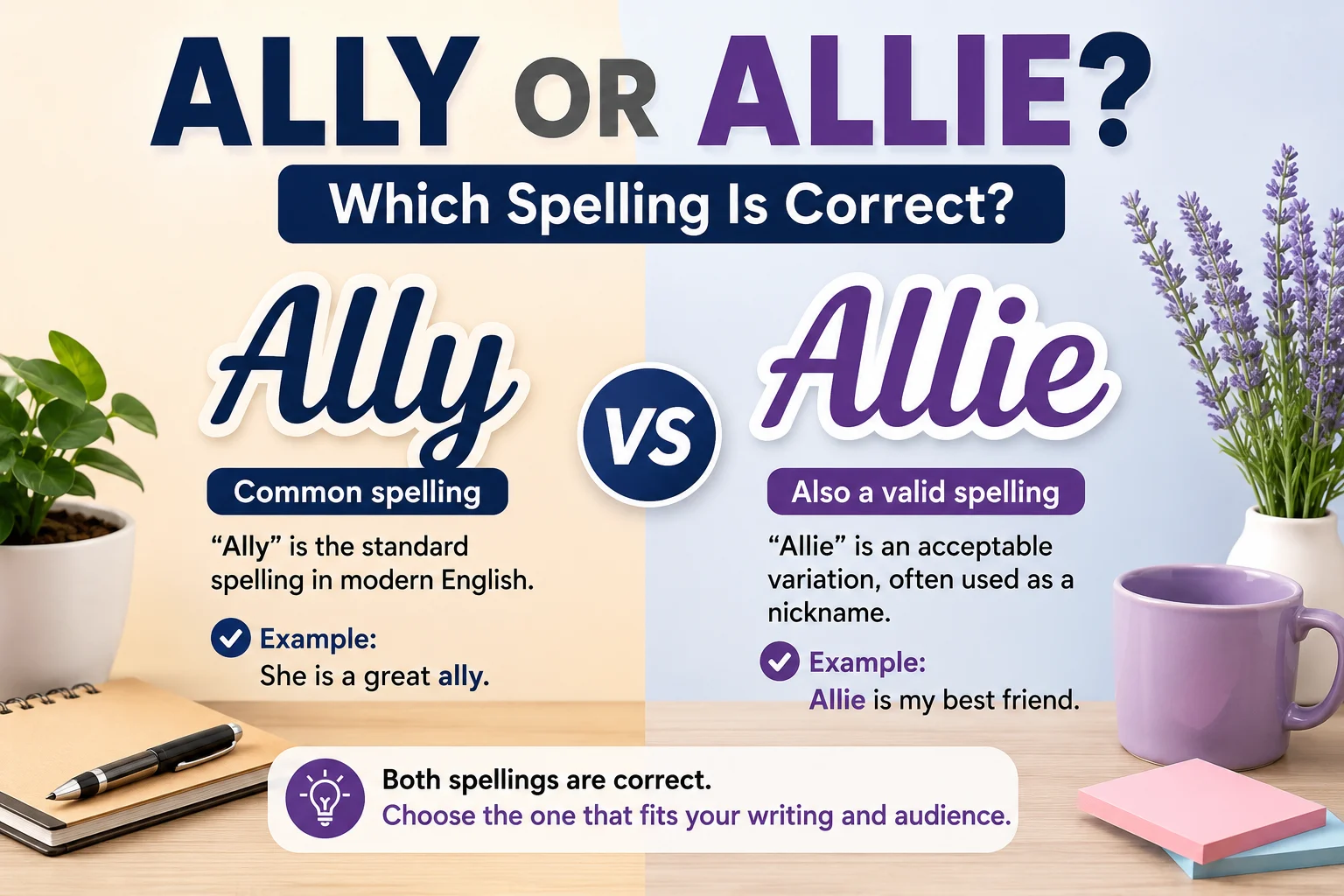
Ally or Allie: “Ally” is the correct word for a friend, supporter, or partner, while “Allie” is usually a person’s ...
Read more
Licence or License? Learn the Correct Spelling and Usage
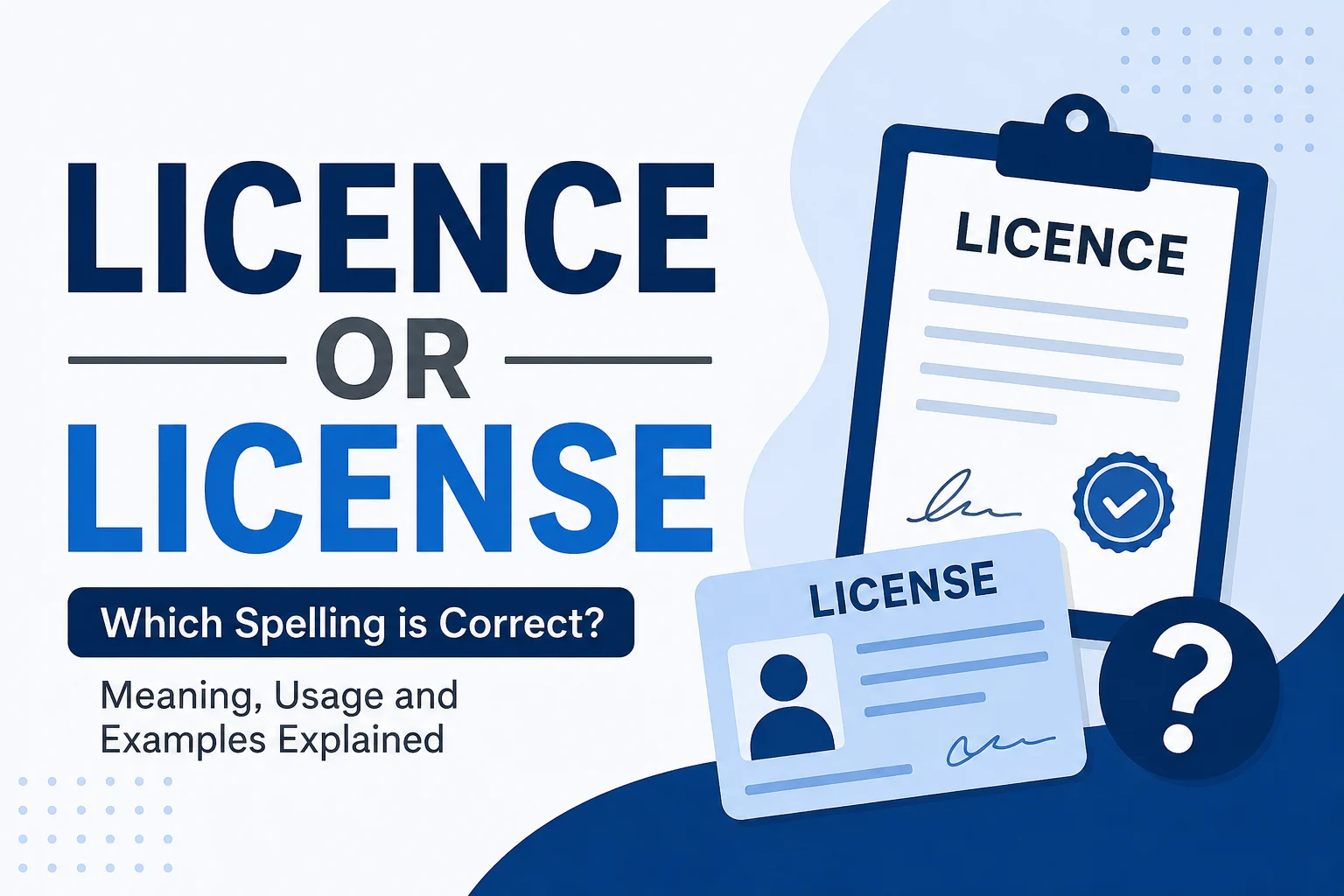
Licence is the noun in British English, while license is the verb; in American English, license is used for both ...
Read more
Que or Queue: Meaning, Differences, Examples & Usage Guide
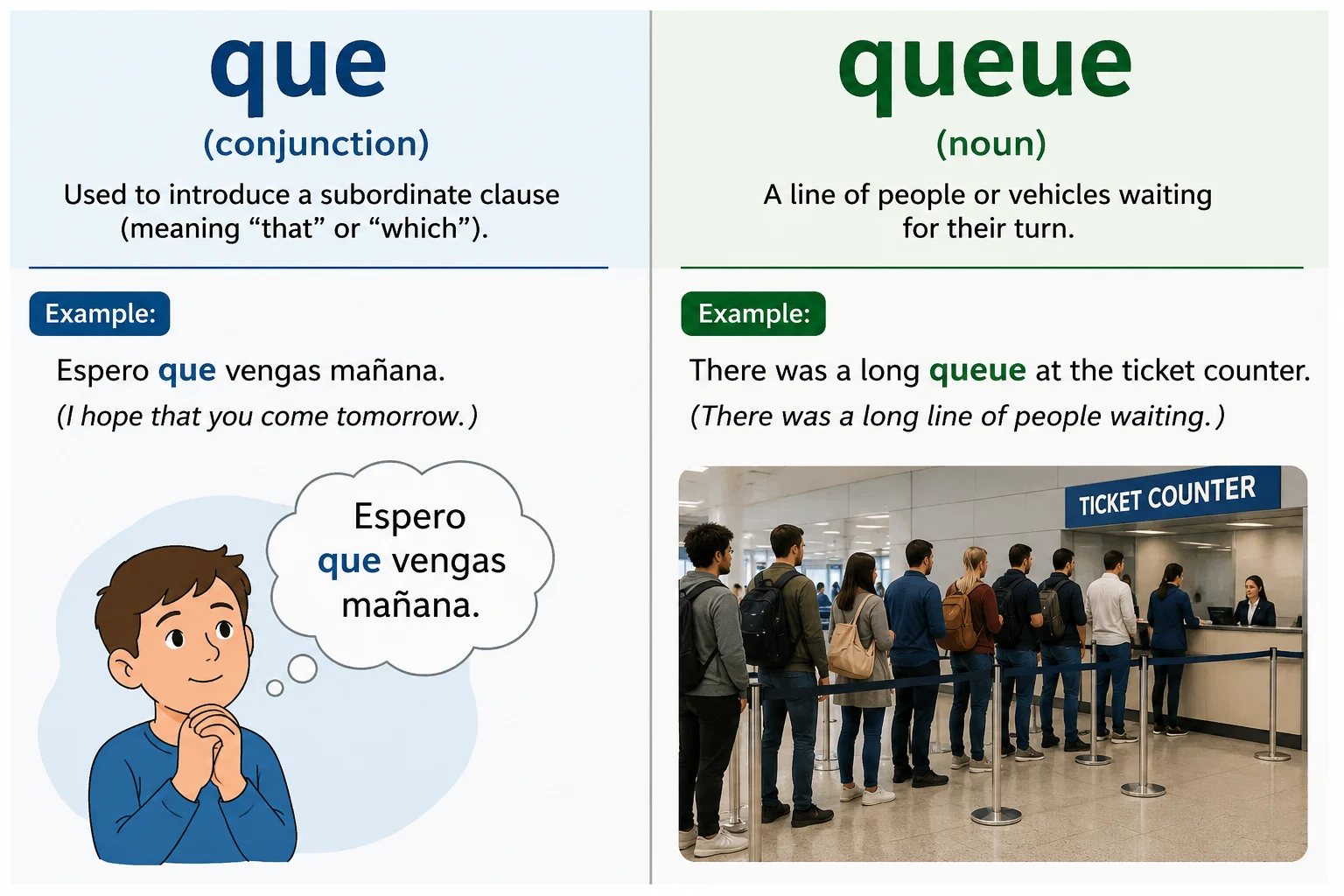
Queue is the correct English spelling for a line or waiting list, while que is generally a misspelling or a ...
Read more
Analysing or Analyzing:Meaning, Differences, Examples & Usage Guide
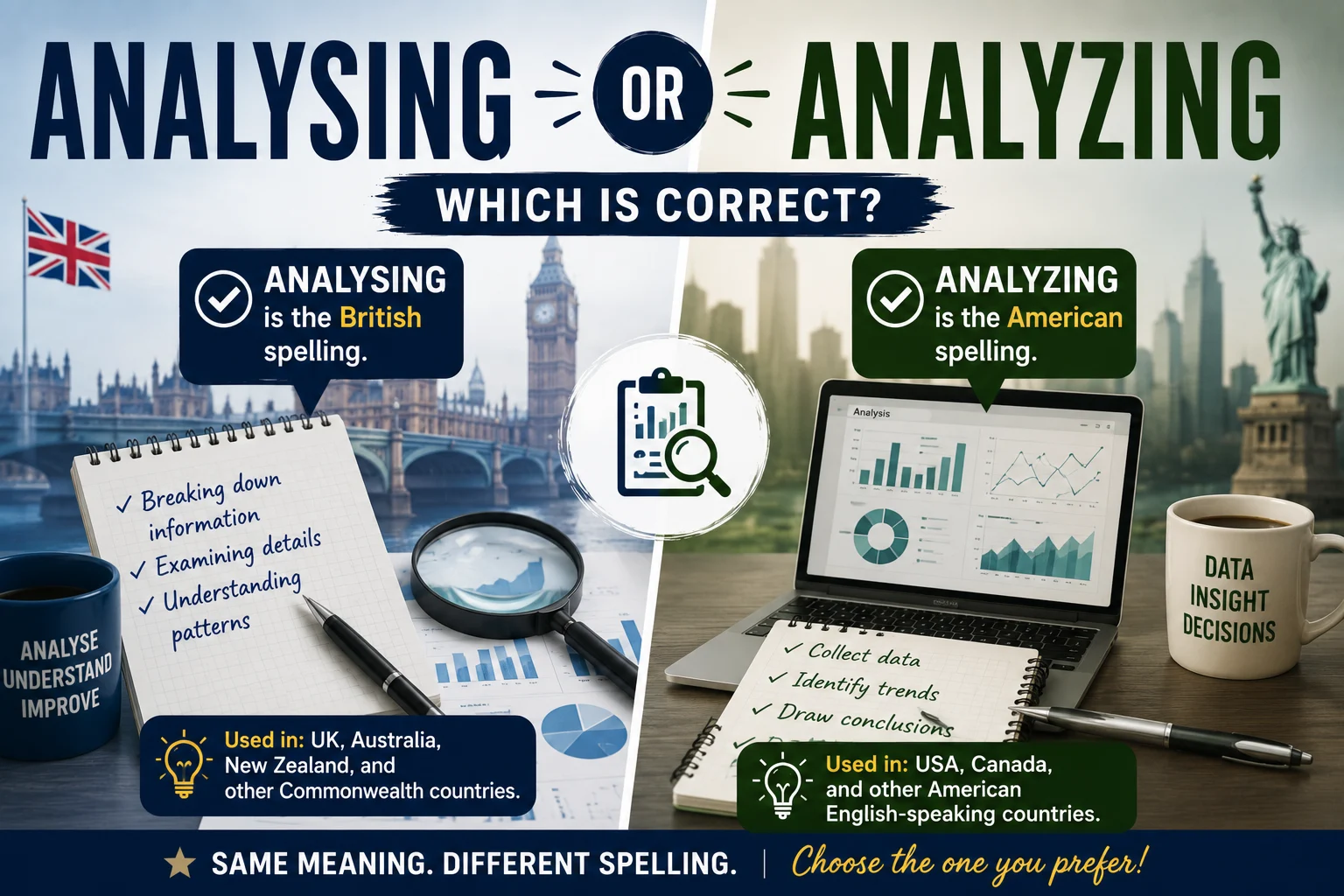
Analyzing is the correct American English spelling, while analysing is the correct British English spelling—both mean examining something carefully. Have ...
Read more