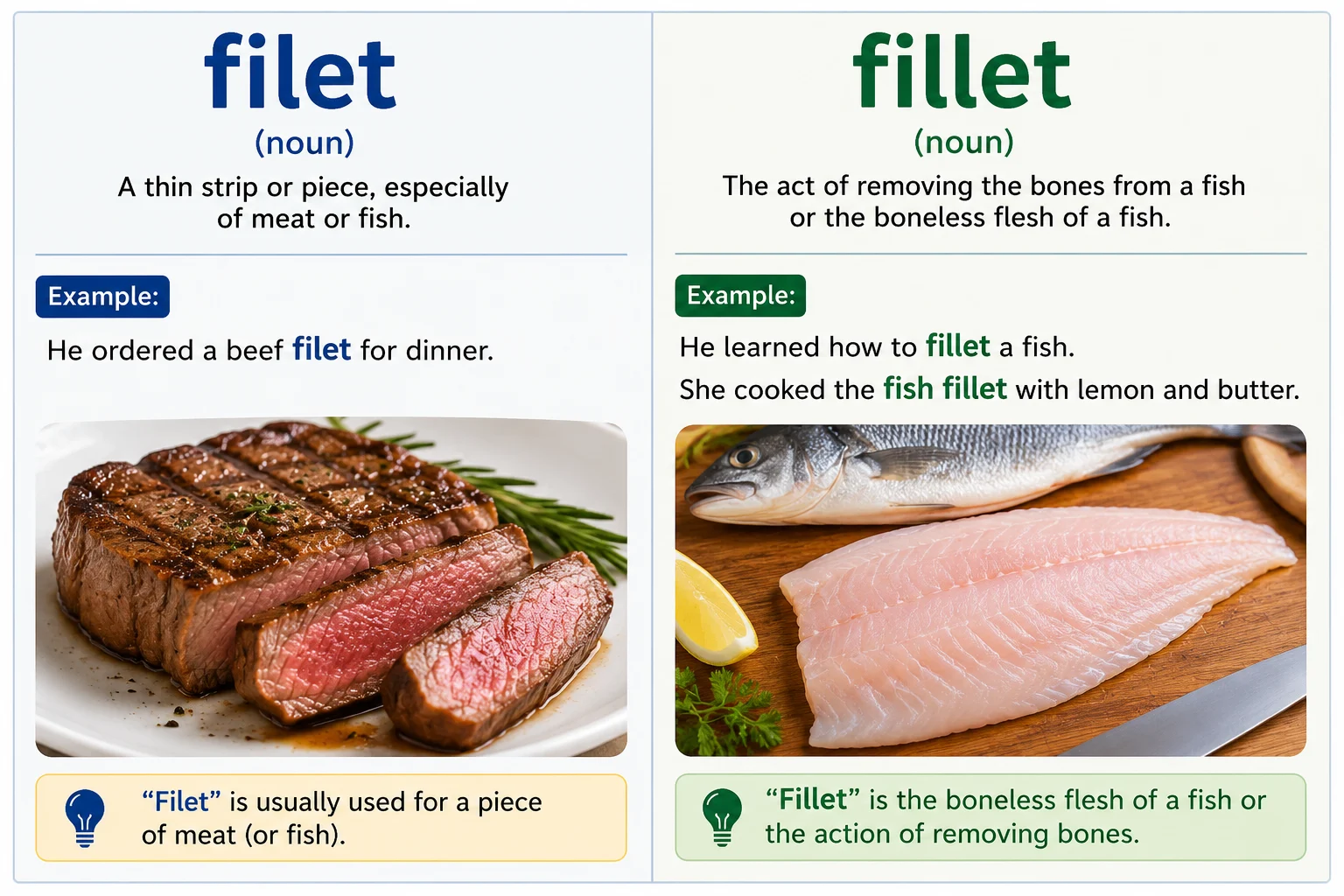
Filet or Fillet? Both spellings are correct—filet is the American English form, while fillet is preferred in British English for boneless cuts of meat or fish.
Have you ever wondered whether you should write filet or fillet? You are not alone. Many people search for this word because they see both spellings on restaurant menus, cooking websites, and food packages. It can be confusing to know which one is correct.
The good news is that both filet and fillet are correct, but they are used in different parts of the world. The choice depends on whether you are writing in American English or British English. Knowing the difference helps you write more clearly and avoid mistakes.
In this guide, you will learn the meaning of each spelling, where it comes from, and when to use it. You will also see simple examples, comparison tables, common mistakes, and helpful tips. By the end of this article, you will know exactly when to use filet or fillet with confidence.
Filet or Fillet – Quick Answer
Quick Answer: Both filet and fillet mean a boneless piece of meat or fish.
- Filet is the preferred spelling in American English, especially in cooking.
- Fillet is the standard spelling in British English and many Commonwealth countries.
Examples
- I ordered a filet of salmon at the restaurant.
- The chef prepared a fresh fillet of cod.
- This recipe works well with a chicken fillet or chicken filet.
The Origin of Filet or Fillet
The word comes from the French word filet, which means “thread” or “strip.”
English later adopted the word as fillet, which became the traditional English spelling. Over time, American English began using the French spelling filet, especially in restaurant menus and food writing.
Today, both spellings are accepted. The difference mainly depends on the variety of English you are using.
British English vs American English Spelling
| Version | Spelling | Region | Example Sentence |
|---|---|---|---|
| American English | Filet | United States | I grilled a beef filet for dinner. |
| British English | Fillet | United Kingdom | She cooked a fish fillet with herbs. |
| Australian English | Fillet | Australia | The chicken fillet was tender. |
| Canadian English | Fillet (more common), Filet (also seen) | Canada | The restaurant served a salmon fillet. |
Which Spelling Should You Use?
For a US Audience
Use filet, especially when writing recipes, restaurant menus, or food blogs for American readers.
For a UK or Commonwealth Audience
Use fillet. This is the standard spelling in the UK, Australia, New Zealand, and many other English-speaking countries.
For a Global or SEO Audience
Choose the spelling that matches your target audience. If your readers come from different countries, you can explain both spellings once and then stay consistent throughout the article.
Common Mistakes with Filet or Fillet
Many writers make small mistakes when using these words.
| Incorrect | Correct |
|---|---|
| Fish filett | Fish fillet |
| Beef filay | Beef filet |
| Chicken filett | Chicken fillet |
| Mixing both spellings in one article | Use one spelling consistently |
Tips
- Use one spelling throughout your content.
- Match your spelling to your audience.
- Check your writing style guide if you are writing professionally.
Filet or Fillet in Everyday Examples
Emails
Please order two chicken fillets for tomorrow’s lunch.
News Headlines
Local Restaurant Introduces Premium Beef Filet Menu
Social Media
Tonight’s dinner is grilled salmon fillet with vegetables!
Formal Writing
The recipe recommends using a fresh fish fillet for the best results.
Filet or Fillet – Google Trends & Usage
The spelling filet is more common in the United States, especially on restaurant menus and food packaging.
The spelling fillet is more popular in the United Kingdom, Australia, New Zealand, and many other English-speaking countries. It is also commonly used in cookbooks and everyday writing outside the US.
Both spellings are widely understood. Most readers recognize them as the same word, but using the spelling that matches your audience makes your writing feel more natural.
Filet vs Fillet Comparison Table
| Feature | Filet | Fillet |
|---|---|---|
| Meaning | Boneless cut of meat or fish | Boneless cut of meat or fish |
| Language Style | American English | British English |
| Common on Menus | Very common in the US | Common in the UK |
| Correct Spelling | Yes | Yes |
| Pronunciation | Same | Same |
| Best For | US audience | UK and Commonwealth audience |
Frequently Asked Questions
Is filet or fillet correct?
Yes. Both are correct. The preferred spelling depends on the variety of English you use.
Why do Americans write filet?
American English often keeps the French spelling, especially in cooking and restaurant menus.
Why do British people use fillet?
British English follows the traditional English spelling fillet.
Do filet and fillet mean different things?
No. They have the same meaning when referring to a boneless piece of meat or fish.
Which spelling should I use for my blog?
Use filet for American readers and fillet for British or international readers.
Is filet mignon spelled with one or two Ls?
The correct spelling is filet mignon because it keeps the original French spelling.
Conclusion
The choice between filet and fillet is easier than it first appears. Both words describe a boneless piece of meat or fish, and both are correct. The only real difference is the spelling preference used in different parts of the world.
If you are writing for an American audience, filet is the better choice, especially in recipes, menus, and food-related content. If your readers are in the United Kingdom or other Commonwealth countries, fillet is the standard spelling they expect to see.
Whatever spelling you choose, the most important rule is to stay consistent throughout your writing. Using the correct version for your audience makes your content easier to read and more professional. Now that you understand the difference, you can confidently decide whether filet or fillet is the right spelling for your next article, recipe, or menu.