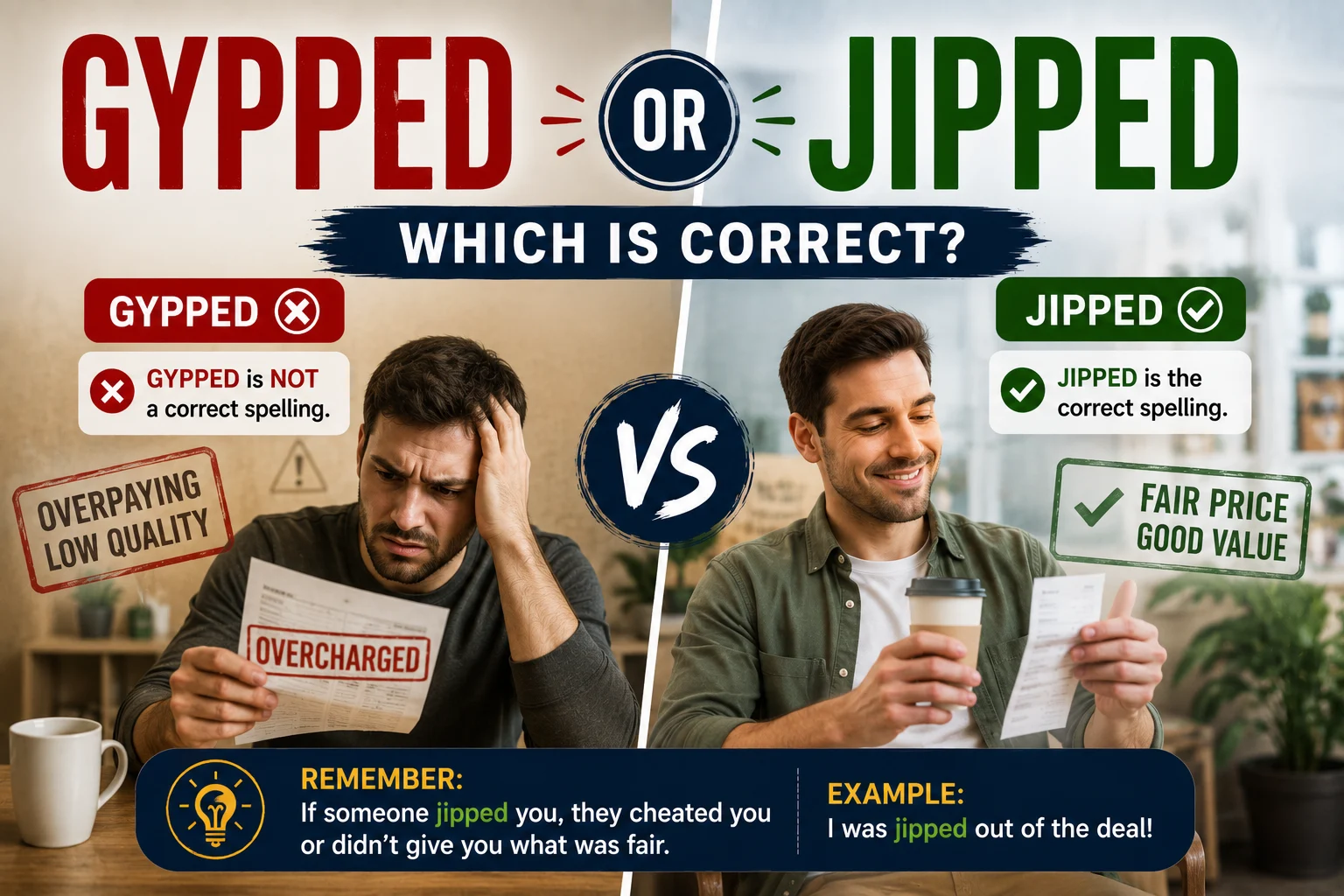
Jipped is the preferred spelling if you use the term at all, but both forms are considered offensive because they derive from a slur against Romani people—it’s better to say cheated, ripped off, or swindled instead.
Many people search for gypped or jipped because they have heard the word in conversation but are unsure which spelling is correct. Others want to know whether the word is appropriate to use today. This confusion is understandable because both spellings appear online, and many speakers have used the expression without knowing its history.
The short answer is that both “gypped” and “jipped” refer to the same informal expression, meaning someone was cheated or treated unfairly. However, there is an important point to understand. The term gypped is widely considered offensive because it comes from the word “Gypsy,” a historical name for the Romani people, and it promotes a harmful stereotype. The spelling jipped is often used to avoid the original spelling, but many style guides still recommend avoiding the expression altogether because it carries the same meaning and history.
In this guide, you’ll learn the origin of both spellings, why the word is controversial, whether British and American English treat it differently, better alternatives to use, and examples that help you write respectfully and accurately.
Gypped or Jipped – Quick Answer
Both gypped and jipped have been used to mean cheated, tricked, or treated unfairly.
However:
- Gypped is generally considered offensive because of its historical connection to the Romani people.
- Jipped is an alternate spelling, but many people still avoid it because it represents the same expression.
Better Alternatives
Instead of using either word, consider saying:
- I was cheated.
- I was ripped off.
- I was overcharged.
Examples
- I felt cheated after buying the broken phone.
- They were ripped off by the fake seller.
- She was overcharged for the repair.
The Origin of Gypped or Jipped
The expression gypped developed from the word “Gypsy,” an older name for the Romani people, an ethnic group with roots in South Asia.
For many years, unfair stereotypes falsely suggested that Romani people were dishonest. Because of these stereotypes, the verb gypped came to mean “to cheat or swindle.”
Today, many people recognize this history and consider the term offensive because it links an entire ethnic group with dishonest behavior.
The spelling jipped became common because people heard the word in speech and spelled it based on pronunciation. However, changing the spelling does not remove the expression’s historical origin.
British English vs American English Spelling
There is no official British or American spelling difference.
Both spellings have appeared in English, but modern writing guides in both regions generally recommend avoiding them.
| Version | Spelling | Region | Example Sentence |
|---|---|---|---|
| Traditional spelling | Gypped | US & UK | Generally avoided because it is considered offensive. |
| Alternate spelling | Jipped | US & UK | Also usually avoided for the same reason. |
| Recommended alternative | Cheated | Worldwide | I felt cheated after the purchase. |
Which Spelling Should You Use?
US Audience
Avoid both gypped and jipped. Use cheated, ripped off, or overcharged instead.
UK/Commonwealth Audience
The same advice applies. Neutral alternatives are clearer and more respectful.
Global/SEO Audience
If you’re writing for an international audience, use words such as cheated, deceived, scammed, or treated unfairly. These terms are widely understood and avoid causing offense.
Common Mistakes with Gypped or Jipped
Many writers believe jipped is the “safe” spelling.
Incorrect vs Better Usage
❌ I got gypped on the deal.
✅ I got cheated on the deal.
❌ We were jipped by the contractor.
✅ We were ripped off by the contractor.
❌ The customer felt gypped.
✅ The customer felt overcharged.
Tips
- Choose respectful language.
- Use clear alternatives like cheated or scammed.
- Remember that changing the spelling does not change the word’s origin.
Gypped or Jipped in Everyday Examples
Emails
We believe we were overcharged and would like a refund.
News Headlines
Customers say they were cheated by the online seller.
Social Media
I feel like I got ripped off buying those tickets.
Formal Writing
The investigation found that several consumers had been deceived.
Gypped or Jipped – Google Trends & Usage
People often search for gypped or jipped because they hear the expression in conversation and want to know the correct spelling. Others search after learning that the term may be offensive.
Today, dictionaries and language experts increasingly recommend avoiding both spellings in professional and public writing. Modern speakers usually choose alternatives such as cheated, scammed, deceived, or ripped off, which clearly express the meaning without relying on a word with a harmful history.
Comparison Table
| Feature | Gypped | Jipped |
|---|---|---|
| Dictionary recognition | ✅ Yes (often labeled offensive) | Sometimes listed as a variant |
| Modern use | Discouraged | Discouraged |
| British English | Rare | Rare |
| American English | Rare | Rare |
| Formal writing | ❌ Avoid | ❌ Avoid |
| Better alternative | Cheated | Cheated |
FAQs
Is gypped or jipped correct?
Both spellings have been used for the same expression, but many people avoid them because of their offensive origin.
Why is “gypped” considered offensive?
It comes from the word “Gypsy,” historically used to stereotype Romani people as dishonest.
Is “jipped” less offensive than “gypped”?
Not necessarily. Although the spelling is different, it generally refers to the same expression and history.
What should I say instead of gypped or jipped?
Use words like cheated, scammed, ripped off, deceived, or overcharged.
Do dictionaries include gypped?
Many dictionaries include it but often label it as offensive, derogatory, or something to avoid.
Can I use gypped in formal writing?
No. Professional and academic writing should use respectful alternatives.
Conclusion
Understanding the difference between gypped or jipped is about more than spelling. While both forms have been used to describe being cheated or treated unfairly, they share the same historical background. The traditional spelling gypped comes from the word “Gypsy,” which has long been associated with harmful stereotypes about the Romani people. Because of this history, many readers and style guides consider the expression offensive.
The spelling jipped is often seen as a phonetic alternative, but it carries the same meaning and is generally avoided for the same reason. Instead of choosing between the two, it is better to use clear and respectful words such as cheated, scammed, deceived, overcharged, or ripped off. These alternatives communicate your message accurately without risking offense.
When writing for school, work, websites, or social media, choosing respectful language helps your communication stay professional, inclusive, and easy to understand.